Fleetgenius helps fleet and maritime teams standardize planning, visibility, and reporting to support day-to-day operations. This guide explains what Fleetgenius is, how it typically fits procurement and supplier workflows, and what decision criteria matter when evaluating fleet technology. It then compares implementation approaches, outlines requirements, and provides objective FAQs.

Fleetgenius is commonly considered by operators and fleet managers who want clearer visibility over assets, routes, and operational activities—especially when multiple stakeholders (dispatch, maintenance, compliance, and finance) need consistent information. This guide takes an expert, decision-oriented approach: it focuses on how to assess whether Fleetgenius matches your operational reality, what supplier and pricing considerations you should request, and what conditions typically determine successful adoption. It is written for teams that want to reduce ambiguity during procurement and implementation, and it assumes you care about both day-to-day operational execution and longer-term planning outcomes (performance, audit readiness, and operational governance).
When fleet technology is evaluated properly, the discussion shifts from “Do we like the dashboard?” to “Can we trust the operational record?” and “Will workflows run reliably under real constraints?” Visibility is not only about seeing where assets are; it is about understanding what is happening, why it happened, what decisions were taken, and what evidence supports those decisions. Fleet visibility without operational traceability can create a false sense of control. Conversely, a workflow and governance layer—configured to your operating model—can convert raw activity data into operational planning intelligence, audit evidence, and measurable process improvements.
Because organizations use the term “visibility” differently, this guide emphasizes evaluation criteria that can be verified: workflow fit, data integrity, reporting consistency, security and auditability, and integration boundaries. It also includes a procurement checklist you can use to turn your operational needs into supplier questions, and it expands on specific risks and validation steps that often determine whether a fleet platform becomes an operational tool or an underused system.
Modern fleet operations are shaped by coordination challenges: vehicles or vessels move on tight schedules, maintenance is time- and condition-dependent, and reporting requirements can become complex when regions, routes, and partners multiply. Dispatchers need quick decisions; maintenance planners need scheduling logic and evidence; compliance teams need consistent recordkeeping; finance teams need predictable reporting for cost allocation and performance measurement. In this context, fleet management platforms generally seek to reduce friction between planning and execution—by organizing data, improving traceability of actions, and supporting workflows such as route planning, status reporting, incident handling, and performance review.
Traditional operations often rely on spreadsheets, email chains, ticketing systems, and manual status updates. These tools can work at small scale, but they tend to degrade when volume increases or when multiple teams must reconcile information across time. For example, dispatch may update a status in one place, maintenance may record work in another system, compliance may require evidence attachments in a third process, and finance may require a finalized cost allocation later. If these steps are not standardized, the organization ends up with inconsistent “truth” across systems.
Fleet technology’s core purpose, therefore, is not just data presentation. It is workflow orchestration and operational recordkeeping. A mature fleet platform should help you:
When organizations evaluate a platform like Fleetgenius, they usually do so to address specific operational pain points—such as fragmented information across teams, inconsistent reporting, or difficulty tracking operational decisions. A professional evaluation therefore begins with mapping your current process, identifying the handoffs where data is lost or delayed, and then testing whether the platform’s features and implementation approach reduce those gaps.
That process mapping is frequently more valuable than feature comparison. Two organizations can ask for “fleet visibility” and mean totally different things. One may need reliable audit trails for regulated inspections; another may need to coordinate subcontractors; another may need to plan around maintenance capacity constraints. A strong evaluation process differentiates these needs and determines whether Fleetgenius can support them without forcing your teams into unnatural workflows.
Fleetgenius is often assessed in categories where visibility and coordination matter. Depending on the organization’s scope—whether it is a mixed fleet, a logistics operation with recurring routes, or a maritime-oriented workflow—platforms like Fleetgenius can be positioned as an orchestration layer for operational data and decision support. For many buyers, the key question is not merely “does it have a dashboard?” but “can it standardize the way teams capture events, update statuses, and produce reliable reports?”
When fleet technology is implemented well, it supports consistent operational practices across stakeholders. The goal is that the dispatch team can update status and reason codes in one place; maintenance can create and close work orders with evidence; compliance can retrieve consistent records; and finance can report costs and performance measures from the same underlying operational record. When those connections exist, operational planning becomes more accurate because it is based on reliable history rather than fragmented updates.
In practical terms, the evaluation typically includes:
Buyers also commonly look for the platform’s ability to “connect the story” of an asset’s activities. For example, if an asset was delayed, you want to connect that delay to the relevant operational event, potentially to a maintenance or incident record, and then to the status that finance uses for cost and performance reporting. Without these links, reporting can become a mechanical summary that doesn’t answer operational questions such as “what caused this trend?”
Another reason teams consider Fleetgenius is scalability of operational data capture. As fleets grow across routes or regions, manual capture becomes a bottleneck. The evaluation should therefore consider not only current usage but also how the solution will scale: how it handles more assets, more users, more report types, more roles, and more system integrations over time.
Fleet-related operations often intersect with safety management, regulatory recordkeeping, and contractual expectations between parties (carriers, subcontractors, customers, insurers, and service vendors). While exact legal requirements vary by country and route, credible technology platforms generally emphasize controlled data access, audit trails, and consistent change management.
For objective grounding on why auditability and governance matter, it is worth referencing widely adopted governance principles: for example, the ISO/IEC 27001 framework for information security management underlines the importance of access control, risk treatment, and auditable processes. Another relevant standard is ISO 9001, which supports quality management approaches that rely on document control and process consistency. These are not platform-specific claims, but they clarify what “good governance” looks like when digitizing operational workflows.
In a fleet context, governance means more than “security.” It includes:
When evaluating Fleetgenius, governance requirements should not be treated as “checkbox compliance.” Instead, map your governance needs to platform behavior. For example, auditors often want to know that an inspection occurred, who performed it, what the results were, and that the record is not easily altered without trace. Similarly, safety management might require evidence for specific incident classifications and corrective actions. These needs should appear in your evaluation test cases.
Finally, data governance in modern deployments includes privacy considerations and contractual constraints about data sharing across partners. If you have subcontractors or third parties contributing updates, you will want clarity about data access boundaries: what they can see, what they can edit, whether they need separate accounts, and how their updates are authenticated and traceable.
One of the very common mistakes in platform procurement is comparing prices without comparing scope. A professional review of Fleetgenius should separate:
Because your request mentions price information and supplier details, the top practice is to request a structured quote from the supplier that itemizes total cost of ownership (TCO), including initial onboarding and ongoing operational costs. If a supplier offers a “base platform” price, ask for the cost of enabling the exact workflows you need—especially if your organization expects integration with existing tools or requires specialized reporting templates.
Note: Specific price figures are highly dependent on contract terms, region, fleet size, and module selection. For that reason, this guide avoids quoting unverified numbers. Instead, it provides a repeatable procurement checklist so you can compare offerings on equal terms.
To compare suppliers objectively, insist on quote transparency. A structured quote should ideally include:
Another important pricing evaluation factor is cost predictability. Fleet operators often struggle when support or integration changes become expensive after initial deployment. You should therefore ask:
From a procurement perspective, also request proof that the supplier can deliver the promised functionality within your constraints. This is best done through references and examples, not just marketing statements. Ask for documentation of similar deployments, including how the supplier handled workflow standardization and integrations in real environments.
For fleet and logistics teams, adoption fails when the platform is built around a generic workflow rather than the team’s reality. Expert buyers typically run a short “workflow fit test.” The goal is to validate, in your own operational language, whether Fleetgenius supports the sequence of actions your teams actually follow.
During the fit test, teams commonly evaluate:
To make workflow fit tests more rigorous, prepare realistic scenario scripts. A good test does not only demonstrate “happy path” features—it challenges the system with the kinds of deviations your organization experiences every week. Example scenario scripts include:
For each scenario, evaluate not only whether the tasks can be done, but whether the process feels natural to the roles performing it. Fit tests should include time-to-complete measures and minimal-click usability. If operators need to navigate complex forms or enter redundant fields, adoption will suffer even if the platform is technically capable.
Also evaluate how the platform handles partial information. In real operations, some data is missing or delayed. For example, a photo might not be uploaded until later, or a maintenance completion date might only be confirmed after technician validation. The platform should allow work to proceed while maintaining clear data completeness indicators and audit-ready records.
A credible deployment plan clarifies which systems supply data and which system is the “source of truth.” Platforms like Fleetgenius can only be as reliable as the operational data feeding them. Therefore, the integration strategy should address:
Integration evaluation often fails when teams focus only on data connectivity rather than data consistency and error handling. A robust evaluation should ask how the system behaves when integrations fail, when mappings are incomplete, or when duplicate records appear. For example:
Also decide which fields should be mastered inside Fleetgenius vs outside it. The “source of truth” concept should be explicitly defined. Typical candidates for source-of-truth include:
Document handling is particularly important for audit contexts. Evaluate the platform’s ability to accept structured evidence, control file types and retention, and link evidence to specific events and approvals. Ask how evidence is indexed for search and retrieval, and whether there are permissions or restrictions preventing evidence tampering.
Finally, integration strategy should include test environments. Ask the supplier about access to sandbox environments, sample data provisioning, and whether they can simulate integrations for your test scripts. Without a proper test environment, you may discover integration issues late, which drives timeline and cost risk.
Even a strong platform can underperform if users do not trust the data or cannot complete tasks efficiently. From an industry perspective, the top deployments include role-based training. Dispatchers, maintenance planners, supervisors, and finance/reporting owners usually need different training outcomes.
Effective change management typically includes:
To increase adoption success, treat training as a workflow enablement program, not a one-time session. A role-based training plan should include:
Change management also includes communication. Users are more likely to adopt when they understand why the change is happening and what they gain. For instance, maintenance technicians might value evidence handling and clarity of assignment; dispatch might value reduced manual reporting and faster exception resolution; compliance might value audit-ready exports and consistent evidence linking. If benefits are framed only as “new software,” adoption will be weaker.
Another adoption factor is data discipline. Platforms require certain structured inputs to produce reliable reporting. If user training does not enforce disciplined data entry—particularly around mandatory fields, reason codes, and event relationships—the system can become cluttered with incomplete records that undermine visibility. The evaluation should therefore include a data quality strategy: define mandatory fields, validate input formats, and decide what happens when required fields are missing.
Finally, plan adoption metrics. Track early indicators such as:
These metrics create an evidence-based approach to adoption rather than relying on subjective impressions.
Expert reviewers often encounter predictable failure modes. Knowing these in advance improves procurement discipline and implementation planning.
Additional pitfalls often appear during evaluation and rollout:
To mitigate these risks, your evaluation process should include explicit governance and KPI definitions, a data quality plan, and a disciplined approach to scope. One practical technique is to define “must-have,” “should-have,” and “nice-to-have” workflows. Then validate must-have workflows during pilot-first deployment.
Also ensure you test permission behavior. Permission gaps are not only about access; they are about ensuring correct workflow approval behavior. For instance, if dispatch can update status without approval, while maintenance completion requires supervisor approval, your system must enforce these rules. Evaluate permission and approval flows using test accounts representing real roles.
The table below compares typical adoption approaches, the evidence you should request from the supplier, and the conditions required for a stable rollout. (No links are included in the table, as requested.)
| Adoption approach | What it emphasizes | What to verify with the supplier | Conditions/requirements |
|---|---|---|---|
| Pilot-first rollout | Testing workflows on a limited set of assets/routes | Pilot scope definition, success criteria, training plan, and support during testing | Data availability for pilot assets; designated internal owners; agreed KPI targets |
| Integration-led deployment | Connecting existing systems first (ERP/maintenance/telematics) | Data mapping approach, sync cadence, validation method, and fallback procedures | Clean asset identifiers; stable APIs or export formats; test environment access |
| Workflow standardization | Aligning SOPs and operational roles before scaling | Role-based configuration, approval flows, and audit trail behavior | Documented SOPs; agreed approval hierarchy; change-management ownership |
| Compliance-and-reporting focus | Prioritizing auditability, evidence linking, and report outputs | Report definitions, evidence attachment method, and export formats for auditors | Clear reporting requirements; retention policy alignment; access control design |
When deciding which approach to adopt, consider your biggest operational risk. If data quality and integration complexity are uncertain, integration-led deployment might reduce uncertainty early. If your biggest risk is inconsistent workflows across teams, workflow standardization is often the best path. If auditors are the critical stakeholder whose requirements can’t be missed, compliance-and-reporting focus should be prioritized. In practice, many organizations run a hybrid approach: pilot-first for workflow validation while concurrently ensuring that integration and evidence handling meet compliance expectations.
To make this step-by-step evaluation more effective, add two internal deliverables: (1) a requirement traceability matrix (use case → workflow steps → data fields → reports → permissions → success metrics), and (2) an integration and data quality checklist (source systems → expected data formats → mapping rules → validation rules → error handling behavior). These deliverables help you avoid “silent gaps” where requirements are implied rather than specified.
For objective background on security management and auditable processes relevant to technology procurement, consider the widely recognized ISO frameworks: ISO/IEC 27001 (information security management) and ISO 9001 (quality management and process consistency). For performance and reporting governance in organizations, consult guidance from reputable industry bodies such as NIST (U.S. National Institute of Standards and Technology) on risk management practices. These references provide standards context, while specific Fleetgenius implementation details should be confirmed with the supplier during evaluation.
In addition to those general references, procurement teams often benefit from practical internal governance documentation. For example, create a “data handling and evidence policy” that defines how long evidence is retained, who can access it, how corrections are handled, and which evidence types are mandatory for particular operational events. When such policies exist before platform deployment, they translate into clearer workflow configuration and fewer disputes later.
Fleetgenius is typically considered for helping teams improve operational visibility, standardize workflows, and support consistent reporting across fleet activities. The exact fit depends on how your organization records events, tracks assets, and structures operational roles. A practical way to evaluate “use” is to define the top five operational questions your leaders ask weekly (e.g., asset availability, maintenance backlog, exception reasons, on-time performance, and compliance status), then test whether Fleetgenius can answer them using consistent, auditable records.
Request a scope-based quote that itemizes subscription terms, onboarding, integration work, training, and support. Compare offerings on total cost of ownership (TCO) and on whether each vendor covers the same workflows and data integrations—not on headline pricing alone. Ensure that implementation effort is estimated consistently: ask each supplier to explain assumptions, what data cleansing they expect, how many integration points they assume, and what acceptance criteria define successful completion.
Integrations are often important if your operational data currently lives in multiple systems (e.g., maintenance tools, ERP, or document systems). However, the necessity depends on your data maturity and whether you can reliably capture required fields within the platform. A useful evaluation approach is to run a “minimum viable deployment” where you determine what information must be entered manually vs automated. If manual entry introduces unacceptable errors or delays, integration may be critical.
Common requirements include consistent asset identifiers, agreement on “source of truth,” role-based permissions design, and a training plan aligned to operational responsibilities. If historical data migration is planned, you’ll also need data quality checks and mapping rules. In addition, prepare an evidence strategy: define what evidence is required for each event type and how it will be stored, linked, and secured.
Timelines vary based on scope, integration complexity, and pilot strategy. A credible supplier should provide a phased plan with milestones for configuration, testing, user training, and go-live. Use your use cases and integration requirements to estimate schedule rather than relying on generic timeframes. Ask for a detailed timeline with dependencies such as “data mapping sign-off,” “test environment readiness,” and “pilot user availability.”
Define KPIs before go-live, such as reduced time spent on manual reporting, fewer missing operational logs, improved update timeliness, and better traceability of maintenance or operational events. Track results during pilot and post-rollout phases. Also define leading indicators (usage and completeness) and lagging indicators (audit outcomes, cost performance, and reduced operational downtime) to avoid focusing only on end-of-cycle outcomes.
Confirm the support model (response times, escalation), update policy, training resources, and how issues are handled during pilot and after go-live. Also ask for examples of similar deployments and how the supplier handled workflow changes. Additionally, ask how the supplier manages configuration changes and releases: do they have versioning, change logs, and rollback mechanisms for critical workflow settings?
Fleet governance suitability depends on role permissions, audit trail capabilities, evidence handling, and how the platform supports controlled workflows. You should review these features with the supplier and align them with your internal governance requirements. A strong evaluation includes test cases demonstrating audit trail integrity, correction workflows, and restricted editing rights for sensitive fields.
Choosing Fleetgenius is very effective when approached as a workflow and governance decision—not simply a technology purchase. By defining use cases, requesting scope-based pricing and supplier details, validating integration and data requirements, and running a pilot grounded in measurable KPIs, organizations can reduce adoption risk and build operational clarity over time.
If you share your fleet size, primary workflows (dispatch, maintenance, reporting, compliance), and current systems that must integrate, the evaluation checklist above can be tailored into a concrete requirements document for your next supplier discussions. The strongest procurement outcomes come from translating operational needs into testable scenarios—so you can confirm not just that the platform can display information, but that it can reliably capture, govern, and produce decision-grade operational records across your fleet lifecycle.
Striking the Perfect Balance: Navigating Premiums and Out-of-Pocket Expenses in Senior Insurance Plans

Explore the Tranquil Bliss of Idyllic Rural Retreats

How to Make Lasting Memories at Disneyland Attractions

4rkojvsx Technology: Industry Insights and Buying Guide

Affordable Phones and Plans for Seniors

Affordable Full Mouth Dental Implants Near You

Unlock the Top Kept Secrets to Finding Your Ideal Dentist for Flawless Dental Implant Results!

Discovering Springdale Estates

Unveiling RS Sul Telecom Services

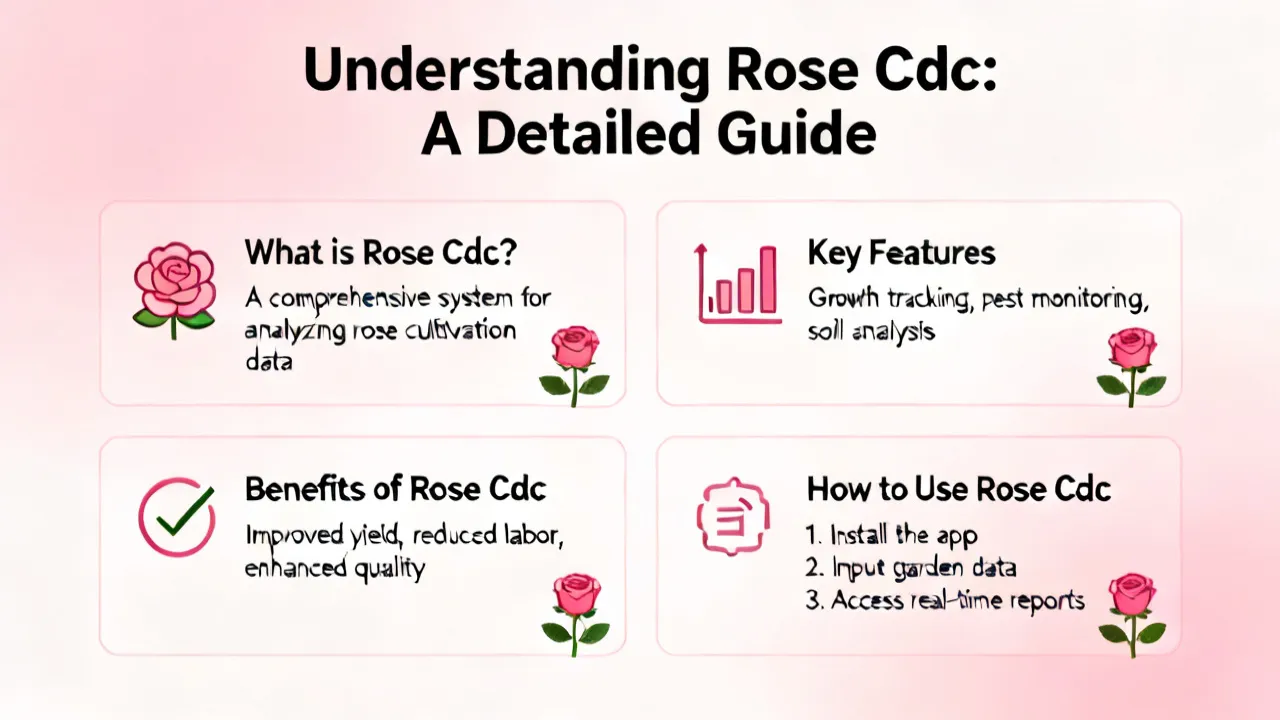
Understanding Rose Cdc: A Comprehensive Guide
This article provides an in-depth exploration of Rose Cdc, a term rapidly gaining attention in specific industries. Our discussion delves into the significance and application of Rose Cdc, its potential impact on various sectors, and expert insights into its future developments. This comprehensive analysis is designed to inform readers about the multifaceted aspects of Rose Cdc, its current applications, and potential advancements.

Understanding Compliance and AML Strategies
This article delves into the intricate realm of Compliance and Anti-Money Laundering (AML) strategies, highlighting their significance in the corporate world. Compliance AML refers to the organizational adherence to legal standards and regulations to deter financial crimes, ensuring transparent and ethical financial practices. This comprehensive guide examines these strategies' complexities and their pivotal role in safeguarding economic integrity.

Mastering Inbound B2B Strategies
The foundation of successful B2B strategies often lies in the effective implementation of inbound marketing techniques. In today's globally connected business environment, inbound B2B strategies have become critical for companies seeking to engage target audiences, optimize lead generation, and establish long-lasting partnerships. Understanding these strategies is essential for companies aiming to thrive in competitive markets.

Exploring B2B MBA Opportunities
Dive into the dynamic world of B2B MBA programs, designed for professionals seeking to enhance their strategic and management skills in a business-to-business context. This comprehensive guide discusses the significance of B2B MBAs in today's market, highlighting how these programs equip leaders with the expertise to navigate complex B2B relationships and drive business success.

Understanding Whitewater Regenerative Blowers
Whitewater Regenerative Blowers are essential in various industrial applications for their efficiency in moving air and gases. These blowers are known for their durability and ability to operate continuously, making them a preferred choice for industries ranging from wastewater treatment to aquaculture. This article explores their features, benefits, and applications, offering readers a comprehensive understanding of their importance in modern industry.

Mastering Employee Retention Strategies
Employee retention has become a critical aspect of organizational success, particularly in the dynamic landscape of 2020. As businesses strive to maintain a stable and productive workforce, understanding effective retention strategies is essential. This article delves into key methods for enhancing employee satisfaction and retention, offering a comprehensive guide for HR professionals and business leaders alike.
