Promobe helps businesses structure promotions that feel timely, measurable, and trustworthy. This guide explains promotion mechanics from an objective standpoint—covering messaging, pricing integrity, supplier coordination, and compliance considerations—so readers can evaluate offers with clarity. It also outlines practical steps, conditions, and an expert perspective on sustainable promotion performance.
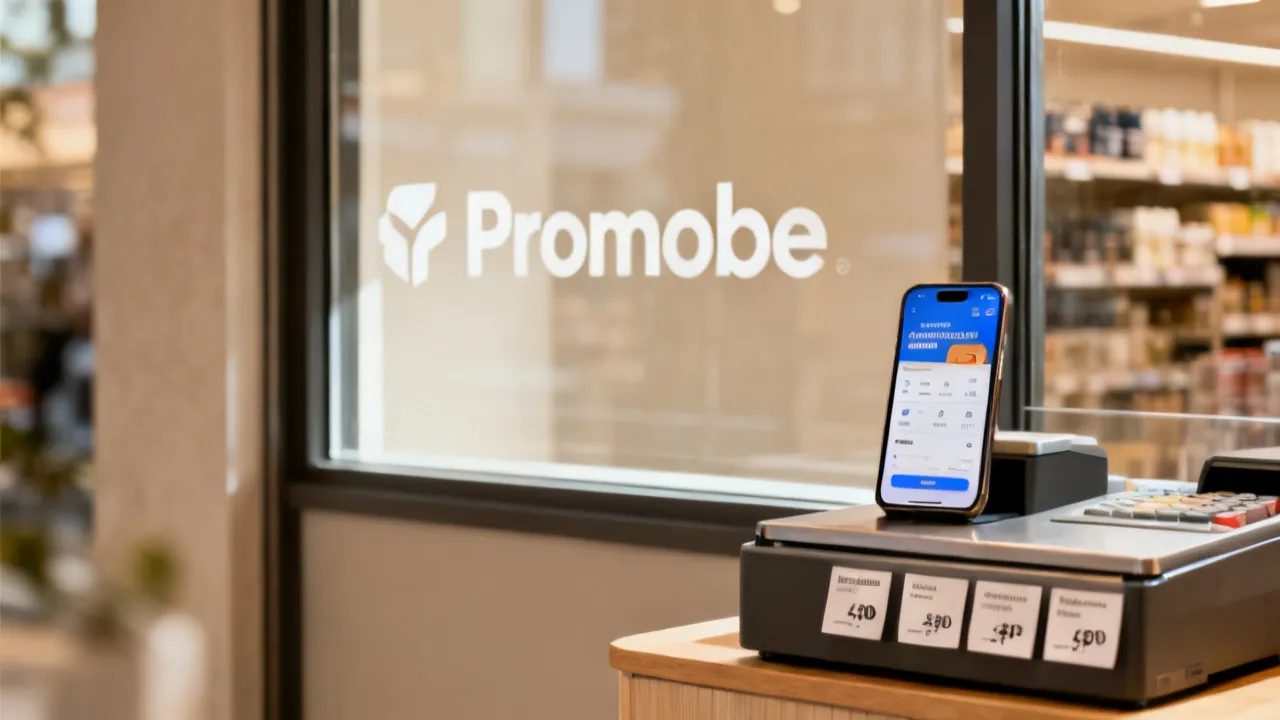
Promobe is best understood as a structured approach to planning and communicating promotions that deliberately balance customer appeal with operational control. Rather than treating a promotion as a single announcement—such as a banner, a flyer, or a discount code—an expert-led view frames a promotion as a chain of decisions and constraints. Those decisions include selecting the offer boundaries, aligning pricing with margin realities, coordinating product availability through suppliers and internal inventory processes, and confirming that the marketing message matches what customers will actually receive at checkout.
In practical terms, a Promobe mindset forces teams to stop relying on “hope-based” execution. Hope-based execution is when a company assumes that because the deal looks attractive online or in a press release, the rest of the system will automatically support it. Promotion operations rarely work that way. Eligibility rules that are clear in a campaign brief may be applied differently in-store. Inventory that looks available in a dashboard may be reserved for other channels. Staff schedules may not match the expected demand spike. And even when the discount is configured correctly, edge cases—like mixed carts, partial returns, substitutions, or multi-store fulfillment—can still break the customer experience.
From a professional standpoint, the primary objective is value clarity. Value clarity means customers can confidently answer questions such as: “Is this deal real for me?” “What exactly am I getting?” “When does it end?” “What does it cost after any conditions?” “Will it work when I check out?” and “Where can I get it and how quickly?” When promotions are clear and consistent, they reduce friction, improve conversion quality (not just conversion volume), and protect brand trust—especially when customers compare options across channels such as online, mobile app, nearby store locations, marketplaces, or delivery partners.
In other words, a good Promobe strategy is less about loud discounts and more about disciplined offer governance: correct pricing, accurate eligibility rules, and reliable fulfillment. It treats promotional “value” not as an abstract headline number but as an end-to-end outcome that must be delivered reliably.
Promotion performance often disappoints when teams focus only on campaign visibility and ignore the underlying constraints that determine whether the offer can be delivered. Consider what typically goes wrong in real environments:
Industry practitioners generally emphasize that promotions should be designed around operational feasibility. That includes supplier confirmations, product availability, fulfillment timelines, staff training for cashier or sales associates, and a documented plan for exceptions. “Exceptions” are not a minor detail. They are where reputational damage often occurs. Customers remember not only that a deal existed but also how it behaved when things were imperfect (e.g., a product in the bundle was temporarily out of stock, or a customer needed to make a partial return).
Promotion integrity matters because the customer’s perceived value is shaped by both the outcome and the process. A customer might initially be attracted by a discount, but if the redemption experience is frustrating, the net value perception can be negative. That impacts repeat purchase behavior, loyalty program sentiment, and long-term brand equity.
Promotion integrity also matters internally. When promotions are poorly governed, they create hidden costs: reconciliation work between marketing and finance, manual override requests, refund disputes, and additional warehousing or expedited shipping to correct shortages. A Promobe approach treats these costs as preventable by design, not as acceptable operating noise.
At its core, a Promobe framework aims to answer four questions, but with rigorous precision:
These questions are consistent across sectors—retail, consumer services, e-commerce, and B2B distribution—although the specific implementation details vary. A grocery promotion requires different operational steps than a telecom plan, but both must define eligibility, conditions, and fulfillment mechanisms. A service promotion (such as discounted appointments) requires scheduling logic and resource planning, just as a retail deal requires inventory allocation and staff readiness.
What changes by sector is the definition of “fulfillment.” In retail, fulfillment is picking, packing, shipping, or storing for pickup. In services, fulfillment is appointment scheduling and resource allocation. In B2B, fulfillment may involve lead times, order processing capacity, installation schedules, or reseller channel requirements. Regardless of the sector, the mechanism must be built so that what the marketing team promises is what the operations team delivers.
Importantly, a Promobe framework isn’t only a checklist. It is also a governance approach. Governance means you can make changes safely. If you have a promotion system that is designed for clarity, you can update offer terms, adjust inventory allocations, or modify staffing plans without breaking the customer experience or creating confusion across channels.
While exact price points depend on the store, product category, and current inventory, the pricing philosophy behind Promobe is universal: customers must be able to understand the deal without ambiguity. In credible promotion governance, pricing includes both the number itself and the logic behind how that number is calculated.
Customers don’t evaluate promotions only on “how low” a price is. They evaluate promotions on whether the deal feels fair, predictable, and easy. Pricing integrity supports that evaluation.
In a Promobe approach, pricing integrity typically includes:
From an expert lens, pricing integrity is not merely ethical—it is operational. Misapplied discounts create reconciliation work, disputes, chargebacks, refunds, and potential regulatory risk depending on jurisdiction. Even when formal penalties do not occur, the “soft cost” of eroded trust is real. Customers who encounter incorrect pricing twice are far less likely to try another promotion from the same brand.
Pricing integrity also protects your internal decision-making. If the baseline price assumptions are unclear, it becomes hard to assess whether the promotion was truly profitable, whether the discount exceeded expected demand elasticity, or whether the campaign inadvertently trained customers to wait for promotions rather than buying at regular price.
In a well-governed promotion environment, pricing is treated as a configuration with an audit trail. That audit trail matters because it enables debugging, compliance checks, and continuous improvement.
Promotions often fail not because marketing was wrong about customer interest, but because supply cannot keep up with demand spikes. A mature Promobe process treats supply chain coordination as a first-class requirement rather than a background task.
Supplier coordination in a Promobe approach typically includes:
When teams communicate clearly with suppliers, they can prevent “phantom availability.” Phantom availability is the situation where marketing and inventory dashboards suggest stock exists, but the warehouse cannot actually fulfill the demand once orders are aggregated across channels. This usually happens when inventory visibility is not aligned with allocation rules, or when replenishment assumptions are incorrect.
Supplier coordination should also consider operational constraints inside the organization. For example:
A Promobe framework builds these constraints into the offer design. That means the offer duration, the quantity allocated, and the substitution rules are chosen with operational capacity in mind. The goal is to avoid the “marketing-led demand without supply-led readiness” scenario.
Because the prompt does not specify a city or country for the phrase “near me,” this guide uses a “nearby”-oriented framing. In real consumer behavior, people often evaluate promotions by considering how quickly they can obtain the product or service in their local area. That evaluation changes how terms should be communicated and how fulfillment promises should be structured.
For example, nearby-focused consumers frequently ask:
In a Promobe-style promotion, localization is not only about language translation or store signage. It is about ensuring the operational reality matches the local customer expectation.
In practice, localization affects:
In many markets, the localized approach aligns with how consumers compare options: “Can I get it today?” “Is the offer truly valid for my situation?” “Will it work at checkout at my nearest location?” “What happens if the first choice SKU is out of stock?” A robust Promobe strategy answers these questions before customers ask.
Localization also affects analytics and measurement. If your promotion is localized, the data should be analyzed by region or store cluster. A deal that performs well in one area may fail in another due to inventory allocation, local customer behavior, or differences in how staff apply eligibility rules.
Finally, localization affects customer sentiment during issues. If a customer in one area encounters a frequent out-of-stock situation, they may associate that negative experience with the brand overall. Promobe reduces that risk by matching allocation and fulfillment rules to local demand patterns.
When assessing whether a promotion is well constructed, industry specialists often review the offer using a structured checklist. The point is to evaluate the promotion as an integrated system, not as a creative idea or a discount number.
Below is an evaluation checklist you can use for any Promobe-style offer:
This checklist is especially relevant when promotions include multiple SKUs, conditional pricing, or supplier-dependent products. Multi-SKU promotions amplify risk because each SKU can have different inventory realities, different availability across stores, and different handling constraints. If the bundle is advertised as “all items included,” the operational team must guarantee inclusion or define how substitutions are offered.
Specialist reviewers often add deeper questions depending on the offer type:
Those additional questions reflect the operational reality of promotion delivery. A promotion is ultimately judged by customers at the moment of transaction and fulfillment—not by the attractiveness of a headline.
Even well-funded campaigns can underperform due to predictable issues. These issues are predictable because they come from common failure modes: ambiguous language, misaligned systems, or lack of operational readiness. A Promobe-style approach helps address these failure modes early, before they reach customers.
Typical pitfalls include:
A Promobe-style promotion design process treats these not as “afterthoughts,” but as elements that must be validated early. That means clarity is tested, systems are QA’d, inventory allocations are confirmed, and staffing is aligned with expected customer volume.
Another pitfall is missing operational “translation” between teams. Marketing may interpret “deal is live” as a creative launch, while operations interprets “deal is live” as system configuration and inventory allocation being ready end-to-end. A Promobe framework closes that translation gap by defining a promotion as a system with explicit dependencies.
Finally, many campaigns fail because they do not define escalation paths. If a promotion begins to behave unexpectedly—like unusually high returns or checkout failures—teams need a pre-planned response. Without escalation, organizations react slowly, and the customer experience degrades while the campaign continues.
Below is a structured supplement presented as a comparison-style guide. It is not a claim about any single provider; it summarizes widely used industry practices. The “source basis” refers to established guidance from recognized bodies such as consumer protection frameworks and common retail compliance principles, plus general best practices in accounting governance and retail analytics. Because jurisdictions and industry requirements vary, always validate local legal and policy requirements with qualified advisors.
| Element | Source basis (objective) | Step-by-step application | Conditions / requirements |
|---|---|---|---|
| Offer clarity (terms and eligibility) | Consumer protection and fair marketing guidance commonly emphasizes clear disclosure | 1) Draft eligibility rules 2) Write customer-facing wording 3) Validate with POS rules 4) Review landing page and in-store signage alignment | Terms must be unambiguous; end date and eligibility should be consistently displayed across channels |
| Pricing integrity (comparison and application) | Accounting and retail governance practices emphasize traceable pricing logic | 1) Define internal pricing baseline 2) Configure POS discount triggers 3) QA checkout outcomes 4) Maintain an audit trail of promo parameters | Checkout must apply the offer exactly as advertised; reconciliation procedures should exist for edge cases |
| Supplier coordination (availability planning) | Operations and supply chain top practices for demand spikes and allocation planning | 1) Confirm reserved inventory 2) Set replenishment schedule 3) Define substitution policy 4) Establish escalation contacts | Promotion duration should match supply reality; exceptions must be pre-approved to avoid inconsistent customer experiences |
| Compliance and returns/exchanges | Jurisdictional consumer rights frameworks and return policy norms | 1) Map return rules for promo purchases 2) Train frontline staff 3) Prepare customer service scripts 4) Test edge cases in your system | Return and exchange handling must be consistent; documentation must be accessible for customer support |
| Measurement (impact beyond redemption) | Marketing analytics standards in retail emphasize conversion quality and repeat behavior | 1) Define success metrics (e.g., redemption, incremental revenue) 2) Track cohorts 3) Compare against control groups when possible 4) Post-mortem analysis | Attribution should be carefully designed to avoid misleading conclusions |
To strengthen the governance approach, organizations can add an additional “audit layer” that checks how each element interacts with the others. For example: if you revise eligibility rules mid-campaign, do you also update the staff scripts, POS configuration, landing page terms, and customer service documentation? A Promobe system treats these updates as linked operations so that the promotion remains coherent.
Although promotion results vary widely due to industry, product category, and execution quality, research and industry analysis consistently highlight two themes relevant to Promobe:
For measurement-related discussion, marketing and retail measurement approaches are frequently documented in resources such as:
Because specific performance claims about “Promobe” as a singular system would require verified datasets and clearly defined measurement methods, this guide avoids unverifiable figures. Instead, it provides a framework that readers can apply and evaluate with their own operational data, promotion history, and customer feedback signals.
In many organizations, the most reliable evidence for a promotion approach comes from internal experiments and structured post-mortems. A Promobe framework encourages this by requiring QA, instrumentation, and careful analysis. Rather than arguing that a framework is “better,” teams can test whether it improves redemption quality, reduces customer support contacts, stabilizes inventory depletion rates, and improves retention after redemption.
Reliable evidence is not only about numbers. Customer feedback—such as comments in customer support tickets, surveys, or review platforms—often reveals operational inconsistencies that are not obvious in dashboards. A Promobe approach treats those signals as data and uses them to refine future offers.
To translate the concepts into action, consider the following staged workflow—designed for teams that need repeatable outcomes across multiple promotions. The steps below assume you want promotion governance that protects customer trust and operational feasibility.
Decide what you are optimizing for: incremental revenue, customer acquisition, inventory clearance, retention, or reducing excess stock. A Promobe plan works best when the objective determines the eligibility rules and pricing structure. If the objective is acquisition, you might use a new-customer offer with strict eligibility. If the objective is clearance, you might define SKU-limited eligibility or time-boxed depletion windows.
Defining the objective also shapes measurement. “Acquisition” and “retention” require different success metrics. If you ignore this, teams may chase redemption volume without ensuring that customers become genuinely valuable.
Before you finalize the creative, confirm supply and operational limitations. Feasibility mapping should include:
Feasibility mapping prevents the common failure mode where the offer looks good but cannot be delivered at the claimed scale. It also helps define boundaries such as “while supplies last” or inventory caps—when those boundaries are appropriate and communicated clearly.
Craft eligibility and conditions in plain terms, then test them internally with edge cases. Customer language discipline means:
Edge case testing should include scenarios such as partial orders, mixed-cart eligibility, multiple-store scenarios, returns on promo-eligible items, and substitutions in bundles. The goal is to ensure the written terms match actual system behavior.
Ensure the promised experience can be delivered. This alignment includes confirming reserved quantities, receiving schedules, picking and packing workflows, and any substitution rule definitions.
If there is any substitution rule, define it early and communicate it clearly to customer support. Substitution rules should be governed so that substitutions are predictable and consistent. For example, if an out-of-stock SKU is substituted with “next closest value,” customers should understand whether the substitution meets quality expectations and whether the price remains correct.
Also align the operational teams on exception-handling. If a supplier short-allocates inventory, who decides whether the promotion is adjusted, paused, or allowed to continue with substitutions? A Promobe framework predefines decision authority and escalation steps.
Validate that the discount or benefit is applied correctly at every relevant touchpoint: mobile checkout, online carts, in-store POS, and any app-based redemption method.
QA should include:
This is where Promobe earns its reliability. The customer journey can only be as strong as the checkout application logic.
Track redemption in real time and watch operational indicators. If the offer starts producing unexpected behavior—such as unusually high returns, repeated checkout errors, or inventory depletion—apply the escalation plan defined during planning.
Monitoring should include both customer-facing metrics and operational metrics:
Escalation procedures might include temporarily pausing redemption in specific channels, adjusting inventory caps, or updating staff guidance if eligibility rules are being misunderstood. The earlier you detect issues, the more you can preserve trust.
Evaluate performance not only by redemption volume, but also by margin impact, customer satisfaction indicators, and any service issues that increased operational costs. Post-campaign review should produce learnings that can be reused.
A strong improvement loop includes:
Finally, document what worked and what didn’t in a way that future teams can apply immediately. Over time, this documentation becomes your organization’s internal “promotion playbook,” enabling faster and more reliable campaign creation.
Promobe is used to structure and manage promotions so the offer terms, pricing application, eligibility logic, and supplier fulfillment align end-to-end. It improves clarity, reduces mismatches across channels, and lowers operational risk by ensuring the customer-facing promise matches the actual transactional experience.
Use traceable internal pricing logic and configure POS rules to match the customer-facing message. Maintain an audit trail of baseline pricing assumptions and promo parameters. Then validate through checkout QA so the applied discount matches what customers see and what the terms describe.
Yes, especially when demand could exceed typical volumes or when the promotion’s SKU assortment depends on supplier allocation. Supplier confirmation helps ensure reserved inventory levels, lead times, and contingency plans are ready before the campaign begins.
Yes. “Nearby” positioning typically focuses on convenience and availability in local stores or on local service scheduling rather than on naming a single city. The key requirement is that eligibility and availability rules are clearly communicated for local fulfillment—meaning customers near specific store clusters or service regions can redeem without surprise.
Include eligibility rules, the promotional period cutoff, limitations (such as product categories or membership requirements), and return/exchange handling for promo purchases. If substitutions are possible, define how they work. If stacking restrictions exist, clarify them.
Track both redemption and the quality of outcomes: incremental revenue, margin impact, repeat behavior where possible, and customer service indicators. Where feasible, compare against baseline periods or control groups. Also analyze redemption quality and refund/return rates to detect hidden costs.
The most common issues arise from unclear terms, inconsistent pricing display across channels, and misapplied eligibility at checkout. Mitigate these via QA testing, consistent content management across channels, documented promotion parameters, and staff/customer service documentation that reflects system behavior.
A rigorous Promobe approach treats promotions as an integrated system. That means the marketing message, pricing rules, supplier readiness, inventory allocation, fulfillment workflows, and customer support processes must all operate together. When those elements align, promotions can deliver measurable value without sacrificing trust.
In many organizations, the biggest improvement opportunity is not “making promotions louder.” It is making them more reliable. Customers are increasingly skeptical when promotions behave inconsistently. They also have less patience for friction when they are making time-sensitive decisions—especially when they think of the deal as something “near me” that they should be able to access quickly.
If you build your next campaign around disciplined offer governance—clear terms, confirmed availability, accurate pricing application, and evidence-based measurement—you position your business to improve both short-term outcomes and long-term good customer confidence.
To reinforce this perspective, remember that a promotion is judged at the moment it touches reality: checkout calculations, inventory truth, pickup readiness, service scheduling, and return handling. A Promobe mindset ensures that the promotional “value” is not only advertised, but delivered.
Striking the Perfect Balance: Navigating Premiums and Out-of-Pocket Expenses in Senior Insurance Plans

Explore the Tranquil Bliss of Idyllic Rural Retreats

How to Make Lasting Memories at Disneyland Attractions

Affordable Phones and Plans for Seniors

Affordable Full Mouth Dental Implants Near You

Unlock the Top Kept Secrets to Finding Your Ideal Dentist for Flawless Dental Implant Results!

Discovering Springdale Estates

Unveiling RS Sul Telecom Services

The Guide to Car Trading


Exploring the Retipster Club Advantage
The Retipster Club is an invaluable resource for real estate investors, offering a plethora of insights, tools, and community support to boost investing endeavors. Aimed at helping both novice and seasoned investors, the club provides educational materials, success stories, and expert strategies tailored to the ever-evolving real estate market landscape. Dive into this analysis to understand the manifold benefits the Retipster Club offers to enhance real estate success.

Navigating the Retipster Club
This article delves into the unique offerings of the Retipster Club, a community designed for individuals interested in real estate investment, providing educational resources and networking opportunities. Discover how the club supports its members through expert advice, comprehensive guides, and a robust community platform, all tailored to foster insightful and profitable investment strategies.

Unveiling Grunig & Hunt's PR Models
This article explores the seminal work of Grunig & Hunt in developing models of public relations. The Grunig & Hunt models, fundamental to understanding PR theory, provide insight into the strategic approaches and methodologies utilized in the field. Each model offers a distinctive perspective on communication and engagement strategies, relevant to both academic discussions and practical applications.
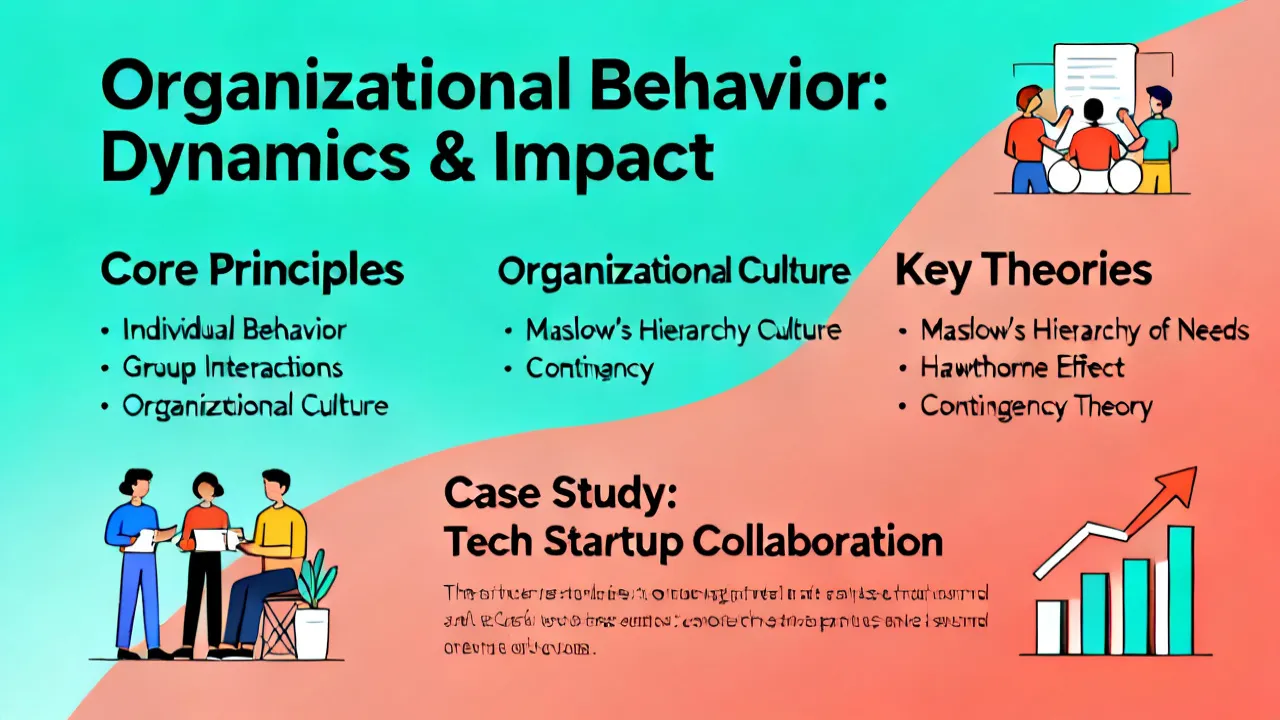
Understanding Organisational Behaviour Slideshare
This article delves into the significance of Organisational Behaviour Slideshare for both educators and professionals. Organisational Behavior is a field that examines the impact individuals, groups, and structures have on behavior within organizations, aiming to improve an organization's effectiveness. With Slideshare's platform, these insights are easily shared, promoting a collaborative learning environment.
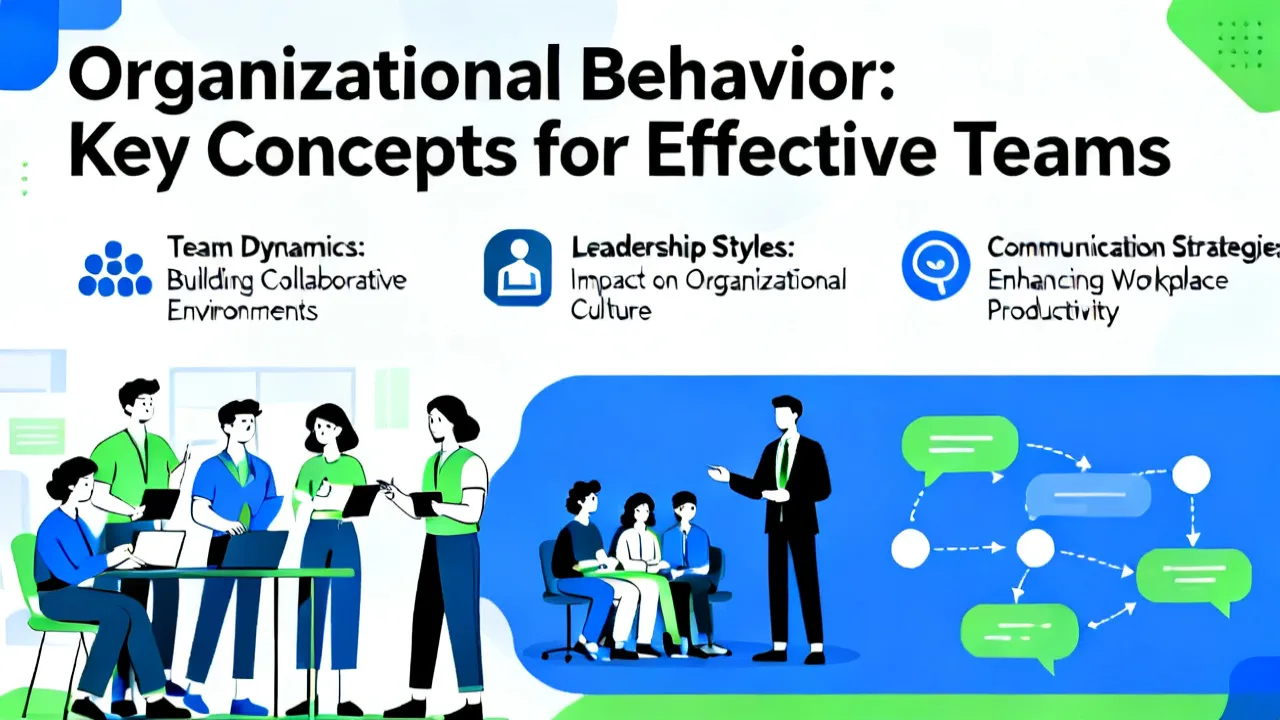
Mastering Organisational Behaviour Dynamics
This guide explores the intricacies of Organisational Behaviour through Slideshare resources. It delves into the study of how people act within groups and organizations, offering insights into the psychological and sociological factors that influence workplace dynamics. This comprehensive analysis examines theories and practices to enhance understanding and improve corporate environments, supported with FAQs and expert perspectives.
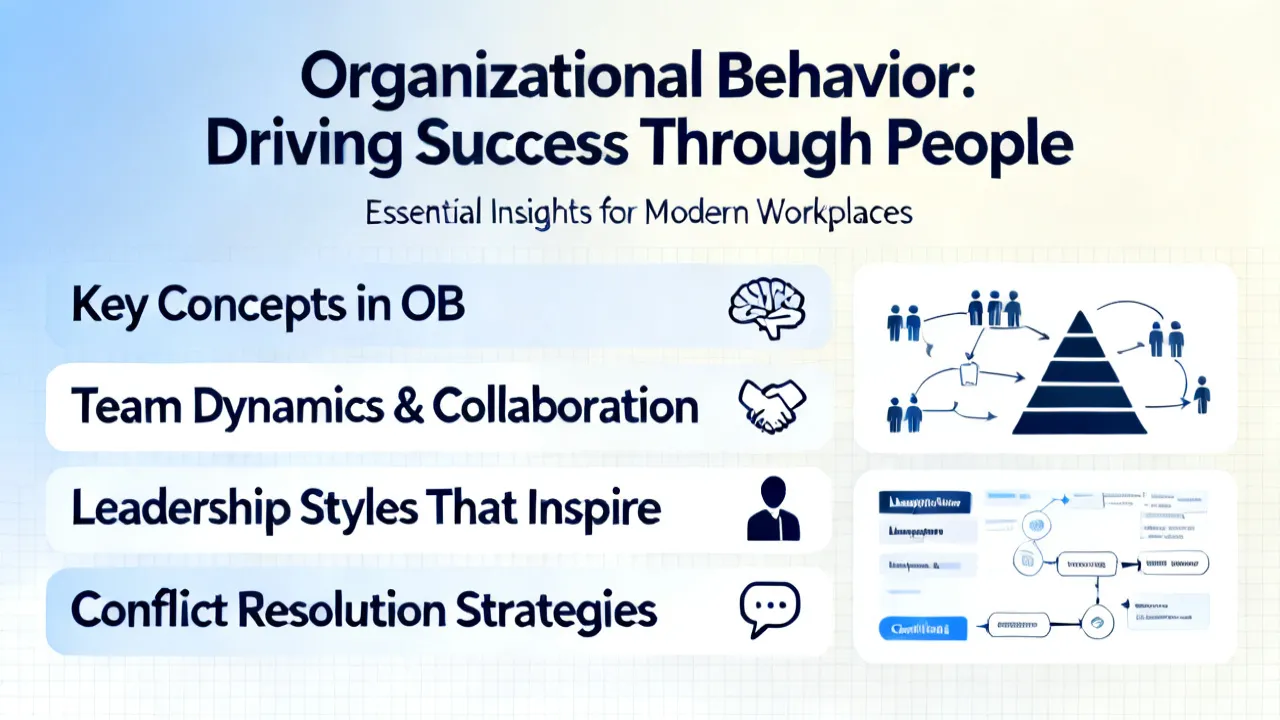
Mastering Organizational Behavior
This comprehensive guide explores the significance of organizational behavior within corporate settings, providing a deep dive into theories and practical applications as depicted on popular platforms like Slideshare. Organizational behavior studies the impact of individuals, groups, and structures on behavior within organizations to improve an organization's effectiveness.