This guide explains Makerphone 2.0 alongside today’s government-supported phone programs, helping readers understand eligibility, application steps, and typical plan features. “Makerphone 2.0” is often discussed in the context of connected devices and modern mobile experiences, while Lifeline and similar initiatives are designed to support qualifying households through carrier-offered service options.
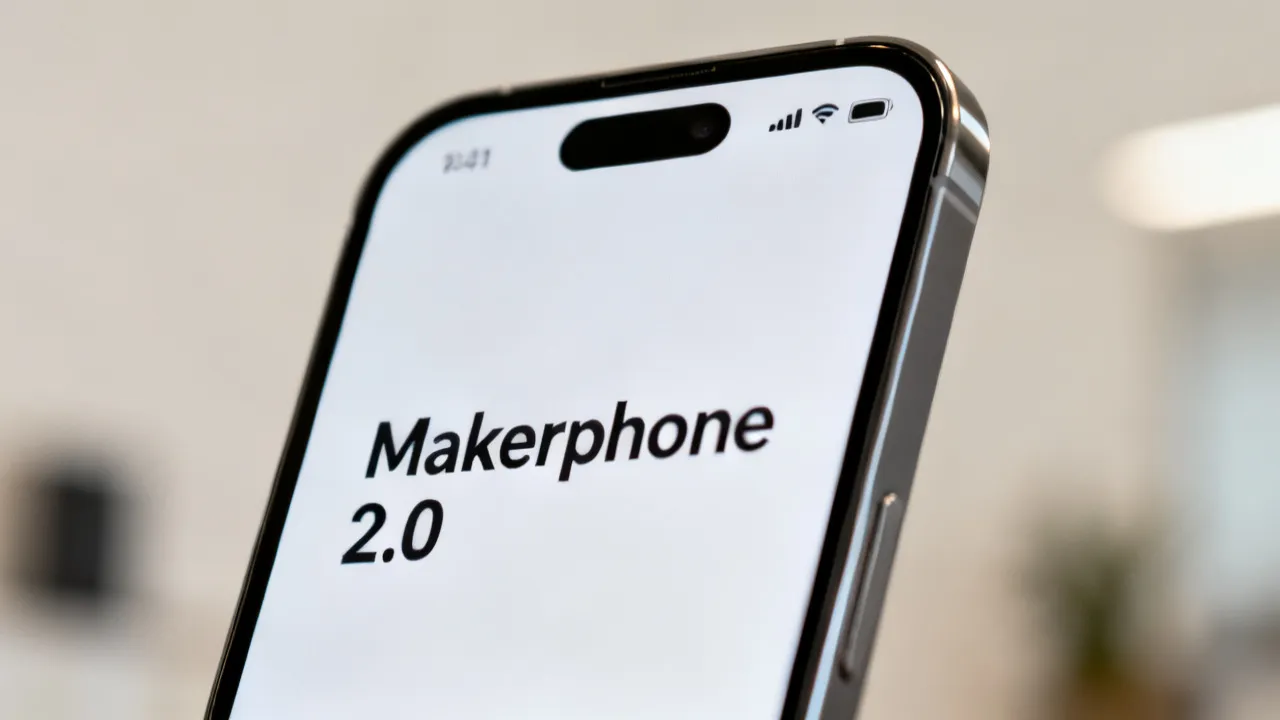
If you’re researching Makerphone 2.0, it usually signals a focus on a more connected, modern approach to everyday mobile access—whether that’s improved device functionality, user experience, or the way services are packaged for real-world use. In practical terms, many consumers exploring device platforms also need a reliable monthly service plan that matches their budget and coverage needs. That is where government-supported phone initiatives (commonly associated with Lifeline and the Affordable Connectivity Program, ACP, depending on eligibility) can become part of the decision—because the “top” setup often combines a capable device with an affordable, stable network plan.
From an industry perspective, there’s a key strategic point: device capability and service affordability are two separate variables. Even if a program provides a handset, users still need to confirm coverage, data speeds/allowances, device compatibility, and whether any optional upgrades carry additional charges. Conversely, a consumer may bring their own device (BYOD) and use a qualifying plan without needing the program’s phone.
Below is a high-level, side-by-side view of well-known participating providers that administer government-supported wireless offerings. Note that “additional costs” typically appear only when customers choose optional upgrades (for example, a premium handset, higher data tiers, or services outside the core allowance).
| Provider (Official Plan Page) | What’s Typically Included | Possible Additional Package Costs |
|---|---|---|
| SafeLink Wireless | Government-supported wireless service plans, often including unlimited talk/text and data allowances (plan specifics vary). | Optional upgrades such as premium device options or additional data/broadband add-ons may involve charges. |
| Assurance Wireless | Government-supported wireless service plans, typically pairing an eligible handset option with unlimited talk/text and data allowances (with plan differences). | Optional enhancements like higher high-speed data amounts or add-on services may have extra costs. |
| StandUp Wireless | Government-supported plans typically offering unlimited talk/text and data allowances; may include a qualifying handset or BYOD option. | Optional premium upgrades (for example, newer models) or extra data are generally paid add-ons. |
| Access Wireless | Wireless service plans usually featuring unlimited voice/text and limited high-speed data under eligible government programs, subject to plan terms. | Data boosts, device upgrades, or optional services may involve additional fees. |
| True Wireless | Government-supported wireless offerings, commonly including qualifying handset options plus voice/data service parameters. | Optional upgrades to better devices and/or extra data can involve additional charges. |
Source of the information in the table:
SafeLink Wireless: https://www.safelinkwireless.com
Assurance Wireless: https://www.assurancewireless.com
StandUp Wireless: https://standupwireless.com/
Access Wireless: https://www.accesswireless.com
True Wireless: https://www.gotruewireless.com/
(The links above are provided as the origin of the table’s summary information.)
Eligibility requirements are usually standardized by the underlying federal program design, while providers manage enrollment through verification processes and may have state-specific nuances. In practice, very applicants fall into one of two broad categories: (1) low-income qualification based on income guidelines, or (2) participation in qualifying assistance programs.
When people search for “government phone” options, they often expect one universal set of criteria. In reality, the core logic is similar across programs, but the details can shift—like the exact income threshold, which assistance programs count, and how providers verify identity. That means two people can both be “eligible in principle,” yet have different experiences when they apply. One may be verified quickly through a national database check; another may need to upload documentation due to mismatches, missing records, or outdated program enrollment.
Even when applicants believe they qualify, outcomes can be affected by administrative details. Understanding these pitfalls can save time and reduce frustration. Some of the most common issues include:
None of these are “moral” failures; they’re procedural friction. But because the programs are designed to be audited and verified, it’s crucial to treat paperwork as part of the process, not an afterthought. For someone interested in Makerphone 2.0, this paperwork readiness is an invisible “ingredient” that often determines whether the device experience becomes attainable or stalled.
Although each provider’s workflow can vary slightly, the process tends to follow a recognizable pattern. Below is a practical, step-by-step guide based on how these programs are commonly administered through participating carriers.
From a user-experience viewpoint, the most “stressful” portion for many applicants is the transition from eligibility approval to actual device onboarding (SIM activation, network registration, number porting). If you’re trying to align a device direction like Makerphone 2.0 with government plan affordability, you should plan for that onboarding time. Have your current device information handy and keep your documentation available during the activation period.
Because many readers want clarity fast, here are common requirements you should expect to encounter when applying for government-supported phone service:
It’s also helpful to remember that “requirements” are not only about initial approval. Recertification rules, data line audits, or periodic verification updates can determine whether the benefit continues smoothly. If you’re selecting a Makerphone 2.0-style device and you’re counting on service stability for work, school, or health communications, it’s wise to treat recertification reminders like bill pay: something you don’t want to miss.
People searching for Makerphone 2.0 are often trying to solve a real-world problem: they want a device experience that supports modern communication habits—messaging, navigation, basic app usage, and secure access to services—without paying premium rates that exceed their budget. Government-supported phone programs typically address the service affordability piece, while device selection addresses the capability and usability piece.
In professional terms, consider Makerphone 2.0 as a “device and experience positioning” concept rather than a guarantee of service coverage or pricing. Even if a consumer starts with a device platform concept, they should then evaluate three network-and-plans dimensions:
In consumer telecom, there’s a common pattern: people focus on one side of the problem and then get surprised by the other. Device-first buyers discover the data model doesn’t match their habits. Plan-first buyers discover the “included phone” is too limited for the apps they need. “Makerphone 2.0” thinking can reduce that mismatch because it treats the phone experience as a system: device capability + network performance + onboarding reliability + ongoing affordability.
To make this more practical, imagine three typical scenarios:
These scenarios aren’t “marketing.” They are real user journeys. Treating your phone like a tool you operate day after day helps you pick the right plan and avoid friction.
Even with government-supported plans, you still live inside the laws of wireless networking: signal availability, carrier load, and data prioritization. A plan may be affordable, but it’s only useful if it’s usable where you actually spend time.
Before you enroll, try to verify the following:
If you want a Makerphone 2.0 experience—smooth messaging, consistent navigation, reliable access to online forms—network stability matters nearly as much as the handset model.
One of the biggest surprises for new government-plan customers is how they interpret data. Many plans include a set amount of high-speed data, after which speeds may be reduced (throttled). The practical effect is not always immediate. Sometimes the difference shows up only after you cross the threshold—or only on specific apps.
Here’s how throttling can change typical app use:
Makerphone 2.0 thinking doesn’t require you to avoid data-heavy apps. It encourages you to understand how they perform under the plan’s data structure, so you can schedule updates at appropriate times, use Wi-Fi when available, and decide whether a data boost is worth the cost.
From an industry-expert standpoint, the very common mistake is focusing on a single factor—either the device name or the plan badge—without validating the plan’s actual performance in daily usage.
There’s also a second mistake that happens when people assume “government phone” means one consistent experience. In reality, there’s variation across providers: different handset models, different data limits, different device activation rules, and different optional upgrade menus. Two people can both enroll under “government supported” offerings and end up with noticeably different day-to-day experiences.
Experts generally recommend an approach that combines:
To make this even more concrete, you can treat it like a checklist you verify before the transaction is final. If you can’t verify a point—like hotspot rules or whether BYOD is allowed—you should consider it an unknown risk. Unknown risks tend to become expensive in telecom because you may have to replace devices or pay for additional services to solve issues.
While the providers differ in branding and customer interfaces, they generally operate with a shared goal: enable eligible households to access affordable wireless service. Their differences often show up in handset selection, BYOD availability, and the structure of optional upgrades.
Another factor that can affect the “fit” is how a provider handles customer support during activation. Even when plans are equivalent, activation friction can change customer satisfaction dramatically. A customer who can get online quickly has a different experience than someone who is stuck troubleshooting SIM activation or porting a number.
SafeLink Wireless is commonly associated with government-supported service options that may include unlimited talk/text and data allowances. Some customers may receive a qualifying handset option; others may bring their own device if supported. Premium device upgrades and additional data are typically offered as optional paid enhancements.
When evaluating SafeLink, focus on the practical items that affect a Makerphone 2.0 experience: do the plan’s data allowances match your app usage, does the carrier coverage work where you live, and can the device you want be activated using the provider’s BYOD policy.
Assurance Wireless is another major provider participating in government-supported wireless programs. Typical offerings include an eligible handset option (frequently Android-based), unlimited talk/text, and data allowances subject to the plan terms. Optional upgrades like higher data tiers or international calling features may carry additional costs.
In many cases, the “eligible handset option” is designed to provide a functional baseline smartphone experience. If your goal is more aligned with Makerphone 2.0—meaning not just basic calling, but also modern app experiences—pay attention to the handset’s operating system version and storage. Those features influence app performance and the ability to install updated versions of messaging and security apps.
StandUp Wireless often markets accessible wireless plans that can include unlimited talk/text and data allowances. Customers may be able to select a qualifying phone or use BYOD where permitted. Upgrades to newer or premium devices and extra data are generally offered for a fee.
When you consider StandUp, a key consideration is whether the included offerings align with your needs for daily connectivity: navigation reliability, messaging reliability, and whether you can access essential services in a way that remains consistent even when data is throttled after a threshold.
Access Wireless commonly provides unlimited voice and text with limited high-speed data as part of qualifying program benefits. Providers may also offer optional data boosts and device upgrades for additional charges, depending on eligibility and plan availability.
Access Wireless is often a fit for households seeking a plan that covers the fundamentals—calls, texts, and a usable data tier—without requiring a large monthly budget. But because “limited high-speed data” is a specific feature, you should interpret it correctly. If you rely on data-heavy applications, the optional boost options may be relevant, and you should compare their cost versus the overall monthly plan affordability you need.
True Wireless offers government-supported handset and service options that can support voice and data needs for qualifying households. Customers may qualify based on enrollment in eligible assistance programs or income thresholds, and optional upgrades for better devices or additional data may involve additional fees.
For True Wireless, as with the other providers, the decision should be grounded in what you can verify: handset capability for your day-to-day apps, coverage for your area, and the plan’s data structure. The “Makerphone 2.0” lens can help you ask the right questions—like “Is this handset good enough for the apps I need?” and “Will the plan behave well enough for how I actually use data?”
In consumer conversations, “government phone” is often used as shorthand for a carrier offering under government-supported affordability programs. However, it is not a single standardized product. Instead, it’s a family of plan offerings where the exact service details—like data allowance structure and optional upgrades—are defined by the provider’s plan terms and the customer’s eligibility verification outcome.
This matters because people sometimes compare “government phone” options as if they are interchangeable. They aren’t. Even when unlimited talk and text appear across multiple offerings, data amounts, throttling thresholds, and optional upgrade options can vary. Some plans prioritize certain services differently or restrict certain features like hotspot. Those nuances directly influence whether the experience feels like “modern connectivity” or a “barebones line.”
No. Makerphone 2.0 is top understood as a device/experience concept rather than a specific government program. Government-supported phones are typically administered by carriers through programs such as Lifeline and, in some cases, ACP. To know whether a device works with a qualifying plan, check the provider’s BYOD and compatibility policies.
Often, yes. Many providers support a bring-your-own-device approach for eligible customers, depending on network compatibility and device requirements. Confirm the specific BYOD policy with the provider you choose.
Common inclusions across major participating carriers are unlimited talk and text plus data allowances that may be limited to a high-speed portion with potential throttling after a threshold. Exact allowances depend on the provider and plan.
Typically, core service is provided according to plan rules after eligibility verification. However, optional upgrades—such as premium device selections or additional data—can introduce additional costs. Always review the provider’s plan terms and upgrade pricing before enrolling in extra services.
Very applicants can apply online through the provider’s website. The process generally includes eligibility verification, and in some cases document upload for proof. After approval, you activate the plan and confirm the service allowances.
That can happen due to eligibility mismatch, verification issues, or incomplete documentation. The provider’s official application page and customer support are the top sources for next steps. If you receive a denial or request for additional information, follow the provider instructions carefully.
Processing timelines can vary by provider and verification method (automatic verification versus document review). For the very accurate timing, consult the provider’s application guidance.
Many carriers support number porting during activation. Whether it’s available and how it’s handled depends on the provider’s activation workflow and your service circumstances. Confirm during the activation process.
In very cases, yes—especially for standard messaging, calling, and navigation. However, your results depend on the data allowance and whether video-heavy or bandwidth-intensive uses exceed high-speed data thresholds. Evaluate the plan’s data model for your usage.
Service availability can depend on carrier coverage and the program’s administrative rules. While the eligibility criteria are typically structured around income or qualifying program participation, actual device and plan offerings can also depend on network coverage in your area (referred to here as “nearby”).
To reduce wasted time, verify these points before committing:
Because Makerphone 2.0 implies an emphasis on modern usability, it’s useful to consider what “modern” means for actual phone users. Modernity often includes things like reliable access to messaging services, functioning maps, secure identity management, and the ability to install the apps that help people stay connected to work, school, family, and essential services.
Below are practical device considerations that can matter just as much as the plan:
None of these are solved by a government plan alone. That’s why the device + service combination matters. A plan can be affordable, but if the handset can’t support essential modern apps smoothly, the overall experience will fall short of what someone means by Makerphone 2.0.
Optional upgrades are one of the few “controllable” variables after you confirm eligibility and pick a baseline plan. They can be useful—especially if you have periods of higher usage, like during job searching, exam weeks, or travel.
At the same time, optional upgrades can quietly shift a low-cost plan into a higher-cost monthly burden. The difference between “affordable” and “not affordable anymore” can come down to whether you repeatedly choose add-ons, or only use them when needed.
To keep upgrades from becoming a surprise expense, approach them like this:
When you combine these behaviors with a capable handset, you can produce an experience that feels more like Makerphone 2.0—consistent and modern—rather than a phone that struggles under predictable usage patterns.
Consumers often focus on monthly pricing and the handset selection, but satisfaction can hinge on the “activation and maintenance” period. In telecom, onboarding can be the most challenging time because the phone transitions into a new billing and network environment.
Consider what “support” means in practice:
If you’re using the phone as part of essential life routines—job applications, healthcare reminders, family coordination—then support responsiveness becomes a crucial factor. A slightly more capable handset can matter less than a provider that resolves activation problems quickly and reliably.
If you want to align your device direction with government-supported service affordability, use a pre-enrollment checklist that forces you to validate the key system pieces.
Coverage and network readiness:
Device readiness:
Administrative readiness:
1) The above information comes from online resources, and the data is as of October 2023.
2) This website cannot guarantee that applicants will definitely get a government affordable phone. For specific application requirements and how to obtain it, please refer to the official requirements of the provider. This website will not be updated in real time.
Carrier/provider pages (used as reference for the table summary):
Note: Additional general program eligibility concepts are consistent with how Lifeline/ACP-related verification is typically administered; for authoritative details and current thresholds, consult the official program guidance and each provider’s terms.
Striking the Perfect Balance: Navigating Premiums and Out-of-Pocket Expenses in Senior Insurance Plans

Explore the Tranquil Bliss of Idyllic Rural Retreats

How to Make Lasting Memories at Disneyland Attractions

4rkojvsx Technology: Industry Insights and Buying Guide
Affordable Phones and Plans for Seniors

Affordable Full Mouth Dental Implants Near You

Unlock the Top Kept Secrets to Finding Your Ideal Dentist for Flawless Dental Implant Results!

Discovering Springdale Estates

Unveiling RS Sul Telecom Services

Affordable Phones and Plans for Seniors
Discover the top deals on new phones and plans tailored for seniors, including discounts on 5G technology and unsold models.
Affordable Cell Phones Without Plans
Discover affordable cell phones for sale without plans, exclusive discounts for seniors, and tailored mobile plan options in your area.

Navigating Government Phone Programs
This guide provides an expert analysis of government-supported phone programs for eligible individuals, offering insights into available providers and their services. Affordable phones are often a necessity for individuals under economic constraints, aiding in communication, job searches, and access to emergency services. The article delves into eligibility criteria, application processes, and compares popular service providers in various regions.
Unlocking the Top Cell Phone Deals
Discover unbeatable cell phone discounts, plans, and offers for seniors and iPhone enthusiasts without contracts.
Navigating Affordable Phone Offers
Discover the essential details about government-assisted phone programs aimed at providing budget-friendly devices to eligible individuals. These programs offer complementary mobile phones and services to qualified beneficiaries, ensuring connectivity at minimal expense. This guide breaks down how to access such benefits and what conditions apply.
How to Apply for a Affordable Phone
This guide provides insights on how to apply for a affordable phone through government-sponsored programs. Understanding how these programs operate and their eligibility requirements is essential. These initiatives aim to support individuals in low-income households or those enrolled in specified government assistance programs by providing basic communication tools.
