This guide explains how Cloudpay IE supports business payments and compliance decisions in a structured, risk-aware way. It provides objective background on Cloudpay IE, the typical role of payment service providers, and the practical factors organizations evaluate—such as onboarding requirements, integration considerations, service scope, and operational controls—so readers can assess fit responsibly.
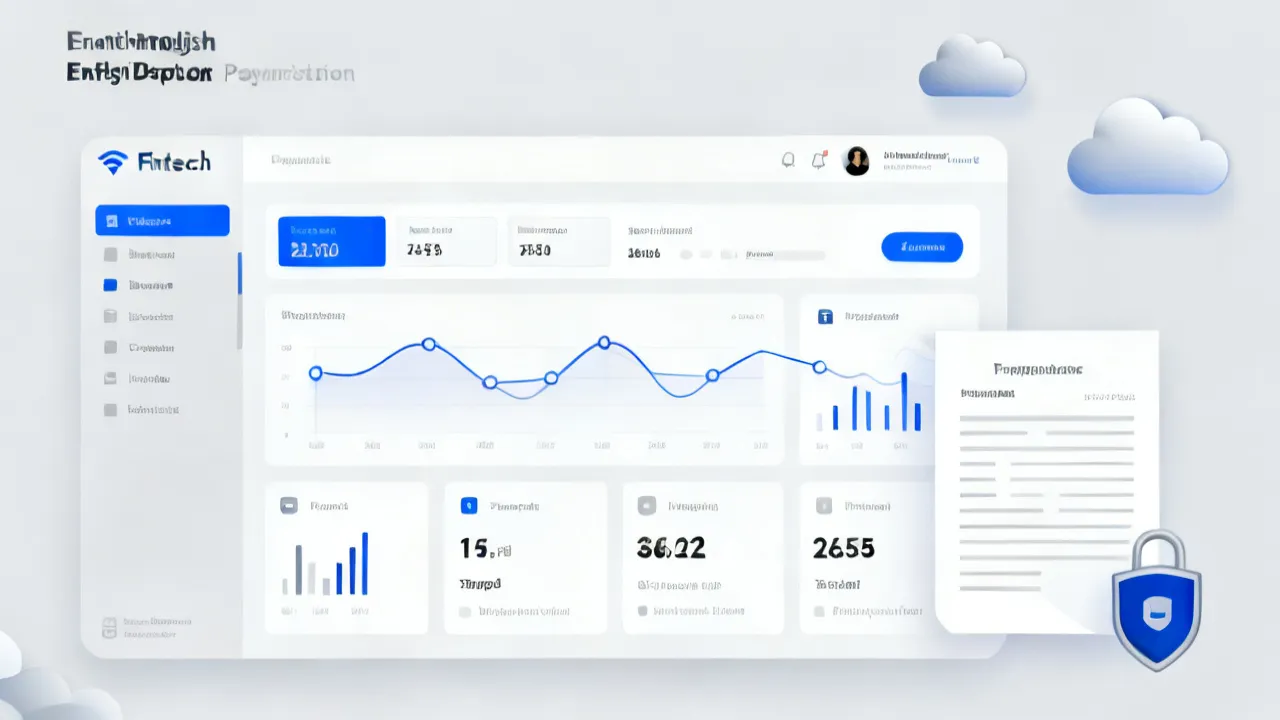
Cloudpay Ie is best understood as a business payments platform that helps organizations manage payment workflows with an emphasis on operational control and compliance readiness. For decision-makers, the most important step is not a “feature list” review, but a disciplined assessment of scope, responsibilities, integration effort, and auditability—especially in cases where payroll-related or vendor payment activity intersects with governance, internal controls, and reporting needs.
When evaluating Cloudpay Ie, focus on: (1) what tasks the platform supports end-to-end, (2) how responsibilities are divided between your organization and the supplier, (3) the conditions required for onboarding and ongoing service, and (4) how operational controls, permissions, and evidence are handled during audits or internal reviews. If you treat the evaluation as a risk-and-process project—rather than a purely technical procurement—you can reduce surprises later, protect month-end close timelines, and improve the quality of evidence available to finance, internal audit, and external auditors.
In practice, this means asking questions that go beyond “Can the platform do X?” and instead asking “Who does X, under what constraints, with what approvals, and what evidence is retained afterward?” This perspective helps you validate that Cloudpay Ie will behave consistently under normal operating conditions as well as during exceptions: failed payments, mismatched invoices, incomplete vendor information, disputes, or urgent manual overrides.
Payments infrastructure has evolved from simple transaction processing into a layered system that combines workflow management, compliance considerations, and data handling. In many organizations, the “payments problem” is not only moving money—it’s coordinating approvals, maintaining documentation, and ensuring that payment activity can be reviewed consistently by finance and governance teams. As organizations scale or as regulatory expectations increase, the risk is that payment processes become fragmented across spreadsheets, email threads, and disconnected tools—creating audit gaps and increasing operational friction.
Cloudpay Ie is commonly considered in this broader context: organizations look for a supplier that can standardize payment operations and improve traceability across teams. An expert approach is to map your current process end-to-end (who initiates, who approves, who reconciles, and who stores records) and then compare that map to what Cloudpay Ie supports operationally. This comparison should include not just “happy path” flows, but also the operational reality of exceptions and governance checks.
It is also helpful to consider where Cloudpay Ie sits relative to your internal systems. For example, a company may already have ERP capabilities for vendor management, and it may have HR/payroll systems that generate payroll-adjacent payment instructions or reimbursements. In such environments, the payments workflow tool needs to integrate cleanly and avoid duplicating logic in inconsistent ways. If the tool’s workflow rules conflict with the ERP’s approval rules—or if data definitions differ—your control environment can weaken even if the tool itself has strong technical safeguards.
Another common driver for adopting platforms like Cloudpay Ie is the need to support consistent reporting. Finance teams often require month-end reconciliation views, payment status reporting, and evidence exports that match the organization’s accounting methods. If reporting output is not aligned, teams may continue doing manual reconciliation outside the system, which reduces the overall value and can increase error rates.
Finally, adoption is often influenced by operational resilience expectations. Modern payment operations are expected to handle partial outages, degraded performance, or delays in upstream systems. While the detailed specifics depend on a supplier’s documented service standards, your evaluation should look for how the platform communicates issues, how it supports incident reporting, and how it helps you preserve control evidence even when events disrupt normal flows.
One reason many businesses struggle with payments vendors is that pricing and service scope are often discussed without enough operational detail. Instead of anchoring early on cost, treat pricing as a consequence of deliverables, risk controls, and integration responsibilities. A low price for a limited scope can become expensive if it forces you to absorb large integration tasks, accept weak auditability, or maintain manual workarounds after go-live.
Because your request did not include specific price figures, this guide intentionally avoids unverified rates. In practice, payment platforms such as Cloudpay Ie are typically priced based on contractual terms that may reflect service scope, transaction volumes, implementation work, and support level. The responsible approach is to request a written quote that ties cost to clear responsibilities—for example: onboarding support, integration hours (if any), dispute handling workflows, and reporting outputs.
When vendors provide a pricing model (such as “price per transaction” or “tiered service levels”), you should confirm what is included in each tier (permissions, reconciliation tooling, reporting granularity, operational support, and evidence export options). Then validate whether your internal teams can actually use the outputs for month-end close and governance evidence. If finance cannot reconcile using the exported reports, you will incur downstream costs even if the vendor price seems attractive.
Another critical evaluation step is to ensure your procurement documentation includes not only what the vendor will charge, but also what the vendor will guarantee—such as service availability targets, incident response processes, and constraints around data access. Pricing should never be separated from operational controls. A procurement team that only compares “cost per month” without comparing control effectiveness may underwrite avoidable risk.
To compare apples to apples, ask vendors for a structured “scope matrix” alongside pricing. This matrix should map features to measurable deliverables and include responsibilities for each stage: pre-onboarding, onboarding, integration/testing, production cutover, and ongoing operations. If the supplier cannot provide a clear matrix, the organization may struggle to enforce the contract later.
In addition, consider the cost of change management: training, process documentation updates, and the time required from internal stakeholders during user acceptance testing. Many procurement discussions under-budget these internal efforts. A responsible approach is to include internal effort estimates in the decision—so you can compare the total cost of adoption rather than only the vendor bill.
An industry expert generally evaluates payments platforms through a set of lenses. Below are practical checks you can apply to Cloudpay Ie regardless of your company size or industry. Treat these as “evidence-seeking” rather than “feature-checking” questions. You want to confirm what the platform does, but also how reliably it does it, how it supports controls, and how it provides proof for governance activities.
In addition to these lenses, a strong evaluation includes scenario testing. The expert approach is to run representative scenarios in a controlled environment: a standard vendor payment, a payment requiring additional approval, a payment rejected due to validation, a failed transaction that needs investigation, and a dispute case where supporting documents must be tied to specific payment events. After each scenario, assess what evidence exists and how easily it can be extracted.
Even the top payment platform can underperform if the integration process is unclear. If Cloudpay Ie is being assessed alongside an existing ERP, accounting system, or vendor management tool, you should plan for data mapping, testing cycles, and a fallback approach. Integration is not just a technical exercise—it is a control exercise. You must ensure that data mapping rules preserve the meaning of fields across systems, and that approvals and payment instructions remain consistent.
From a professional change-management viewpoint, the goal is to ensure that your finance team can keep month-end close stable while adopting the new workflow. Consider parallel testing, documented procedures for exceptions, and training for staff who handle approvals and reconciliations.
To manage integration effectively, teams should define the integration scope and responsibilities in writing. For example: who is responsible for building connectors (if any), who owns test data, who validates field mappings, and who approves cutover readiness. Without clear responsibility boundaries, integration projects tend to stall or create uncontrolled workarounds.
A robust integration plan typically includes:
Additionally, ensure that change management covers communication between teams. If approvals or reconciliation steps change, internal stakeholders need to know what “good” looks like in the new process. Training should include not only how to use the platform interface, but also how to interpret operational statuses and what evidence to collect for governance.
It can also be useful to define “control points” during transition. For example, you may decide that for the first two months after go-live, specific exceptions must be reviewed using an expanded checklist. While this increases effort temporarily, it helps confirm that controls behave as expected and reduces the risk of silent failure.
Payments involve financial governance. While compliance frameworks vary by jurisdiction and industry, decision-makers typically want clarity on responsibility boundaries: what the supplier provides, what the customer must configure, and what internal controls must remain in place. A platform can offer strong technical safeguards, but governance also depends on how your organization uses the platform and how you demonstrate that the controls operate effectively over time.
For an objective evaluation of Cloudpay Ie, request documentation describing operational controls, reporting capabilities, and support processes for oversight. You should also confirm how the supplier handles data access, retention, and incident communication in a manner consistent with your organization’s governance expectations.
“Good” usually means the supplier provides enough information and operational transparency for your organization to meet governance requirements. This often includes:
It is important to distinguish between “compliance readiness” claims and demonstrable readiness. For example, a supplier might say it supports audit logs, but your evaluation should confirm whether audit logs include all information needed by your review process (timestamps, user identity, approver roles, and relevant metadata). Also confirm what happens to logs during outages or unusual workflows.
Governance is also influenced by how the platform supports change. If configurations can be modified without a controlled approval process, then the control environment may erode. Ask how configuration changes are tracked, whether there is a change approval mechanism, and how evidence is retained that configuration updates did not bypass internal policy.
Finally, consider the interaction with your internal policies. For example, your internal approval policy may require specific evidence attachments or reason codes. Evaluate whether Cloudpay Ie supports these requirements in a way that is enforceable and retrievable for audit purposes. If policy requirements cannot be enforced within the workflow tool, you may need to add compensating controls—such as periodic manual checks—which should be evaluated for workload and effectiveness.
Use this checklist to structure internal discussions and avoid “demo-only” conclusions. The goal is to convert ambiguous vendor promises into specific operational outcomes that your team can verify. As you work through the checklist, capture decisions, open questions, and evidence artifacts (e.g., screenshots, exported reports, walkthrough notes, and written responses from the supplier).
To strengthen the checklist, you can add two practical disciplines: (1) test-driven validation (walk through scenario cases with the supplier) and (2) evidence mapping (for each control requirement, identify what evidence the platform provides, where it is stored, and how you will retrieve it).
The table below rephrases the supplementary evaluation approach as a comparison framework (without relying on unverified pricing or unconfirmed claims). It is meant to help you structure a procurement conversation around practical conditions and requirements. For each category, you should seek at least one concrete artifact: a written scope description, an example report, a demonstration of export behavior, or a walkthrough of how an exception case is handled.
| Evaluation Area | What to Compare in Cloudpay Ie | Common Conditions/Requirements |
|---|---|---|
| Service Scope | Which payment workflows are supported, and what remains manual | Documented workflow mapping; clear responsibilities |
| Onboarding Inputs | What information your organization must provide to start operating | Verified entity details; internal sign-off on configuration |
| Integration Effort | How systems connect and where human steps may still be required | Test plan; data mapping; user acceptance testing |
| Operational Controls | Approvals, permissions, logging, and evidence retention | Role policy; access management; audit log review routine |
| Reporting & Reconciliation | Export formats and reconciliation support for finance teams | Accounting mapping; reconciliation checklist; sign-off process |
| Support & Exceptions | How disputes, failures, and missing info are handled | Escalation routes; defined turnaround times; escalation criteria |
| Governance Readiness | How you can demonstrate control effectiveness during reviews | Documented procedures; evidence collection; periodic control testing |
In your internal evaluation, you can score each category using a simple rubric (e.g., meets/partially meets/does not meet). The key is to base the scoring on evidence collected during walkthroughs, scenario tests, and written clarifications—rather than on impressions from demonstrations.
If you’re assessing Cloudpay Ie for a real deployment, use a structured approach. This minimizes procurement risk and ensures alignment across finance, IT, and governance. A well-run procurement process also prevents “late discovery” problems—such as discovering that a needed report export is missing or that exception handling requires manual steps you hadn’t accounted for.
To make the process even safer, consider involving internal audit early. Even if internal audit is not responsible for procurement, their input can prevent misalignment between how the organization expects to evidence controls and how the platform actually stores and exposes evidence.
Also consider a post-implementation readiness review. After cutover, the organization can validate that controls behave as expected in production. This includes verifying role permissions, approval workflows, logging behavior, and evidence export functionality.
To reduce operational friction, clarify these requirements early with the Cloudpay Ie supplier (or prospective supplier representative):
Clarifying these points early avoids late-stage contract friction. Many procurement delays occur because teams discover, during legal review, that they had not addressed evidence handling, access control governance, or integration responsibilities. By capturing requirements early, the organization can align legal terms with operational reality.
Cloudpay Ie is typically evaluated as a business payments platform that supports organizations in managing payment workflows with operational control, reporting, and governance-friendly processes. Rather than focusing purely on transaction execution, the platform is considered for its ability to coordinate approvals, standardize workflow steps, and provide evidence trails that make internal review and audit activities more efficient.
Compare by workflow scope, integration effort, evidence/audit trail behavior, reporting and reconciliation outputs, exception handling, and the clarity of supplier versus customer responsibilities. Avoid making decisions solely on headline functionality or interface usability. The more important comparison is whether the platform can support your control environment end-to-end: from initiation and approvals through execution, exception resolution, reconciliation, and evidence retention.
Pricing varies by contract scope and operational factors. A reliable approach is to request a written quotation that specifies what is included—such as onboarding support, reporting capabilities, and support coverage—so you can compare apples to apples. If a supplier provides “starting prices,” still demand a scope matrix and ensure the quote ties pricing to deliverables and responsibilities, not only to volume assumptions.
Common requirements include verified entity details, internal approval of configuration, defined access roles, and a testing or validation plan aligned with your finance and governance processes. Many organizations also need to prepare internal process documentation and train staff who will use the platform for approvals, exception handling, and reconciliation. Onboarding should include a clear plan for how you will validate that controls function correctly in your specific workflow.
Key risks include data mapping errors, mismatched reporting outputs, unclear responsibilities for exceptions, and insufficient user training. Mitigate these through a structured test plan and a pilot with measurable outcomes. Integration risk is not only about technical failure—it is also about control failure. If fields are mapped incorrectly or statuses are interpreted differently, your reconciliation and governance evidence can become unreliable.
Define evidence requirements (what logs and records must be retained), verify access controls, ensure reporting supports internal review, and document procedures so control effectiveness can be demonstrated consistently. Compliance readiness also includes ensuring that the platform’s workflows enforce your approval policy, and that exceptions are handled in a way that preserves traceability and supports evidence collection.
Many organizations evaluate platforms based on reconciliation readiness—such as export formats, reporting granularity, and the ability to trace transactions to supporting data. Confirm these capabilities in writing before rollout. During evaluation, run a small reconciliation exercise in a pilot (or using test data) to validate whether finance can reconcile without excessive manual work.
Because this is a governance- and risk-aware topic, readers may also consult broadly applicable industry guidance on payment processing and financial controls. For example, many organizations use frameworks and research from:
When reviewing specific vendor claims about controls, request documentation and test results relevant to your setup rather than relying on marketing summaries. Also ensure you can connect external control frameworks to your internal evidence requirements—for example, mapping how the platform’s logging capabilities support your internal audit requests.
In procurement, the biggest failure mode is not misunderstanding the vendor’s capabilities—it is misunderstanding the organization’s own control needs and then accepting a solution that does not meet them in practice. This section provides a more hands-on approach to evaluating Cloudpay Ie by translating common control expectations into testable proof points. The goal is to help you structure evaluation activities so that you can confidently answer: “If something goes wrong, can we detect it, fix it, and prove that our process was followed?”
To do that, begin by identifying the “control outcomes” your organization needs. Examples include:
Once you list outcomes, create a set of “proof tests.” These tests should be performed during walkthroughs and scenario simulations. For each test, you want to know what artifact you will collect (a report export, a screenshot, a downloaded file, or a log entry). The evaluation becomes more objective when you require artifacts rather than impressions.
Below are example scenario tests you can use to validate operational fit. You can adapt them depending on your scope. Even if Cloudpay Ie supports many workflows, what matters is how it handles each scenario while maintaining governance and audit evidence.
Use a representative vendor payment instruction that includes typical fields such as vendor identifier, amount, currency, reference, and any invoice linkage. Confirm:
After the scenario, collect the evidence: export files, screenshots, or log outputs. Your internal control team should review whether the evidence format matches the organization’s expected review workflow.
Many organizations set approval limits (e.g., approvals for smaller amounts can be done by one approver group, while larger amounts require senior approval). Test whether Cloudpay Ie can enforce this logic. Confirm:
This scenario often reveals whether workflow configuration is flexible enough to represent your policy. If the platform cannot implement policy logic without heavy manual steps, you may need to reconsider scope or plan compensating controls.
Failures happen. A responsible evaluation expects failure behavior, not just success behavior. Simulate a rejected execution (or use test conditions that force a failure). Validate:
Also confirm whether failure does not break reconciliation. For example, you may need to reconcile failed payments to avoid misstatement or double-counting. Your evaluation should check how failed statuses appear in reporting exports.
Payments sometimes require dispute handling—for example, when a vendor disputes the correctness of a payment reference or when an invoice cannot be matched to expected documentation. Evaluate whether Cloudpay Ie supports evidence tying:
Even if the platform does not manage “attachments” like a document repository, you should still confirm how dispute evidence is captured in a way that remains auditable.
Access control is a core part of governance. Test a user role change and confirm:
If your organization uses periodic access reviews, ensure there is a practical way to extract user role information to support those reviews.
Many evaluations stop at “the platform has audit logs.” In practice, you need to understand what the logs contain and how they are retrieved. Auditability requires not only logging but also evidence retrieval mechanisms that are usable by the people who conduct reviews. Consider the difference between “logs exist” and “logs can be efficiently reviewed.” Your evaluation should test retrieval and formatting.
Ask whether Cloudpay Ie provides:
Also evaluate how the platform handles evidence completeness. For example, consider whether evidence includes:
A platform that logs too little detail may require your team to reconstruct evidence from multiple sources, undermining the efficiency and reliability you are seeking.
Reconciliation is often where adoption successes and failures diverge. Finance teams may accept a workflow tool only if it reduces reconciliation time and improves accuracy. To evaluate Cloudpay Ie reconciliation readiness, consider not only whether exports exist, but whether exports match your reconciliation logic.
Ask the supplier for sample reconciliations and example exports. Then, attempt to map these outputs to your accounting processes:
During pilot testing, include finance analysts in the exercise. Their feedback should determine whether the platform truly supports month-end close. If finance needs to perform significant manual matching outside of the platform, you may need either additional configuration, additional reporting, or a reconsideration of scope.
It is also useful to define reconciliation success criteria in advance. Examples include:
Governance readiness is not only about meeting compliance requirements. It is about enabling effective review. Your internal audit or compliance team will usually want evidence that demonstrates control design and control operating effectiveness. Even if the supplier has strong technical features, your evaluation should ensure that the platform outputs align with how your organization conducts control testing.
Consider whether Cloudpay Ie supports the type of evidence collection you need for:
You should also consider whether the platform provides audit evidence in a stable format that will not change unexpectedly. Frequent changes in report structures can create review burden and can complicate consistent control testing.
As part of governance readiness, ask how the supplier provides documentation. For example, do they provide control descriptions (what the platform does), and do they provide help for your risk assessment and control mapping activities? Even when you remain responsible for your own controls, supplier documentation can accelerate evaluation and reduce uncertainty.
Procurement contracts can fail operationally when responsibilities are not explicit. This is especially important for integration and change management. Your organization should clarify who is responsible for:
Ask for a deployment plan in writing. A good deployment plan specifies milestones, responsibilities, and acceptance criteria. It also specifies what happens when acceptance criteria are not met—who resolves issues, by when, and how you prevent repeated failures.
Also clarify whether the supplier provides onboarding assistance and whether it includes support for training and procedure documentation. Even if the platform is easy to use, operational adoption requires that staff understand how to handle exceptions and how to produce evidence for review. Without that, the platform may exist but may not function as intended within your control environment.
Payment systems operate in real-world conditions where disruptions can occur. A governance-aware evaluation includes questions about service continuity. You should ask how Cloudpay Ie behaves in common disruption categories, such as:
Then ask how the supplier communicates these events. A responsible supplier model typically includes severity levels, defined communication channels, and transparency about what customers can and cannot do during an incident. From your perspective, the key is control continuity: you want to avoid scenarios where payments are executed without approvals, or where approvals are granted but evidence cannot be retrieved.
While your question does not require quoting service levels or incident timelines, your evaluation should still aim to understand the operational resilience approach. Even basic clarity helps you design your operational playbooks.
Even the best-designed workflow tool can fail if staff do not understand the operational procedures. Therefore, include people-focused evaluation aspects in your Cloudpay Ie assessment. Specifically:
Training should include both system operations and control logic. For example, users should be trained not only on clicking buttons, but also on why certain approvals are required and how to handle overrides. If training focuses only on UI mechanics, your organization may end up with inconsistent behavior that weakens controls.
Also consider that training should be documented. Governance often requires evidence that training occurred, especially for roles that handle approval workflows. Your evaluation should confirm whether Cloudpay Ie can support role-based training exercises (e.g., sandbox environments) and whether supplier-provided onboarding includes a training component.
Payments workflows can involve sensitive data: personal data (for payroll-adjacent or employee reimbursements), vendor banking details, and transactional metadata. Your evaluation should include data governance questions around privacy, ownership, retention, and access.
Clarify:
Even if these questions are handled by your legal and security teams, procurement teams should ensure they are asked early enough. Missing data governance terms can slow or block adoption later due to security review cycles.
To ensure the evaluation process is repeatable and defensible, build an “evaluation pack” that contains the artifacts you collect during the Cloudpay Ie review. This pack should be structured so that it can be used later for audit or internal decision justification.
Examples of what the evaluation pack might contain:
This evaluation pack becomes valuable when you need to justify why you selected a platform or why you decided not to proceed. It also supports internal audit by showing that the selection was evidence-based.
Cloudpay Ie can be a practical option for organizations that want more structure in payment workflows and stronger operational traceability. The professional way to proceed is to treat the adoption as a controlled change project: define scope, clarify responsibilities, validate evidence and reconciliation outputs, and confirm onboarding conditions in advance. By doing so, you align technology with governance—an outcome that matters far more than any single feature during a procurement decision.
When you evaluate Cloudpay Ie with the discipline described here—scenario testing, evidence mapping, integration responsibility clarity, and governance readiness checks—you increase the likelihood that the platform will improve control effectiveness rather than introduce new manual workarounds. That is the difference between a “successful pilot” and a sustainable payments operation that stands up to audits and real-world operational pressures.
Striking the Perfect Balance: Navigating Premiums and Out-of-Pocket Expenses in Senior Insurance Plans

Explore the Tranquil Bliss of Idyllic Rural Retreats

How to Make Lasting Memories at Disneyland Attractions

4rkojvsx Technology: Industry Insights and Buying Guide

Affordable Phones and Plans for Seniors

Affordable Full Mouth Dental Implants Near You

Unlock the Top Kept Secrets to Finding Your Ideal Dentist for Flawless Dental Implant Results!

Discovering Springdale Estates

Unveiling RS Sul Telecom Services

Unveiling RS Sul Telecom Services
RS Sul Telecom emerges as a prominent entity in the telecommunications industry, providing reliable services across various regions. This article delves into the offerings of RS Sul Telecom, the benefits it presents to both individual and business clients, and its impact on the modern telecom landscape.

Understanding Rlock Advpl in Business
Rlock Advpl represents a pivotal advancement in business software solutions, offering enhanced security and efficiency for enterprise resource planning systems. This article delves into the intricacies of Rlock Advpl, its application in modern businesses, and the benefits it offers in streamlining operations and safeguarding data. As an expert tool, Rlock Advpl is essential for businesses looking to optimize their IT infrastructure.

Unveiling Atranet Innovation
Atranet represents a cutting-edge concept in networking technology. Harnessing its capabilities can transform digital communication by providing seamless connectivity. Designed to optimize data transfer, security, and efficiency, Atranet is shaping the future of how we connect and share information. This article delves into its structure, applications, and potential impacts on industry practices and consumer experiences.

Understanding Polysulfide Adhesive Applications
This comprehensive guide explores the applications and benefits of polysulfide adhesive, highlighting its unique properties and widespread use in construction, aerospace, and automotive industries. Known for its flexibility and resistance to various environmental factors, polysulfide adhesive is a key component in sealing and bonding applications, providing durability and reliability in demanding conditions.
Comparing Vtex with Salesforce Commerce
This article provides an in-depth comparison between Vtex and Salesforce Commerce, two leading digital commerce platforms. Each offers unique features suited to different business needs. Vtex is renowned for its collaborative commerce approach, while Salesforce Commerce shines with its comprehensive customer relationship management capabilities. Explore their differences, strengths, and insights from industry experts.

Understanding the Latest Chrome Version
This article delves into the intricacies and features of the latest Chrome version. Chrome, developed by Google, is one of the very popular web browsers globally, known for its speed, simplicity, and security features. Each update aims to enhance user experience through improved functionality and performance. Understanding these updates is crucial for both everyday users and developers.