This guide explains integrating the Mpx5700dp sensor with Arduino, emphasizing its application in pressure sensing projects. The Mpx5700dp is a versatile sensor known for its accuracy and stability, ideal for various engineering and hobbyist projects. Combined with Arduino, it provides robust solutions for real-time pressure monitoring.
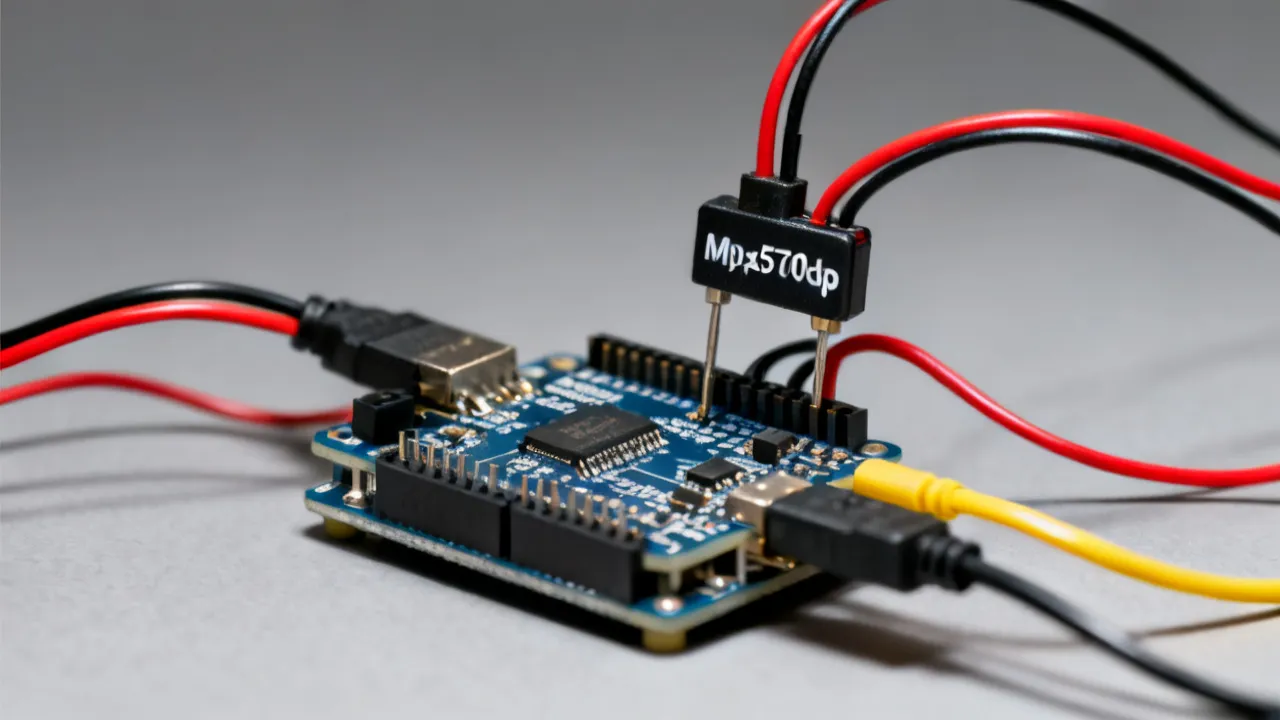
In the realm of electronic projects, the blend of precision and programmability offered by the Mpx5700dp sensor and Arduino microcontroller boards unlocks exciting possibilities. The Mpx5700dp is a pressure sensor known for its high accuracy and stability, making it an excellent choice for applications requiring reliable pressure measurement. When paired with an Arduino board, it allows for real-time data collection and analysis, enabling users to implement sophisticated monitoring systems. This powerful combination enhances one's ability to prototype various applications, from air pressure monitoring to fluid management, and provides a hands-on approach to learning electronic and programming skills.
The combination of Mpx5700dp and Arduino is particularly useful in applications like weather stations, industrial monitoring systems, and scientific experiments. The sensor's ability to deliver accurate and stable pressure readings—and Arduino's programmable nature—facilitates the development of systems that can measure pressure variations and trigger processes or alerts based on predefined criteria. Each application leverages specific capabilities of the Mpx5700dp, such as responsiveness to pressure changes and temperature stability, thus serving a wide range of fields:
To achieve a seamless integration of the Mpx5700dp with Arduino, here is a detailed step-by-step guide:
Here’s an example Arduino sketch that demonstrates how to read the output from the Mpx5700dp sensor:
const int sensorPin = A0; // Connect sensor output to analog pin A0
void setup() {
  Serial.begin(9600); // Initialize serial communication at 9600 bps
}

void loop() {
  int sensorValue = analogRead(sensorPin); // Read the value from the sensor
  // Convert the analog value to voltage
  float voltage = sensorValue * (5.0 / 1023.0);
  // Assuming a specific conversion factor (consult sensor datasheet for actual mapping)
  float pressure = (voltage - 0.5) * (700.0);
  Serial.print("Pressure: ");
  Serial.print(pressure);
  Serial.println(" kPa");
  delay(1000); // Wait for a bit before the next reading
}
This code initializes communication with the serial monitor and reads the analog voltage from the sensor to calculate the pressure in kilopascals (kPa). Note that the actual conversion factor may differ based on the sensor configuration, so always refer to the datasheet for precision.
| Sensor | Features | Applications |
|---|---|---|
| Mpx5700dp | High accuracy, Dual-port pressure sensor | Weather stations, Industrial monitoring |
| MPU6050 | Gyroscope and accelerometer | Motion detection, Orientation tracking |
| DHT22 | Temperature and humidity sensor | Environmental monitoring, HVAC systems |
| BMP180 | Digital pressure and temperature sensor | Altitude measurement, Weather applications |
| PRS3800 | High accuracy, various pressure ranges | Aerospace, Aviation applications |
When selecting the appropriate sensor for a project, the specific requirements such as the measurement range, accuracy, and the type of output (analog vs. digital) must be considered. Mpx5700dp stands out for its excellent performance in applications where real-time pressure measurements are crucial, particularly where environmental conditions may fluctuate.
Experts in the field of electronics and embedded systems highlight the flexibility and ease of use that comes with integrating Mpx5700dp sensors with Arduino. This setup is particularly favored in educational environments, enabling students to learn about sensor technologies while creating practical and impactful projects. Furthermore, professionals in industrial automation appreciate the reliability and scalability of these systems, which are crucial for maintaining productivity and safety standards. In industries dealing with critical processes like manufacturing, oil and gas, and automotive, the ability to implement rapid prototyping using Arduino and Mpx5700dp has led to innovative solutions that enhance operational efficiency.
Many users have successfully implemented Mpx5700dp in various projects. One notable example is a high school project where students designed a weather station using an Mpx5700dp sensor connected to an Arduino. They successfully created a system capable of logging atmospheric pressure data over time and visualizing it in real-time graphs on a computer. This project not only increased their understanding of sensor technology but also sparked interest in pursuing careers in engineering and environmental sciences.
In a separate case, a small manufacturing company utilized Mpx5700dp sensors in tandem with Arduino boards to monitor pressure in their pneumatic systems. By setting up alerts for abnormal pressure levels, they were able to significantly reduce downtime, ensuring smoother operations and avoiding costly breakdowns. Feedback from employees indicated that the ease of setup, along with the rich variety of online tutorials and community support, made adopting this technology much simpler than anticipated.
Q: What kind of pressure can the Mpx5700dp sensor measure?
A: The Mpx5700dp is designed to measure absolute pressure, and it's particularly suitable for mid-range pressure measurements up to 700 kPa. It's an ideal choice for various applications that do not require ultra-high precision.
Q: What is needed to program an Arduino for Mpx5700dp integration?
A: You will need the Arduino IDE, relevant libraries for sensor integration, and knowledge of basic coding to interpret sensor data. It is also beneficial to have an understanding of analog reading and calibration procedures.
Q: Can Mpx5700dp sensors be used for DIY projects?
A: Absolutely. The Mpx5700dp, combined with Arduino, is ideal for both educational and hobbyist projects, given its relative affordability and ample instructional resources available online. The sensor is particularly popular among those exploring home automation systems and environmental monitoring setups.
Q: Can Mpx5700dp sensors be sensitive to environmental conditions?
A: Yes, like many pressure sensors, the Mpx5700dp can be influenced by temperature fluctuations and other environmental factors, so proper consideration should be given to the installation location and potential effects on readings. Calibration under expected conditions can greatly enhance accuracy.
As you become more comfortable with using the Mpx5700dp sensor and Arduino, you can explore advanced topics to further enhance your projects:
The integration of the Mpx5700dp sensor with Arduino provides a robust platform for a wide range of applications. Whether for educational purposes, hobbyist projects, or industrial applications, this combination allows users to innovate and create effective monitoring and automation systems. With continuous advancements in both the hardware and software domains, enthusiasts and professionals alike will find valuable tools at their disposal, leading to endless possibilities in the world of electronics and beyond. Embrace learning through experimentation and witness firsthand how powerful such a small investment in technology can be.
Striking the Perfect Balance: Navigating Premiums and Out-of-Pocket Expenses in Senior Insurance Plans

Explore the Tranquil Bliss of Idyllic Rural Retreats

How to Make Lasting Memories at Disneyland Attractions

Affordable Phones and Plans for Seniors

Affordable Full Mouth Dental Implants Near You

Unlock the Top Kept Secrets to Finding Your Ideal Dentist for Flawless Dental Implant Results!

Discovering Springdale Estates

Unveiling RS Sul Telecom Services

The Guide to Car Trading

Unveiling RS Sul Telecom Services
RS Sul Telecom emerges as a prominent entity in the telecommunications industry, providing reliable services across various regions. This article delves into the offerings of RS Sul Telecom, the benefits it presents to both individual and business clients, and its impact on the modern telecom landscape.

Understanding Rlock Advpl in Business
Rlock Advpl represents a pivotal advancement in business software solutions, offering enhanced security and efficiency for enterprise resource planning systems. This article delves into the intricacies of Rlock Advpl, its application in modern businesses, and the benefits it offers in streamlining operations and safeguarding data. As an expert tool, Rlock Advpl is essential for businesses looking to optimize their IT infrastructure.

Unveiling Atranet Innovation
Atranet represents a cutting-edge concept in networking technology. Harnessing its capabilities can transform digital communication by providing seamless connectivity. Designed to optimize data transfer, security, and efficiency, Atranet is shaping the future of how we connect and share information. This article delves into its structure, applications, and potential impacts on industry practices and consumer experiences.

Understanding Polysulfide Adhesive Applications
This comprehensive guide explores the applications and benefits of polysulfide adhesive, highlighting its unique properties and widespread use in construction, aerospace, and automotive industries. Known for its flexibility and resistance to various environmental factors, polysulfide adhesive is a key component in sealing and bonding applications, providing durability and reliability in demanding conditions.
Comparing Vtex with Salesforce Commerce
This article provides an in-depth comparison between Vtex and Salesforce Commerce, two leading digital commerce platforms. Each offers unique features suited to different business needs. Vtex is renowned for its collaborative commerce approach, while Salesforce Commerce shines with its comprehensive customer relationship management capabilities. Explore their differences, strengths, and insights from industry experts.
Understanding the Latest Chrome Version
This article delves into the intricacies and features of the latest Chrome version. Chrome, developed by Google, is one of the very popular web browsers globally, known for its speed, simplicity, and security features. Each update aims to enhance user experience through improved functionality and performance. Understanding these updates is crucial for both everyday users and developers.