This guide explains DentaQuest Teledentistry and how teledentistry supports the path to lower-cost dental implants. It provides objective background on remote dental triage, patient selection, and coordination with in-person implant teams. It also compares key information sources, outlines step-by-step actions in English-, Spanish-, and Portuguese-speaking contexts, and gives country-specific implant cost ranges.
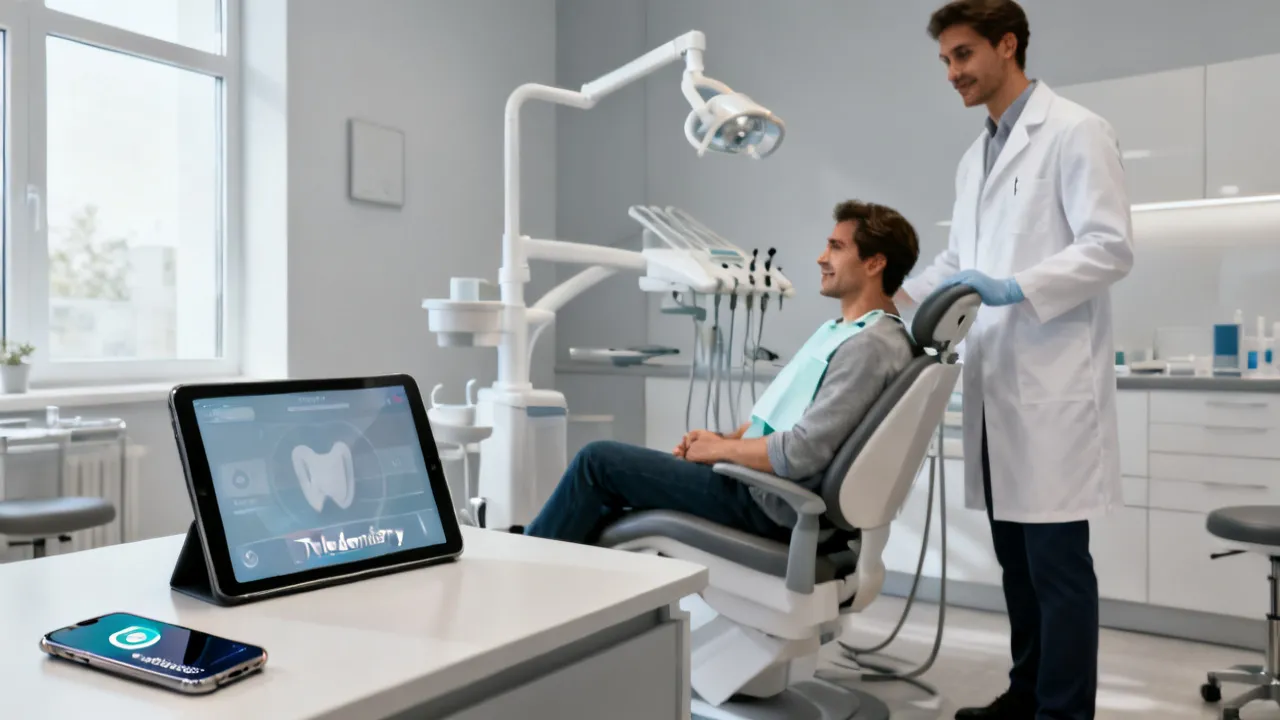
DentaQuest Teledentistry can function as a front-door step in implant journeys—helping patients start with remote screening, oral-health education, and coordination for in-person evaluation. For people concerned about budget, the practical value of teledentistry is less about “performing implants remotely” and more about improving access to timely consultations, clarifying treatment options, and guiding referrals toward clinically appropriate (and potentially more affordable) implant pathways.
In implant care, the hardest part for many patients is not the surgical day itself—it’s everything that comes before it: understanding whether they are a candidate, what prerequisites must be addressed, which documents or images are needed, and how to compare “complete packages” rather than confusing partial quotes. A structured teledentistry workflow can reduce delays by helping patients reach the right in-person appointment faster and with better readiness, so the final diagnosis and treatment plan are less likely to be derailed by missing information, unclear expectations, or unresolved urgent issues.
In this guide, an expert lens is applied to three questions: (1) what teledentistry can and cannot do in implant planning, (2) how patients can use low-cost information resources responsibly, and (3) what actions typically reduce avoidable delays and rework before surgery.
Because implant therapy is highly individualized, the central theme is “cost awareness with clinical discipline.” Teledentistry supports that discipline by acting as an information and coordination layer—helping patients prepare for imaging-based planning, understand staged treatment requirements, and avoid common missteps that lead to price surprises later.
Dental implants often involve multiple components: diagnostic imaging, surgical planning, implant placement, and restorative work (crowns, bridges, or dentures). The overall price can vary widely due to clinical complexity (bone quality, number of implants, need for grafting), materials, provider expertise, and geographic cost structures.
Teledentistry does not replace surgical competence, but it can reduce friction across the journey. In practice, cost sensitivity is driven by uncertainty: if patients don’t know whether they need grafting, whether periodontal inflammation must be treated first, or which restorative design will be used, early quotes can be incomplete or misleading. That uncertainty can lead to premature decisions, wasted visits, and rework—each of which indirectly increases total cost (time, transportation, lost wages, repeat consultations, and delayed restorations).
For example, teledentistry can support the following cost-relevant improvements:
The core idea: teledentistry helps lower “indirect costs” by improving access, readiness, and coordination. Direct surgical fees are still determined by diagnosis, clinical requirements, provider pricing, and restorative design. But fewer delays and fewer rework cycles frequently mean less financial stress and a smoother pathway from consult to completion.
Although “teledentistry” models vary by region and payer, the very defensible interpretation in implant care is a structured digital workflow. That workflow typically includes:
From an industry perspective, the key is governance: teledentistry should follow clinical protocols and local regulations, including documentation standards and appropriate escalation to dentists or oral surgeons when exam-level detail is required.
In an ideal implant pathway, teledentistry functions as a “front-door clinical coordinator.” It may not diagnose bone volume or confirm implant positioning remotely, but it can standardize intake, ensure urgent conditions are handled, and help patients arrive at imaging and consult appointments with a coherent history that reduces guesswork.
Consumers often search for “low-cost dental implants” because implants can represent a major planned expense. However, “low-cost” must be interpreted carefully. Lower pricing can arise from differences such as:
The very reliable “cost reduction” strategies usually involve preventing avoidable complications, ensuring correct diagnosis, and aligning restorative timing with surgical healing. Those themes connect directly to teledentistry’s role in pre-visit preparation.
When patients arrive at a consult without a clear history or without understanding what questions to ask, clinicians may require extra visits to gather information, or they may recommend stabilization treatment before implants. Each additional step can change cost. Teledentistry can reduce these avoidable detours by improving readiness and by helping patients understand that the “implant” is part of a larger staged plan.
Affordable care is not simply the lowest number on a sign. In implant dentistry, affordability often reflects a complete pathway: diagnostic imaging and planning quality, procedural steps that preserve bone and soft tissue, restorative timing, and follow-up. When any element is omitted or delayed, the likely result is either an additional expense later or a compromised outcome that may require further treatment.
To avoid unrealistic expectations, it helps to draw a clear boundary:
That boundary is important for patient safety and for meeting evidence-based standards of care. Patients deserve transparency: remote services are designed to support care access and readiness, not replace clinical evaluation where physical assessment is required.
One reason teledentistry can still be highly valuable for cost-conscious patients is that “knowing the right next step” can reduce the time spent shopping based on incomplete information. When remote guidance helps patients understand prerequisites and what a proper evaluation includes, they spend less time comparing quotes that are not truly comparable.
The following table compares several websites that publish guidance related to low-cost dental implants. It is designed to help readers understand what each source is top used for (education, insurance navigation, dental tourism planning, or general clinic services).
| Website |
| DentalViews – Low Cost Dental Implants: Focuses on cost-related education, implant benefits, treatment types, and cost/FAQ-style explanations aimed at affordability-focused readers. |
| Atlantic Dental Group: Clinic-oriented services description (cleaning, orthodontics, implants, emergencies) plus scheduling/location details, useful for understanding typical service scope. |
| DentaVacation: Dental tourism orientation—cost comparisons across countries and travel arrangement framing for cost-conscious patients pursuing cross-border care. |
| ADHP (American Dental Health Plans): Insurance-planning approach—coverage options and instructions for using dental benefits, relevant for cost containment through insurance alignment. |
source:
[www.dentalviews.com](https://dentalviews.com/low-cost-dental-implants/) (DentalViews – Low Cost Dental Implants)
[www.atlanticdentalgrp.com](https://www.atlanticdentalgrp.com/) (Atlantic Dental Group)
[www.dentavacation.com](https://www.dentavacation.com/) (DentaVacation)
[rockvilledentalarts.com](https://rockvilledentalarts.com/es/) (ADHP reference page shown in the provided materials)
Beyond the table, it’s helpful to interpret these sources as different “tools,” not competing truths. An education-focused site can help you learn the vocabulary needed for a consult. A clinic’s service page can help you understand what they claim to do and whether they list implants as an available service. A dental tourism site can help you conceptualize cost comparisons across destinations. An insurance-focused resource can help you interpret benefits rules—critical because coverage often determines what “low cost” means in real dollars out-of-pocket.
However, no website can substitute for an individualized clinical diagnosis. A strong patient strategy is to use these resources to ask better questions, not to decide treatment without imaging and professional assessment.
In English-speaking markets, a common sequence is:
From a patient experience standpoint, many avoid cost spikes by addressing basic prerequisites early (for example, periodontal inflammation or missing adjacent tooth support). If these prerequisites are ignored, the likely outcome is either compromised implant stability or restorative redesign—both can increase cost later.
Also, English-speaking patients often benefit from clear documentation practices. Patients can ask for copies of imaging reports, treatment plans, and itemized estimates. Those documents can help with insurance claims, second opinions, and continuity if care transitions between clinics.
In Spanish-speaking communities, practical navigation often depends on language accessibility and clear communication. Clinic websites that provide Spanish-language resources can reduce misunderstandings and support appointment readiness.
Based on the provided examples, common Spanish-speaking planning themes include:
For patients looking for cost containment, the very important action is not simply “finding the lowest advertised price,” but ensuring the plan addresses diagnostic requirements and good restorative fit.
Language accessibility also matters for postoperative care. Patients should understand wound care guidance, diet recommendations during healing, warning signs (e.g., persistent swelling, fever, worsening pain), and follow-up schedules. Teledentistry can reinforce those instructions if follow-up check-ins are available remotely.
Portuguese-speaking patients often benefit from structured clinic access and clear service descriptions. Based on the provided references, typical patterns include:
Teledentistry in these contexts is generally very valuable when it helps schedule the in-person diagnostic visit sooner—because implant planning is image-dependent.
In practice, many Portuguese-speaking patients who seek affordability are balancing multiple constraints: work schedule, travel distance, and family obligations. Remote intake and referral coordination can reduce time off work and help ensure imaging appointments happen promptly after triage. That speed can translate into fewer repeated steps and less financial uncertainty.
This section consolidates a practical process. While the exact steps vary by country and provider, the underlying logic remains consistent: reduce avoidable uncertainty, confirm eligibility, compare complete treatment packages, and plan for follow-up care.
The quality of remote intake often determines how smoothly the path moves forward. Even when teledentistry is limited, a well-prepared intake can reduce back-and-forth and speed up scheduling for imaging.
Remote triage is not only a gatekeeping process—it’s also a safety mechanism. Patients often assume that implant evaluation is the first step for any missing tooth. But pain and infection can change the priority order.
Low-cost comparison without diagnosis is often misleading. Imaging provides the foundation for candidacy assessment and treatment planning. Without imaging, different clinics may be quoting for different scenarios.
Ask whether the clinic will:
Once imaging has been reviewed, “low cost” becomes more comparable, because everyone is working from the same clinical reality.
To compare “apples to apples,” request clarity on what is included and what may be added later. A strong estimate should list major components and reflect the staged nature of implant care.
To help you, request an itemized estimate that clarifies:
Also ask about what happens if complications occur. A low initial quote can become expensive if it doesn’t include the management of follow-up care, re-treatment, or additional imaging.
If you have dental insurance or a dental plan, verify implant coverage rules and referral requirements. In many systems, coverage can influence which providers you can use and what portions are covered.
For cost-sensitive patients, plan alignment is often more valuable than shopping for the cheapest advertised implant fee, because coverage determines what you actually pay.
Practical questions to ask:
If teledentistry helps coordinate referrals or confirms eligibility, it can reduce delays tied to administrative steps. Those steps can be the hidden source of cost—especially when they delay imaging and final restoration scheduling.
Dental tourism can sometimes reduce costs, but it introduces continuity-of-care risks. If you consider it, confirm:
A cost comparison across borders should include the “real cost of follow-up.” Travel plus unresolved postoperative issues can outweigh the original savings.
If you plan to combine cross-border surgery with local restoration, ask how the restorative materials and protocols will match. For example, the implant system used and the restorative components selected should be compatible with local providers if you switch teams.
Clinical fit also includes communication style and patient comfort. If you are anxious, you should disclose it early. Good clinics plan sedation or pacing appropriately, and teledentistry intake may help flag anxiety so the in-person team can prepare.
The following cost ranges are provided for individual dental implants in the specified {lang}-speaking categories. These figures are for reference and should be validated with local clinics after diagnostic imaging.
Important interpretation note: these ranges are for an implant fixture and associated planning typical for an “individual implant,” but the real “total cost” for the patient includes the restoration and any prerequisite treatments. Many sources quote only the implant component. Patients should ask clinics whether the displayed range includes the crown and abutment, and whether it includes grafting if needed.
| Country | Currency | Price range (individual implant) |
|---|---|---|
| United States | USD | $3,000 - $6,000 |
| United Kingdom | GBP | £2,000 - £2,500 |
| Australia | AUD | AU$3,500 - AU$6,500 |
| Canada | CAD | CA$3,000 - CA$5,500 |
| Spain | EUR | €1,500 - €2,500 |
| Chile | CLP | CLP$800,000 - CLP$1,500,000 |
| Mexico | MXN | $15,000 - $25,000 |
| Colombia | COP | $2,000,000 - $4,000,000 |
| Peru | PEN | S/ 3,000 - S/ 6,000 |
| Argentina | ARS | $80,000 - $150,000 |
| Brazil | BRL | R$3,000 - R$8,000 |
| Portugal | EUR | €1,000 - €2,000 |
Even within the same country, pricing can shift due to clinical factors. An expert-oriented way to interpret variation:
These drivers also explain why teledentistry is very helpful before in-person planning: it can ensure the right questions are asked so the final estimate reflects clinical reality.
Another expert consideration is that different clinics may quote different stages as “included.” For example, one clinic may provide a comprehensive plan that includes provisional restorations, implant uncovering (if staged), and restorative fitting. Another might quote implant surgery only. Without itemization, the patient can misinterpret a “low-cost implant” as a full solution when it actually represents only part of the journey.
For patients using teledentistry, a valuable practice is to ask the remote team what typical implant stages are and to request a “questions list” for the in-person consult. When the remote intake educates the patient on the staged nature, it becomes easier to compare quotes and identify missing components early.
No. Teledentistry typically supports evaluation, education, and referral coordination. Dental implant placement requires an in-person procedure performed by qualified dental professionals.
In implant pathways, remote services can be considered a “bridge” to the clinical exam and imaging. The surgical act and restorative fabrication cannot be done without in-person clinical assessment and restorative lab workflows.
Teledentistry can help lower indirect costs by improving access to timely consultations, helping you prepare better for the implant exam, reducing misunderstandings about next steps, and supporting coordination of care. Direct surgical fees still depend on clinical needs and provider pricing.
Indirect cost reduction can include fewer repeat visits, more accurate early planning (reducing “surprise” additions), and better alignment with insurance and network requirements. When the plan is correct the first time, restorative completion is also less likely to be delayed.
Ask for an itemized estimate, confirmation of whether additional procedures (like bone grafting) are included, and how follow-up visits and restorative stages are priced. Also ask about alternative treatment pathways if you are not an ideal implant candidate at that time.
In addition, ask how they would proceed if grafting is needed or if infection/periodontal disease is present. Low-cost options are safest when they are built on medically appropriate sequencing, not when prerequisites are minimized or ignored.
Mini dental implants may be priced differently and may be appropriate for select patients; however, “cheaper” depends on your anatomy, diagnosis, and restorative requirements. A clinician must confirm candidacy.
Mini implants may be suitable in particular scenarios, but they may not be appropriate in all cases—especially where occlusal forces, bone quality, or aesthetic goals require a different implant approach. The safe question is: “Are mini implants clinically appropriate for my condition, and how does the full restoration cost compare?”
Cross-border care can introduce challenges such as delayed complication response after returning home and the need for reliable follow-up. If you consider dental tourism, verify documentation quality, postoperative plans, and continuity for restorative adjustments.
You should also consider anesthesia and medication compatibility, how emergency care is handled, and whether local providers can access the implant system documentation if you need follow-up outside the country where the implant was placed.
No. The ranges are for reference only and should be confirmed with local clinics after diagnostic imaging and an individualized treatment plan.
Variability is normal. Even two patients in the same country can have different needs (bone grafting, periodontal stabilization, restorative material selection). A strong clinic plan will explain what factors apply to you.
Very pathways include a clinical exam, dental/medical history review, radiographic or imaging assessment, and a risk evaluation (including gum health and general health). Your provider may also recommend pre-treatment stabilization.
For many patients, eligibility includes periodontal evaluation and management, assessment of oral hygiene, and evaluation of systemic risk factors. If smoking, uncontrolled diabetes, or active infection is present, stabilization is often recommended before implant placement.
In many healthcare systems, insurance or dental plans may cover certain preventive and restorative services but may have different rules for implants. If you have a plan, confirm coverage details, provider network requirements, and any referral or waiting period rules.
It’s also useful to ask whether insurance covers the diagnostic imaging and consults that determine implant candidacy. Even when implants themselves are not covered, covered diagnostic steps can still reduce total out-of-pocket cost.
Bring or upload your dental history, medication list, previous imaging reports if available, and a concise description of symptoms and timeline. If your dentist has provided treatment notes, include those details to improve assessment accuracy.
If you don’t have records, ask remote staff what alternative proof is acceptable. Sometimes a clinic can request records directly from your prior provider, with your consent.
Dental implants are a high-impact treatment, and cost is a legitimate concern. DentaQuest Teledentistry (and similar services) can help patients take a more structured first step—especially by enabling remote triage, improving readiness for in-person diagnostic evaluation, and supporting care coordination. When combined with responsible “total package” cost comparisons and careful provider selection, these steps can make affordability efforts more realistic and clinically safe.
In a well-run implant pathway, affordability is achieved through correct diagnosis, appropriate sequencing, and transparency about what is included in the plan. Teledentistry helps patients reach that transparency earlier—before they commit to treatment based on incomplete information. When the patient arrives at the imaging appointment with a clear history, urgent risks properly flagged, and a list of targeted questions, the in-person consult becomes more efficient and more likely to lead to an accurate (and properly priced) plan.
1) The above information comes from online resources, and the data is as of October 2023.
2) Dental implant prices are for reference only and may vary by region, clinic and doctor.
https://dentalviews.com/low-cost-dental-implants/
https://www.atlanticdentalgrp.com/
https://www.dentavacation.com/
https://rockvilledentalarts.com/es/
https://www.cigna.com/es-us/knowledge-center/guide-to-dental-implants
https://unioncityminidentalimplants.com/es/
https://www.rubiodonto.com.br/
https://odontologiavelasco.com.br/
https://dentalvidas.com.br/
Striking the Perfect Balance: Navigating Premiums and Out-of-Pocket Expenses in Senior Insurance Plans

Explore the Tranquil Bliss of Idyllic Rural Retreats

How to Make Lasting Memories at Disneyland Attractions

Affordable Phones and Plans for Seniors

Affordable Full Mouth Dental Implants Near You

Unlock the Top Kept Secrets to Finding Your Ideal Dentist for Flawless Dental Implant Results!

Discovering Springdale Estates

Unveiling RS Sul Telecom Services

The Guide to Car Trading

Affordable Full Mouth Dental Implants Near You
Discover options for affordable full mouth dental implants, including clinical trials and local dental services that offer cost-effective solutions.
Understanding Full Mouth Dental Implant Prices
Explore the costs and factors influencing full mouth dental implants for seniors and others.
Comprehensive Guide to Dental Implants
This comprehensive guide delves into the intricacies of dental implants, providing a global perspective with a special focus on Implantswiss. Dental implants, a pivotal advancement in restorative dentistry, offer solutions for missing teeth, aiding in oral health and functionality. This article navigates through cost-effective solutions, global pricing comparisons, and the role of Implantswiss in elevating dental care standards internationally.

Affordable Dental Implants Near You
Discover low-cost dental implants and quick solutions to fix your teeth with full mouth options available near you.
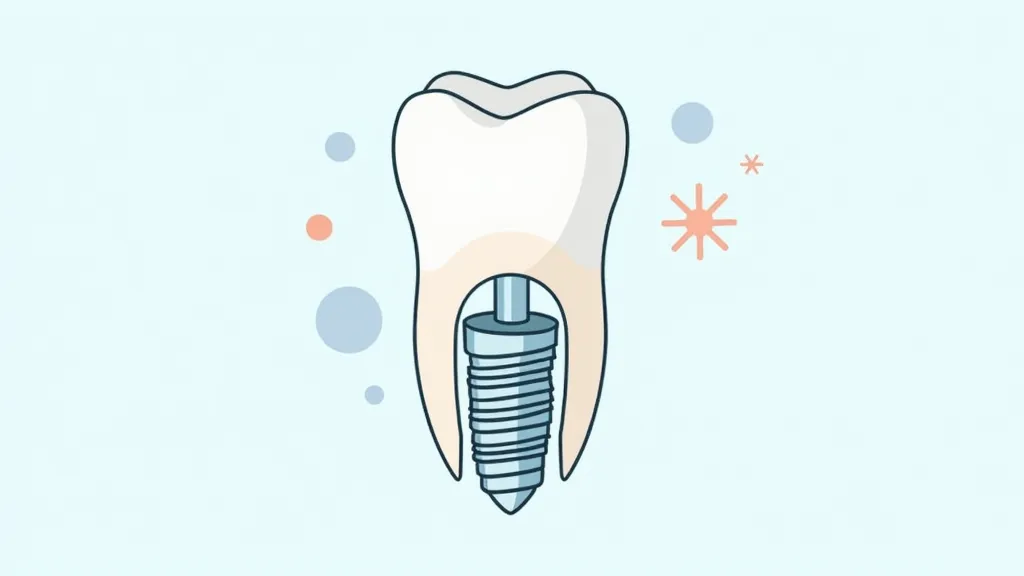
Understanding Dental Implant Prices and Options
Explore dental implant costs, funding, and full mouth options for a confident smile in 2025.
Affordable Dental Implants Near Me: Your Guide
Discover affordable dental implants, funding options, and fast solutions for fixing your teeth near you in 2025.
