This guide explains how to select, evaluate, and use a Poly Mailer for secure, efficient parcel shipping. Poly Mailers are lightweight plastic shipping envelopes made for apparel, documents, soft goods, and other non-fragile products. Their performance depends on material thickness, seal quality, dimensions, durability, recyclability, storage conditions, and compatibility with postal handling and business operations.
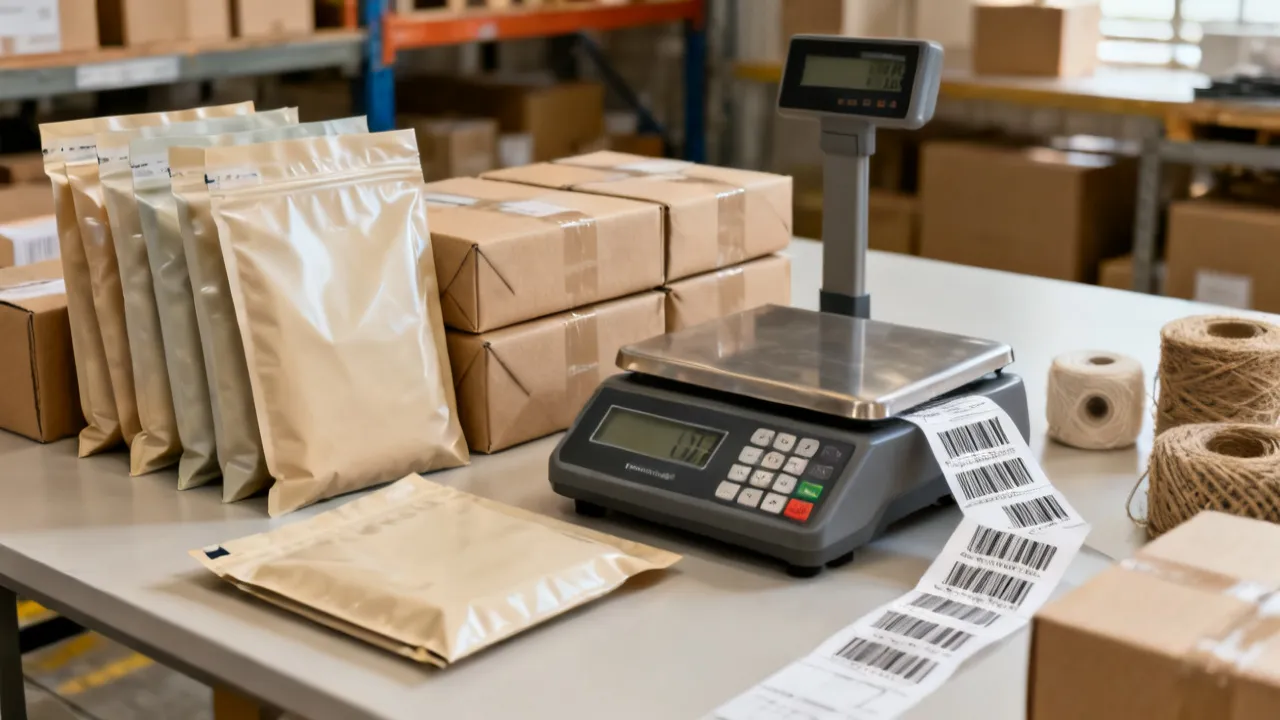
A Poly Mailer is a lightweight shipping envelope manufactured from flexible polyethylene film. It is commonly used by online retailers, apparel brands, subscription businesses, wholesalers, fulfillment centers, and individuals who need a practical outer package for non-fragile goods. Unlike corrugated boxes, a Poly Mailer does not provide rigid structural protection, but it can offer strong resistance to moisture, tearing, and surface abrasion when the appropriate material and construction are selected.
The important purchasing decision is not simply choosing the lowest unit price. A suitable mailer must match the product, fulfillment process, delivery environment, branding requirements, customer expectations, and waste-management policy of the business. A thin envelope may be adequate for a lightweight garment, while a thicker co-extruded mailer may be more suitable for products exposed to repeated handling. An oversized mailer can increase material use and shipping volume, whereas an undersized one may stress the seams and adhesive closure.
From an industry perspective, packaging should be evaluated as part of the complete order system. The mailer affects pick-and-pack speed, postage calculations, customer experience, return handling, storage space, and the likelihood of product damage. It may also influence how customers perceive the brand before they see the product itself. Selecting the correct format at the beginning can reduce operational complications later and create a more consistent shipping process.
Packaging decisions also have a long-term effect on inventory planning. A business that selects several carefully defined sizes can reduce waste and simplify staff training. A business that changes mailer specifications frequently may experience inconsistent performance, obsolete printed inventory, and confusion at packing stations. For this reason, the selection process should include both technical and operational review.
A Poly Mailer is a flexible envelope made primarily from polyethylene film. It usually includes a self-sealing adhesive strip, a flap, and a smooth exterior suitable for shipping labels or printed branding. Some versions contain additional features such as tamper-evident closures, bubble lining, gussets, handles, tear strips, or a second adhesive strip for returns.
Polyethylene is used because it can be manufactured in thin, flexible sheets while retaining useful resistance to water and ordinary handling stress. The film can be produced in different colors, levels of opacity, thicknesses, and layer structures. These variations allow suppliers to create products for different order sizes, brand styles, and fulfillment requirements.
Poly Mailers are generally designed for products that do not need rigid protection. Typical contents include:
The envelope itself is not a substitute for internal protection. Glass, ceramics, electronics, cosmetics in breakable containers, and other impact-sensitive products may require a box, molded insert, corrugated wrap, foam, or another protective structure. A Poly Mailer can serve as an outer layer in some cases, but the packaging design must be based on the product’s vulnerability and the expected distribution environment.
Businesses should also consider the shape of the contents. A soft item with rounded edges may be very suitable for a mailer, while a rigid item with a narrow corner may puncture the film even if it is relatively lightweight. Product weight, surface finish, and movement inside the package can be as important as the basic category of the product.
Polyethylene film is lighter than many rigid packaging materials. Reduced packaging weight can simplify order handling and may influence transportation charges, depending on the carrier’s pricing rules and the parcel’s dimensional characteristics. The actual effect should be confirmed through the applicable carrier service rather than assumed.
Lower weight can also make a difference in high-volume fulfillment. When thousands of orders are prepared each month, a small reduction in packaging weight may reduce the amount of material employees move, lift, and stage. However, a business should never reduce material strength solely to save weight if doing so increases damage, leakage, or return rates.
A properly sealed Poly Mailer can help protect contents from rain, splashes, humidity, and surface contamination during transportation. This feature is especially useful for clothing and other textiles. Moisture resistance does not mean the package is suitable for immersion, prolonged outdoor exposure, or poorly sealed contents.
The mailer’s moisture performance depends on the entire package. A puncture, unsealed corner, open seam, or exposed product opening can compromise protection. Internal product packaging may also be needed when the item itself must be protected from condensation or changes in humidity.
Mailers can usually be stored flat and stacked in cartons or on shelves. This makes them practical for fulfillment rooms with limited space. Businesses should still protect unused mailers from excessive heat, sharp objects, dust, and prolonged sunlight, all of which may affect film performance or adhesive quality.
Flat storage can also help businesses organize packaging by size. Clearly marked bins or shelves reduce the time employees spend searching for the appropriate envelope. The storage system should prevent mailers from being bent sharply, crushed under heavy inventory, or mixed with similar sizes that may lead to selection mistakes.
For suitable products, a mailer can shorten the packing process. The operator places the prepared item inside, removes the release liner, closes the adhesive flap, and applies the shipping label. This workflow may be faster than assembling and sealing a rigid box, although actual results depend on product preparation, order volume, staff training, and equipment.
Efficiency is greatest when the product is already organized for insertion. A mailer does not eliminate the need for accurate order verification. A fast packing method that causes incorrect items, missing accessories, or poor seals can create more total work through customer-service inquiries and returns.
Poly Mailers can be manufactured in standard colors or printed with brand elements. A carefully designed exterior can support recognition when customers receive an order. Printed packaging should remain legible, maintain adequate contrast for labels, and avoid covering areas required for carrier markings or addresses.
Branding can range from a simple logo to a full-color pattern. Small businesses may begin with a stock-colored mailer and a branded label or stamp, while established companies may justify custom printing. The selected approach should account for minimum order quantities, artwork costs, production lead times, and the risk of unused packaging if the brand identity changes.
Flexible packaging has clear limitations. It does not create a rigid barrier against crushing, bending, or concentrated impact. If a product can be damaged when compressed or folded, a mailer alone may not be adequate. Internal packaging remains essential for goods that need cushioning, separation, or shape retention.
Another concern is puncture resistance. Sharp corners, metal components, unfinished edges, or poorly folded products may damage the film. The operator should inspect the product before insertion and use an inner sleeve, tissue, carton, or protective wrap where needed. Products that shift during transit can also create repeated stress at the same point in the envelope.
Adhesive failure can create a delivery risk. The adhesive strip should be compatible with the film, storage conditions, and expected handling period. A mailer stored in a hot warehouse may behave differently from one kept in a controlled environment. Before large-scale adoption, businesses should conduct practical tests that include closure strength, label adhesion, stacking, and simulated handling.
Flexible film may also reveal compression marks or wrinkles more easily than a box. This does not necessarily indicate failure, but significant deformation can make labels difficult to scan and may affect the customer’s first impression. If presentation is important, the business should test the mailer after it has been filled and moved through the actual fulfillment process.
Finally, recycling practices vary by jurisdiction and collection system. A polyethylene mailer may be technically recyclable while remaining unsuitable for a particular curbside program. Packaging claims should therefore be specific and supported by local guidance or recognized certification. Businesses should not present broad environmental claims without identifying the material, collection route, and relevant conditions.
Most mailers use polyethylene because it combines flexibility, moisture resistance, and manufacturability. The film may be produced in different grades and thicknesses. Thickness is often expressed in mils or microns, depending on the supplier and market. Buyers should confirm the measurement system before comparing specifications.
A film specification should be understood as one part of the product design. Two mailers with a similar stated thickness can perform differently because of resin quality, layer structure, sealing temperature, seam design, and manufacturing controls. For that reason, sample testing remains important even when the written specifications appear suitable.
Co-extruded film contains multiple layers formed during manufacturing. Each layer may contribute different properties, such as strength, opacity, printability, or sealing performance. A multi-layer structure may provide more consistent performance than a simple single-layer film, but the product should still be evaluated through samples and supplier documentation.
Some co-extruded films include an exterior layer designed to accept printing and an interior layer that supports reliable sealing. Other structures are designed to improve resistance to tearing or puncture. Buyers should ask the supplier to explain the practical purpose of the layers rather than assuming that a greater number of layers automatically means better performance.
Some Poly Mailers contain post-consumer or post-industrial recycled polyethylene. Recycled content can support a material-reduction strategy, but it may influence appearance, print quality, tensile performance, and consistency. Buyers should request a clear specification describing the percentage and type of recycled content rather than relying on general marketing language.
Recycled content may be particularly relevant for brands with published packaging goals. Documentation should identify whether the percentage is calculated by total product weight, film weight, or another method. It is also useful to confirm whether the content is consistent across colors, sizes, and production batches.
Compostable packaging requires careful interpretation. Compostability depends on formulation, certification, temperature, moisture, processing conditions, and the availability of an appropriate composting facility. A mailer described as bio-based is not automatically biodegradable or compostable. Procurement teams should review recognized certification and disposal instructions before using such claims in customer communications.
A bio-based polymer may be made partly or entirely from renewable feedstocks while still requiring a particular industrial process at the end of its useful life. Conversely, a product marketed as biodegradable may not break down under normal environmental conditions. Clear technical documentation is more valuable than a broad sustainability phrase.
Size selection begins with the packed product, not the product in its retail form. Measure the item after adding any tissue paper, inner bag, cushioning, return documentation, or other required components. The mailer should provide enough space for insertion and sealing without excessive stretching.
A useful approach is to record three dimensions:
Allow room for the adhesive flap and closure area. The usable internal dimensions of a mailer may be smaller than its external dimensions because the flap, seams, and manufacturing tolerances reduce the available space. Always compare the supplier’s stated internal size with the actual usable area.
It is helpful to create a packing profile for each major product. The profile can show the folded or prepared dimensions, recommended mailer size, internal protective materials, label location, and any special handling instructions. Such profiles reduce dependence on individual employee judgment and make the process easier to audit.
Businesses with varied product ranges often benefit from a small selection of standardized sizes rather than one envelope for every order. Too many formats complicate inventory control, while too few formats can lead to overpacking or seam stress. Historical order data can help identify the sizes that cover most shipments without creating unnecessary stock complexity.
When calculating size, do not treat unused space as automatically harmful. A small amount of working room may make insertion easier and protect the closure area from product interference. The objective is not the tightest possible fit; it is a secure fit that uses material efficiently without damaging the product or stressing the envelope.
| Product Category | Recommended Packaging Consideration | Potential Additional Protection |
|---|---|---|
| Folded apparel | Flexible mailer with adequate internal width and secure adhesive closure | Inner garment sleeve or tissue paper |
| Books and documents | Mailer selected according to bending risk and document dimensions | Rigid insert or protective board |
| Soft accessories | Lightweight mailer with puncture-resistant film | Inner pouch or product box |
| Small electronics | Mailer used only when the product has a suitable rigid protective package | Impact-resistant inner packaging |
| Return shipments | Mailers with a second adhesive strip or clear return instructions | Documentation pouch or printed return panel |
Thickness is an important specification, but it does not represent every aspect of durability. Tear resistance, puncture resistance, tensile strength, seam construction, and adhesive performance also matter. A thicker film may perform well in one application yet be less suitable than a thinner, better-engineered structure in another.
When comparing products, ask suppliers for documented specifications and sample units. Examine the following characteristics:
Practical testing should resemble actual use. Pack representative products, apply labels, stack the parcels, move them through ordinary internal handling, and inspect the seals and corners. Testing several batches is more informative than examining one sample because manufacturing variation may occur.
Testing should include the most demanding products that the mailer is expected to carry. If the selected format is intended for both a lightweight shirt and a dense bundle of accessories, test the dense bundle as well as the shirt. The result should be evaluated after packing, not only when the mailer is empty.
The adhesive strip is central to the mailer’s performance. A closure should bond across the intended area without leaving major gaps or wrinkles. The operator should press the flap firmly along its length after removing the release liner. If the mailer includes a tamper-evident design, the film or printed pattern may show visible disturbance when the package is opened.
A tamper-evident feature can discourage casual interference, but it is not a guarantee against unauthorized access. Packaging descriptions should use precise language and avoid presenting a closure as a complete security system.
For businesses managing returns, a dual-seal design can simplify the customer’s experience. The first strip closes the outbound order, while a second strip can be used for the return shipment. Instructions should clearly explain which strip to use and which portion of the original label should be removed or covered. This reduces confusion at the point of return processing.
Adhesive performance can be affected by dust, low temperatures, high temperatures, humidity, and pressure during storage. Packing staff should avoid touching the adhesive surface and should keep the closure area free of fabric fibers, product labels, and loose packaging materials. If a seal appears incomplete, the parcel should be repacked rather than sent with a questionable closure.
Opaque mailers limit visibility of the contents and often provide a more consistent appearance for branded shipments. They are commonly chosen for apparel, personal-care products, and other items where discreet packaging is appropriate. Clear or translucent formats may be useful for internal organization, but businesses should assess privacy and presentation requirements before selecting them.
Color can support product categorization or brand identity. However, strong colors may affect the visibility of shipping labels, barcodes, or handwritten handling marks. Label tests should be performed on the exact film color and finish intended for production.
Some businesses use different colors to distinguish order types, such as standard orders, expedited orders, or returns. This can help warehouse staff, but it may also increase inventory complexity. A color-coding system should be documented so employees do not confuse a visual distinction with a different level of product protection.
Printed packaging turns the outer envelope into a customer-facing communication surface. A restrained design generally performs better than an overcrowded one. The brand name, a simple visual identity, and practical handling information may be sufficient.
Before approving artwork, confirm the following:
Packaging is also part of accessibility. Important instructions should use readable type, clear contrast, and simple wording. If the mailer includes opening guidance or return information, the message should remain understandable without specialized knowledge.
Artwork should also account for the way a mailer folds during storage and transit. A logo placed directly across a likely fold may become distorted or partially hidden. A design that repeats across the surface may provide a more consistent appearance than one large image placed in a single location.
In e-commerce, the mailer must fit into a repeatable fulfillment process. A well-designed workflow begins with product preparation, verifies the order, selects the correct size, inserts the product, seals the envelope, applies the label, and completes a final scan or visual check.
Process consistency matters more as shipment volume grows. A business may use color-coded storage locations, clearly labeled size bins, or a packaging guide at each workstation. These measures can reduce selection errors and help new staff understand the difference between similar formats.
Inventory planning is another important factor. Mailers are often purchased in cartons or production runs, so the business should monitor consumption by size, lead time, seasonal demand, minimum order quantities, and storage capacity. A purchasing plan should include a buffer for demand variation without creating excessive obsolete stock.
For larger operations, packaging data can be connected to an order-management or warehouse system. The system may recommend a mailer based on product dimensions, order type, or shipping method. Automation is useful, but the underlying product measurements and packaging rules must be accurate.
Workstation layout can influence packing speed. Mailers should be positioned within easy reach, with sizes separated clearly and labels located near the sealing area. If employees must repeatedly turn away from the order screen or search through mixed cartons, the expected efficiency of the mailer may not be achieved.
A shipping label must adhere securely to the mailer’s exterior. Smooth polyethylene can require an appropriate label adhesive, and some low-surface-energy films may not bond well with labels intended for paper cartons. Test the exact combination of mailer, label stock, printer settings, and application method.
The label should be placed on a flat area without folds, seams, wrinkles, or overlapping tape. If a mailer is heavily creased, the barcode may become difficult to scan. Operators should also remove or cover obsolete labels on reused outer packaging where reuse is permitted by the packaging policy.
Carrier requirements vary by service and jurisdiction. Businesses should consult the current instructions of the selected postal or parcel carrier regarding label placement, prohibited contents, closure, tracking, and size limits. A packaging format that works for one service may not meet the requirements of another.
Dimensional and weight rules should be reviewed before finalizing mailer sizes. Although flexible envelopes generally occupy less space than boxes, a very large mailer can still be charged under a carrier’s size rules. The packed parcel should be measured in its final shipping condition, including any bulging or irregular shape created by the contents.
Environmental assessment should consider the entire packaging system rather than one material characteristic. Relevant factors include the amount of material used, recycled content, durability, transportation weight, product protection, reuse potential, and the disposal infrastructure available to customers.
A mailer that prevents product damage may avoid the environmental impact associated with replacement shipments, but this benefit should be evaluated alongside material use and end-of-life handling. Conversely, a very lightweight package may be inefficient if it fails frequently and leads to returns or reshipments.
Businesses should provide accurate disposal instructions. In some areas, polyethylene film is collected through specialized drop-off programs rather than standard household recycling. Local requirements may differ, and customers should be directed to the appropriate authority or collection provider for their location.
Reusable mailers are designed with a construction that permits repeated use, often through dual adhesive strips or a resealable closure. Their usefulness depends on whether the material remains intact after the first shipment and whether the return process is clear. Reusability should be tested under realistic conditions before it is promoted as a central packaging benefit.
Material reduction can also be approached through better sizing. A business does not necessarily need to choose the thinnest available film if it can eliminate avoidable excess material, reduce unnecessary inserts, and improve order configuration. The most appropriate environmental strategy may involve a combination of right-sizing, recycled content, durable construction, customer education, and reliable recovery options.
A supplier evaluation should address product specifications, manufacturing consistency, service capacity, and documentation. The following questions can help structure the review:
The supplier’s responsiveness is itself a useful indicator. A reliable partner should be able to explain specifications clearly, distinguish tested properties from general claims, and provide consistent documentation. Buyers should retain approved samples and product specifications so that future deliveries can be compared against the original standard.
For custom-printed orders, the procurement team should also ask about proof approval, color matching, cylinder or plate charges, print registration, and the process for correcting artwork errors. The final approval should be based on a physical or production-quality proof whenever the design is complex or the color requirements are strict.
Unit price is only one part of the packaging cost. A more complete evaluation includes shipping weight, storage occupancy, labor time, label performance, damage rates, returns, minimum order quantities, and disposal requirements. A low-priced mailer may become expensive if it requires additional tape, creates repeated packing delays, or fails during transportation.
Businesses can compare suppliers using a total-cost worksheet. The worksheet may include:
| Cost Area | Evaluation Question |
|---|---|
| Purchase price | What is the price per mailer at the required order quantity? |
| Inbound freight | How does delivery cost affect the landed unit cost? |
| Labor | How much time is needed to pack, seal, label, and inspect each order? |
| Storage | How much shelf or floor space is required? |
| Damage exposure | Does the format provide adequate protection for the selected products? |
| Returns | Does the design support a clear and efficient return process? |
| Waste handling | What disposal or collection instructions apply after use? |
| Obsolescence | What happens if branding, sizing, or product requirements change? |
Actual pricing depends on dimensions, thickness, color, printing, order volume, customization, freight, and supplier location. Because these variables change, buyers should request a current quotation and compare equivalent specifications rather than comparing headline prices alone.
Labor savings can be meaningful when a mailer replaces a slower packing format. The comparison should measure the complete task, including retrieving the package, preparing the product, closing the package, applying the label, and resolving exceptions. A mailer that is slightly more expensive per unit may still have a lower total cost if it reduces handling time and damage.
A pilot program is advisable before converting an entire packaging operation. Select representative products, including the lightest, heaviest, sharpest-edged, and most irregular items that the mailer is expected to contain. Pack them using the intended staff procedures and inspect the results after ordinary movement and storage.
The pilot should examine:
Document the findings in a standard test form. If a failure occurs, identify whether the cause was product preparation, mailer size, film construction, adhesive application, label placement, or handling. Correcting the root cause is more effective than simply switching to a thicker mailer.
A useful pilot can include real customer shipments, provided the business has a process for monitoring results. Record the product category, mailer size, shipping service, destination region, and any reported problem. This information can reveal patterns that a short bench test may not show, such as repeated failure on a particular route or with a particular product shape.
Confirm the product, quantity, destination, and any special handling instructions. Check the item for sharp edges, exposed hardware, or components that could puncture the envelope. Confirm that all accessories, documents, and promotional materials belong to the same order.
Fold or arrange the item so that it has a compact, stable shape. Add an inner sleeve, tissue, rigid insert, or cushioning material when the product requires protection from abrasion, bending, or impact. Keep loose pieces together so they do not migrate toward the mailer’s corners.
Choose a size that accommodates the prepared item and closure flap without excessive force. Avoid using a larger format solely because it is available unless the additional space serves a practical purpose. If the product must be forced into the envelope, select a larger size or reconsider the packaging format.
Place the product inside carefully. Keep sharp or rigid components away from the film wherever possible. If the item is heavy relative to the mailer, consider whether a stronger construction or rigid package is more appropriate. Do not drag a rough product across the inner surface if doing so may create a weak point.
Before closing, ensure that the adhesive flap is free of product, dust, tissue, fibers, and wrinkles. A contaminated or uneven seal may reduce closure performance. If the mailer has a tear strip or return strip, make sure it is not accidentally folded beneath the primary seal.
Remove the release liner and press the flap along its full length. Apply firm, even pressure, especially near the corners and edges. Inspect the closed seam from end to end and confirm that no product is caught in the adhesive.
Place the shipping label on the flattest available surface. Do not position it over a fold, seam, opening edge, or area that may be covered by another label. Smooth the label firmly from the center outward to reduce bubbles and wrinkles.
Verify that the seal is closed, the label is readable, the address is correct, and the package does not show visible punctures or excessive stress. Follow the carrier’s current requirements before dispatch. If the parcel looks unstable or overloaded, repack it rather than relying on additional tape as a substitute for proper packaging.
Poly Mailers should be stored in a clean, dry area protected from direct sunlight and extreme heat. Cartons should remain stable and should not be placed beneath heavy objects that may deform the mailers or compress adhesive components. The storage area should also be separated from sharp tools, chemicals, oils, and surfaces that could contaminate the film.
Stock rotation is useful when the packaging includes pressure-sensitive adhesive or printed finishes. Older inventory should be used according to the supplier’s guidance, particularly when the storage environment is variable. If the mailers become brittle, discolored, excessively curled, or difficult to seal, they should be evaluated before use in customer shipments.
Inventory counts should be performed regularly, especially before seasonal peaks. Running out of a common size may force employees to use unsuitable alternatives, while excess stock can occupy valuable space. A reorder point based on average consumption, supplier lead time, and a safety margin can make replenishment more predictable.
A universal size often creates unnecessary void space or forces products into an unsuitable envelope. Standardization should be balanced with product diversity. A small set of validated sizes is usually more effective than either one universal format or dozens of rarely used variations.
A mailer is not a complete packaging solution for fragile products. Internal protection should be selected according to the product’s shape and sensitivity. Even a non-fragile product may need an inner sleeve if it can be scratched, stained, or exposed to dust.
Dust and loose fibers can interfere with adhesive bonding. The closure area should be kept clean during packing. Employees should avoid allowing the product to protrude into the adhesive zone.
Wrinkled labels may reduce barcode scanning reliability and can detach during handling. Use a flat section of the envelope. If the package is too full to provide a flat label area, use a larger mailer or a more structured outer package.
Terms such as recyclable, recycled, compostable, and reusable should be used only when they accurately describe the product and align with applicable guidance. Documentation should be retained for internal review. Broad claims can mislead customers when local recovery infrastructure does not support the stated disposal method.
Returns can account for a substantial share of packaging interactions in many retail categories. A mailer that is difficult to reopen or reseal can create avoidable customer-service problems. Return instructions, a second adhesive strip, and clear label guidance can improve the experience.
A glossy, thick-looking, or heavily printed mailer is not necessarily the strongest option. Performance should be based on documented construction and practical testing. Conversely, a plain mailer may offer excellent durability even if it has a simple appearance.
A Poly Mailer may not be the right primary package for fragile, sharp, heavy, liquid, or rigid products unless it is combined with suitable internal protection. Products that need to remain upright, resist compression, or maintain a precise shape generally require a more structured solution.
It may also be unsuitable when the package must carry extensive documentation, multiple protective layers, or a product-specific hazard marking. In those situations, a box, specialized pouch, or regulated packaging format may be more appropriate.
Products with a concentrated point load deserve particular caution. A heavy item resting on one narrow corner can produce greater stress than a larger but evenly distributed item. The decision should be based on product risk and distribution requirements. Choosing a mailer simply because it is convenient can create a mismatch between packaging performance and the real demands of transit.
Small businesses should begin with a limited range of sizes and an unprinted or lightly printed design until order patterns become clear. A pilot order allows the operator to test the packing process and observe customer feedback without committing to a large custom run.
Small retailers should document which products fit each size and train anyone who packs orders. This simple step prevents the common problem of one employee using a compact size successfully while another overfills the same size and causes seal failures.
Apparel businesses should pay attention to opacity, garment protection, sizing consistency, and return handling. A dual-adhesive mailer may support a more convenient reverse-logistics process, provided the instructions are visible and easy to understand.
Garments with metal fasteners, decorative studs, zippers, or stiff labels may need an inner sleeve to prevent punctures and surface damage. The mailer should also be large enough to avoid excessive compression that could create unattractive creases.
Subscription operations often pack recurring product combinations. They should test the mailer with the fullest expected configuration, not only the average order. Seasonal inserts, promotional material, and product variation can change the required size.
Because subscription shipments repeat on a schedule, packaging consistency is especially valuable. A documented size and material specification helps ensure that customers receive a similar presentation each cycle, even when temporary staff or different fulfillment locations are involved.
High-volume facilities should prioritize consistent dimensions, reliable seals, fast presentation at workstations, and integration with packaging instructions. Supplier capacity and quality-control procedures become increasingly important as packaging consumption rises.
These facilities may also benefit from periodic time studies. Measuring the seconds required to select, open, fill, seal, and label each mailer can identify whether a different closure style or workstation arrangement would improve throughput without reducing quality.
Wholesale shippers should consider whether the recipient will store, redistribute, or return the product. Packaging may need to withstand longer internal handling periods and different warehouse environments than direct-to-consumer parcels.
If a wholesale recipient expects cartonized deliveries or needs to inspect products without damaging the package, a mailer with a tear strip, resealable closure, or clear product documentation may be useful. The intended downstream handling should be part of the original packaging discussion.
Performance should be tracked using operational measures relevant to the business. Useful indicators include packaging-related damage reports, seal failures, label detachment, packing time, material consumption by order type, return-processing time, and customer complaints concerning opening or presentation.
These measures should be interpreted carefully. A rise in damage may result from a product change, carrier handling, seasonal conditions, or a packing-process variation rather than the mailer alone. Data should be reviewed alongside product type, shipment route, and fulfillment method.
Businesses can use periodic audits to identify whether the approved mailer is being used correctly. The audit may review size selection, closure technique, label placement, internal protection, and storage practices. A short refresher with packing staff can correct small process deviations before they become recurring issues.
Packaging performance can be summarized in a monthly report. The report may compare the number of shipments, number of packaging incidents, damage percentage, average packing time, mailer usage by size, and customer return comments. Trends are more useful than isolated events because they show whether a problem is occasional or systemic.
Packaging rules differ by country, region, carrier, product category, and waste-management system. Companies should review the requirements that apply to their operations, especially when shipping internationally or handling products subject to specific labeling rules.
Environmental symbols and disposal instructions should be presented accurately. If the mailer is intended for a specialized film-collection route, the instructions should not imply that it belongs in every household recycling bin. When printed branding is used, the company should also maintain records supporting any material or environmental statement shown on the package.
For products with privacy, safety, or consumer-information requirements, the packaging should be reviewed by the appropriate legal or compliance team. This article provides general packaging guidance and does not replace carrier instructions, local regulations, or professional compliance advice.
International shipments may also require attention to customs documentation, language requirements, and restrictions on certain materials or products. The mailer should not obscure required documentation, and labels should be placed in a way that allows customs and carrier personnel to inspect the necessary information without damaging the package.
A structured decision process can make Poly Mailer selection more reliable:
This framework encourages a balanced decision. It prevents the business from selecting a mailer solely on color, price, or a general claim of strength. It also creates a record that can be used when comparing future suppliers or explaining why a particular package was approved.
Soft, flexible, and non-fragile products are generally suitable. Clothing, textiles, documents, and products that already have rigid protective packaging are common examples. The mailer should not be treated as sufficient protection for fragile or impact-sensitive goods without additional packaging.
Most polyethylene mailers resist ordinary exposure to rain and surface moisture when properly sealed. They are not intended to provide protection against immersion, prolonged water exposure, or a closure that has been contaminated or damaged.
The appropriate thickness depends on the product, weight, shape, and expected handling. Thickness alone does not determine performance. Buyers should also review puncture resistance, tear resistance, seam quality, and adhesive strength, then confirm the choice through representative testing.
Fragile products usually require internal protection such as a rigid carton, molded insert, cushioning, or protective wrap. The mailer may be used as an outer layer in some designs, but it should not replace packaging that controls impact, compression, or movement.
Some mailers are designed for reuse and include a second adhesive strip or resealable structure. Reuse depends on the condition of the film, the strength of the original seal, and the clarity of the return process. Standard single-use mailers should not be assumed to support repeated shipping.
Some polyethylene mailers can enter specialized film-recycling streams, but acceptance varies by location. Customers should follow local collection guidance. Businesses should provide accurate instructions and avoid assuming that every curbside recycling program accepts flexible plastic film.
A standard Poly Mailer is a flexible polyethylene envelope without an internal cushioning layer. A bubble mailer has an integrated layer of air-filled cushioning. A bubble mailer may provide additional protection against minor impacts, but it still may not be appropriate for highly fragile products.
A properly manufactured self-sealing mailer generally does not require additional tape for ordinary closure. Tape may be used in certain procedures, but it should not conceal a damaged seal or substitute for a mailer that is too small or unsuitable. Any tape should not cover essential labels or barcodes.
Apply the label to a clean, flat, dry area away from seams, folds, and opening edges. Test the label adhesive on the selected film. Ensure the barcode remains smooth, visible, and unobstructed.
Store them in a dry, clean area away from direct sunlight, excessive heat, sharp objects, oils, and chemicals. Keep cartons stable and avoid heavy compression. Follow supplier instructions when the mailer includes pressure-sensitive adhesive or special coatings.
Printed mailers can support brand recognition, but the artwork should leave enough space for shipping labels and carrier markings. Businesses should test print durability, color contrast, barcode scanning, and the overall customer presentation before approving a production run.
Compare equivalent specifications, including dimensions, thickness, film structure, closure type, printing, recycled content, order quantity, lead time, quality documentation, and delivered cost. Samples from the intended production process are more useful than general product photographs.
Begin with accurate sizing and avoid using a larger envelope when a smaller approved format is available. Review unnecessary inserts, improve employee training, and investigate whether a durable reusable design fits the return process. Disposal guidance should also help customers route the used film appropriately.
Separate the affected stock, photograph the issue, record the batch or carton information, and notify the supplier according to the agreed quality procedure. Do not mix questionable stock into normal production until the cause and acceptable use have been determined.
A Poly Mailer is an efficient packaging option when its capabilities match the product and shipping process. Its light, flexible construction can support streamlined fulfillment, moisture resistance, compact storage, practical brand presentation, and convenient return handling. However, successful use depends on more than appearance or unit price.
The strongest procurement decisions begin with product-risk analysis, accurate measurements, suitable material specifications, and realistic testing. Businesses should verify closure performance, label adhesion, storage conditions, recycling guidance, and carrier compatibility before adopting a format at scale. They should also establish clear packing instructions so that the approved mailer is used consistently by every employee and fulfillment location.
With a documented specification and routine performance review, Poly Mailers can become a dependable part of a broader packaging strategy. The best results come from treating the mailer as one component of a complete system that includes product preparation, internal protection, warehouse workflow, transportation requirements, customer communication, return logistics, and responsible end-of-life handling. This balanced approach helps businesses control cost while maintaining a clear focus on product protection, operational reliability, and accurate packaging claims.
Striking the Perfect Balance: Navigating Premiums and Out-of-Pocket Expenses in Senior Insurance Plans

Explore the Tranquil Bliss of Idyllic Rural Retreats

How to Make Lasting Memories at Disneyland Attractions

Affordable Phones and Plans for Seniors

Affordable Full Mouth Dental Implants Near You

Unlock the Top Kept Secrets to Finding Your Ideal Dentist for Flawless Dental Implant Results!

Discovering Springdale Estates

Unveiling RS Sul Telecom Services

The Guide to Car Trading


Understanding Proportional Valves
Proportional valves are hydraulic components vital for controlling fluid flow and pressure with high precision in various industrial applications. Their importance in automation and manufacturing settings stems from their ability to offer variable output in response to input signals, greatly enhancing system efficiency and performance.

Understanding Rexroth Valve Systems
Rexroth Valves are quintessential components in various industrial applications, known for their precision and reliability. These hydraulic, pneumatic, and electrohydraulic valves regulate fluid flow in machinery, ensuring optimal performance and safety. Understanding their functionality and benefits is crucial for industries seeking efficiency and sustainability in their operations.

Unveiling Thermo Fisher Chromatography
This article explores the pivotal role of Thermo Fisher Chromatography in modern analytical science. Chromatography is crucial for separating compounds within mixtures, making it indispensable in industries such as pharmaceuticals and environmental testing. Thermo Fisher Scientific stands out in this field for its innovative solutions, leading to improved accuracy and efficiency in research and development.

Understanding Corrosion Inhibitor Manufacturers
In today's industrial landscape, corrosion inhibitor manufacturers play a crucial role in safeguarding equipment and infrastructure against corrosive damage. These manufacturers provide specialized chemicals that prevent corrosion in various environments, including industries such as oil and gas, marine, and construction. Understanding their operations and offerings is essential for selecting the right supplier and maintaining asset longevity.

Analyzing Lm66100 Digikey Components
This article offers an in-depth analysis of the Lm66100 component available through Digikey, a renowned distributor of electronic components. The Lm66100, a load switch, is integral in industry applications, providing efficient power management. This piece explores its features, applications, and availability through Digikey, while offering a comprehensive guide for industry professionals seeking to optimize their electronic designs.

Leading Corrosion Inhibitor Suppliers
Corrosion inhibitor manufacturers play a crucial role in protecting materials from degradation. These companies specialize in creating chemical compounds that slow down or prevent the corrosive effects on various surfaces, especially metals. Understanding their production processes and solutions offered is vital for industries reliant on metal infrastructure.
