This guide explains how to select, use, and evaluate a Poly Mailer for modern shipping operations. Poly mailers are lightweight plastic shipping envelopes made primarily from polyethylene, commonly used for apparel, soft goods, documents, and non-fragile merchandise. Their performance depends on material thickness, seal design, dimensions, durability, product protection, storage, and end-of-life handling. The article also examines purchasing decisions, sustainability considerations, packing methods, compliance, and common buyer questions.
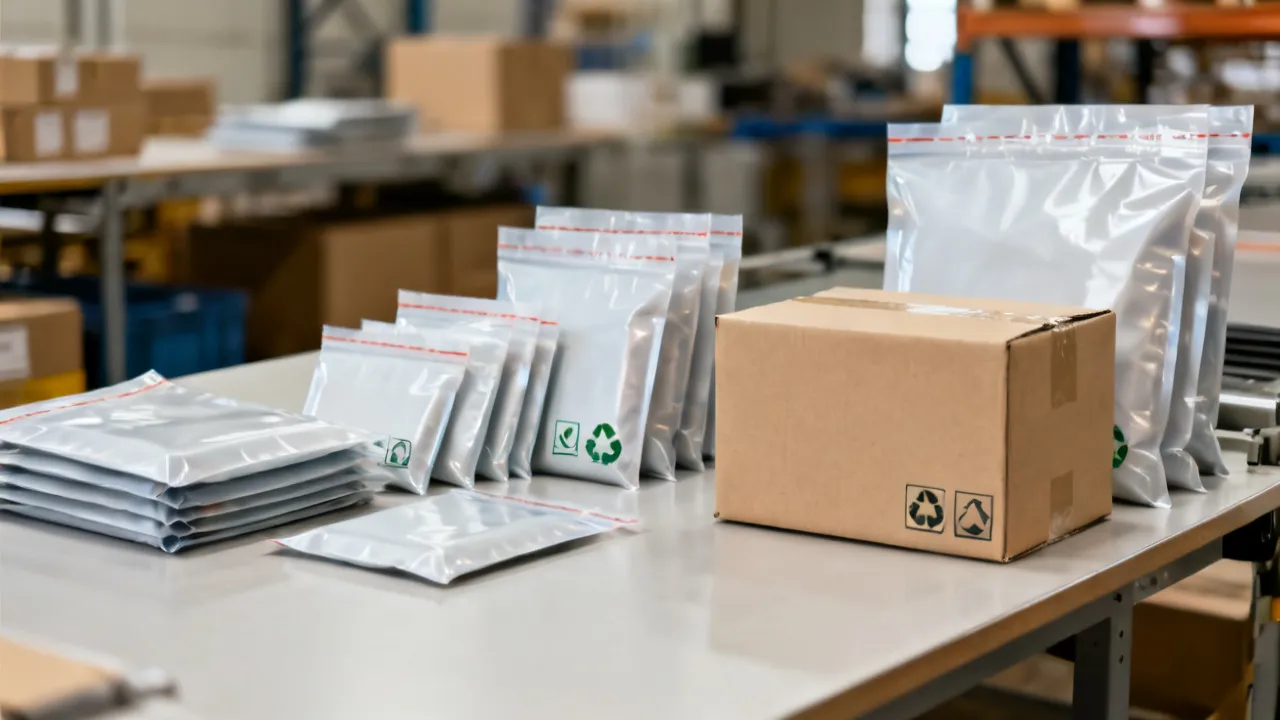
A Poly Mailer is a flexible shipping envelope made from polyethylene film. It is designed to contain and protect goods during handling, transportation, sorting, and delivery. Unlike a corrugated carton, a poly mailer does not have a rigid structure or built-in impact-absorbing walls. Its value comes from its low weight, compact storage profile, moisture resistance, flexibility, tear resistance, and self-sealing closure.
Poly mailers are frequently used for garments, textiles, accessories, books with suitable protection, soft household items, documents, promotional materials, and other products that are not highly vulnerable to crushing. They are common in retail fulfillment, marketplace selling, subscription commerce, fashion distribution, direct-to-consumer logistics, and return shipments. Some designs include an opaque exterior to improve privacy, while others include tamper-evident seams, return strips, bubble lining, reinforced construction, or recycled content.
From an industry perspective, the very important point is that a Poly Mailer is a packaging component, not a universal replacement for every shipping container. The correct choice depends on the product’s fragility, shape, weight, dimensions, moisture exposure, handling conditions, destination requirements, carrier rules, and customer expectations. A lightweight envelope may be an efficient option for a sweatshirt but an unsuitable one for glassware, precision equipment, a liquid-filled container, or an item that requires rigid edge protection.
The term “poly mailer” is often used broadly, but products in this category can differ considerably. A thin promotional envelope, a heavy-duty shipping bag, a bubble-lined mailer, and a returnable apparel mailer may all be described with similar language even though they offer different levels of protection. Buyers should therefore evaluate the actual construction and intended use instead of relying only on the product name.
Packaging decisions affect more than appearance. They influence shipping weight, storage space, labor time, product presentation, damage prevention, material consumption, reverse logistics, and the ease of scaling an operation. A Poly Mailer can support operational efficiency because it is typically thinner and lighter than a similarly sized carton. It can also be stored flat, allowing fulfillment teams to keep a large number of units in a relatively compact area.
For businesses shipping flexible or non-fragile products, this format may simplify the packing workflow. An employee can place the item inside the envelope, remove the release liner, press the adhesive flap closed, and apply the shipping label. The process may require fewer packing materials than a carton-based system, particularly when internal cushioning is unnecessary. Fewer components can also reduce the number of replenishment points at a packing station.
Poly mailers offer resistance to rain, splashes, and ordinary moisture exposure. This characteristic can be valuable when parcels are moved through outdoor collection points, loading areas, delivery vehicles, or damp sorting environments. Moisture resistance, however, should not be interpreted as a guarantee of waterproof performance under all conditions. Seams, closures, punctures, label adhesion, and openings created during rough handling remain potential weak points.
Packaging professionals generally assess a mailer by considering the complete distribution journey. A parcel may be stacked, dropped, compressed, dragged, exposed to temperature changes, or handled alongside heavier items. The material must therefore be judged according to its intended application rather than by thickness alone. A mailer that performs well in a controlled warehouse test may still need further evaluation if it will travel through a demanding carrier network.
Poly mailers are also important because they can help businesses standardize packaging. A company may establish a small range of sizes for different product groups, train employees on a consistent process, and reduce the need to choose among numerous boxes and cushioning materials. Standardization does not mean every item should use the same mailer. It means that the packaging decision can become repeatable, measurable, and easier to improve.
Poly mailers are manufactured from polyethylene film. Polyethylene is a thermoplastic polymer that can be processed into flexible films with different combinations of strength, stretch, opacity, softness, sealability, and resistance to moisture. The exact properties depend on the resin type, film structure, additives, manufacturing method, thickness, and quality-control process.
Material terminology should be reviewed carefully. A claim such as “recyclable” describes a potential end-of-life pathway, while “recycled content” describes the material used to make the product. These are different attributes. A mailer may contain recycled content but encounter limited collection options in a particular region. Conversely, a product designed for polyethylene film recycling may not contain recycled material.
Some suppliers also offer bubble-lined or padded poly mailers. These products add an internal layer of air-filled cushioning, paper cushioning, foam, or another protective material. They may be useful for products that need moderate protection from abrasion and minor impact but do not require a full carton. Because the lining changes the structure of the package, its recycling pathway may differ from that of a simple polyethylene mailer. The supplier should identify whether the construction is mono-material or contains bonded layers that require a different disposal route.
Buyers should compare specifications in a structured way rather than selecting a package solely on color, appearance, or unit price. The following characteristics have a direct effect on performance and operating cost.
Mailer size is usually stated by width and length. The listed dimensions may refer to the overall bag size, usable internal space, or dimensions excluding the adhesive flap. These measurement conventions are not always identical. Before placing a large order, obtain a sample and measure the actual usable cavity.
The selected mailer should accommodate the product without excessive compression or unnecessary empty space. A bag that is too small may stress the seams and closure. A bag that is too large may allow movement, create a poor presentation, increase material consumption, or make automated sorting less predictable. For flexible apparel, the product can often be folded or rolled carefully. For books, accessories, or boxed goods, the dimensions of the item and any protective insert must be considered together.
Film thickness is often expressed in mils or microns, depending on the supplier and market. Greater thickness can improve resistance to punctures and handling stress, but thickness alone does not determine overall quality. Resin selection, film orientation, seam construction, adhesive performance, and manufacturing consistency also matter.
A thicker mailer may be justified for heavier products, items with corners, or shipments that need additional puncture resistance. A lighter film may be suitable for soft, smooth merchandise. Packaging teams should conduct practical tests using representative products rather than assuming that the thickest option is always the most efficient. Excess material can increase cost and environmental impact without solving the actual failure point.
The adhesive flap is one of the most important functional elements. A well-designed closure should seal consistently across the intended operating temperature range and remain secure during routine transport. Some mailers feature a single adhesive strip, while others have separate strips for outbound and return shipping.
Closure performance can be influenced by dust, surface contamination, cold temperatures, humidity, and improper pressure during application. Staff should press the flap firmly along the complete adhesive area. If return shipping is part of the customer experience, a second strip can make the original package easier to reuse. The release liner should remain attached until the parcel is ready to close, because exposed adhesive can collect dust or lose effectiveness.
Side and bottom seams should withstand the expected contents and handling conditions. A seam that looks neat may still fail if the package is overloaded or if sharp product edges press against the film. Seams should be evaluated through sample packing, manual pull testing, and, where appropriate, formal distribution testing.
It is useful to examine whether failures occur in the film next to the seam or directly along the sealed area. These two failure modes may require different corrective actions. Film tearing beside a seam may indicate insufficient material strength or a sharp internal edge, while separation along the seam may indicate a sealing or manufacturing issue.
Opaque poly mailers conceal the contents and can help create a consistent branded appearance. Privacy may be particularly important for apparel, personal-care items, specialty products, and returns. Opacity can be achieved through pigments, layered film, or printed surfaces. A buyer should confirm whether the chosen color and film combination provides adequate coverage under strong light.
Plain mailers are often selected for operational simplicity, while custom-printed mailers can support brand recognition. Printing may include a logo, handling instructions, return information, or a repeat pattern. The design should not interfere with shipping labels, barcodes, adhesive areas, carrier markings, or customs documentation.
Printing specifications should be reviewed with the supplier, including color count, print coverage, registration tolerance, artwork format, minimum order quantity, and proofing requirements. A pre-production sample or digital proof can reduce the risk of receiving packaging that does not match the intended brand presentation. The print surface should also be tested for scuffing and ink transfer if packages will rub against one another during transport.
Some poly mailers include side or bottom gussets that increase capacity without requiring a much larger flat envelope. Gussets can be useful for bulky soft goods, but they may also change how the package sits on a conveyor or how a shipping label should be applied. Buyers should confirm the expanded dimensions and practical fill range.
Other features may include tear-open strips, tamper-evident patterns, hang holes, double adhesive strips, perforations, or reinforced handles. Each feature should have a defined operational purpose. Additional components can improve convenience, but they may also add cost, complicate recycling, or introduce another potential point of failure.
The product should determine the packaging format. A useful evaluation begins with five questions:
Soft garments are among the most straightforward applications. A standard opaque mailer may provide sufficient containment and moisture resistance when the garment is folded properly. Shoes require more consideration because their boxes can create rigid corners. If shoes are shipped without their retail box, the mailer must be large enough to avoid excessive stress and may need internal protection.
Books and printed materials can be shipped in poly mailers when bending and corner damage are acceptable within the service expectation. If the book has a valuable cover, delicate binding, or presentation-sensitive finish, a rigid mailer or carton may offer better protection. A bubble-lined mailer may reduce surface scuffing, but it will not provide the same edge protection as a rigid structure.
Small accessories can often be placed in a poly mailer after being secured in a smaller pouch, box, or protective wrap. This prevents loose items from moving against one another and reduces the possibility of puncturing the outer film. Items with metal edges, hooks, or pointed components should not be placed directly against a thin film envelope without appropriate protection.
Products that are fragile, liquid-filled, sharp, temperature-sensitive, or highly vulnerable to crushing generally require a different packaging strategy. A poly mailer may serve as an outer layer in some cases, but it should not be treated as the primary protective structure unless testing confirms that it meets the product’s needs. For liquids, secondary containment and leak prevention may be essential even when the outer package is moisture resistant.
Irregularly shaped products deserve special attention. A mailer may fit the product’s overall dimensions but still fail because a protruding corner concentrates force on one area of the film. Wrapping the item, adding a soft sleeve, or using a more durable mailer may solve the problem. The goal is to distribute contact and prevent localized stress.
There is no universal size chart that applies to every supplier because dimensions, flap length, gussets, and measurement practices vary. Nevertheless, buyers can organize their packaging range into practical categories.
| Mailer category | Typical application | Primary consideration |
|---|---|---|
| Small | Accessories, documents, compact soft goods | Ensure the item does not stress the seams or closure |
| Medium | Shirts, lightweight apparel, small textile products | Allow enough room for folding and label placement |
| Large | Jackets, multiple garments, larger soft goods | Check packed weight and movement inside the mailer |
| Extra-large | Bulky textiles and consolidated soft merchandise | Confirm seam strength and closure coverage |
| Returnable design | Apparel and products with frequent returns | Verify the second adhesive strip and usable return space |
When calculating the required size, measure the product after it has been prepared for dispatch. Include folded thickness, protective tissue, inserts, and any internal package. For a product with a rectangular shape, add sufficient allowance for insertion without forcing the film around the item. For irregular products, the maximum width and height should be assessed rather than relying on a single average measurement.
It is also useful to establish a small number of standard sizes. Too many packaging formats increase inventory complexity and make training more difficult. Too few sizes can lead to overpacking or strained closures. A packaging audit can identify which sizes account for the largest share of shipments and whether certain formats can be consolidated.
Size testing should include the sealing area. A product can technically fit into an envelope but leave too little flap area for a secure closure. The contents should remain below the intended fill line, and the opening should be able to lie flat enough for the adhesive to make complete contact. If workers regularly need to force the flap closed, the package is not correctly sized for that application.
Quality control should begin before a supplier’s full production run. Request representative samples made with the same film structure, dimensions, adhesive, and printing process that will be used in the final order. A sample made from a different material can produce misleading results.
Basic in-house testing may include:
For larger operations, formal packaging tests may be appropriate. The International Safe Transit Association publishes procedures for evaluating packaged products in distribution environments, while ASTM International develops standards covering materials and testing methods. The correct procedure depends on the product, transport network, package configuration, and business risk. Businesses should consult qualified packaging engineers or testing laboratories when failure could cause significant product loss or safety concerns.
Field data is equally valuable. Track damaged parcels, adhesive failures, customer reports, return condition, carrier handling patterns, and the frequency of replacement shipments. A packaging change should be assessed against these operational indicators, not only against a visual inspection. If a new mailer costs slightly more but reduces damage by a meaningful amount, the total result may be favorable.
Incoming quality checks should be simple enough to perform consistently. A receiving inspection may verify dimensions, color, print registration, seal placement, carton counts, and random samples of film and adhesive performance. Any recurring defect should be documented with photographs, lot numbers, purchase-order details, and a description of the affected quantity. Clear records make supplier corrective action more effective.
A consistent packing method improves both protection and presentation. The following process is suitable for many soft and non-fragile products, subject to product-specific requirements.
Inspect the item for defects, loose components, sharp edges, or contamination. Fold apparel neatly and secure small components in an inner pouch or suitable protective layer. Confirm that the product matches the order before placing it in the mailer. If the product includes a gift message, invoice, or care instructions, position those materials so they do not become trapped in the adhesive.
Choose the smallest practical mailer that accommodates the prepared item without excessive force. The adhesive flap must have sufficient surface area to close smoothly. Do not stretch the film so tightly that the closure or seams become overloaded. At the same time, avoid a mailer so large that the contents shift substantially during transportation.
Place the item into the center of the mailer. Avoid pushing corners or hard edges directly into the bottom seam. If the product is rigid or has a rough surface, use an inner package or protective wrap to separate it from the film. Do not use excessive force to push an item into a tight envelope, because a small tear created during packing may expand during shipment.
Gently position the contents so the opening lies flat. Excess air may increase package volume and make the envelope harder to seal, but aggressive compression can damage the product. The goal is a stable, compact package rather than maximum compression. Smooth wrinkles from the sealing area before applying the adhesive.
Remove the release liner without touching the adhesive unnecessarily. Align the flap and press across the entire seal. Check both corners and the center for incomplete contact. If the package is intended for returns, ensure the return strip remains clearly identifiable and that the original shipping label does not cover it.
Place the label on a flat, clean surface. Avoid seams, folds, adhesive flaps, and heavily curved areas. Barcodes should be unobstructed and easy for automated scanners to read. Any additional markings should be positioned so they do not compete with carrier information. If the surface is wrinkled, smooth it before applying the label rather than placing the label over a crease.
Check the seal, seams, label, package weight, and address. Confirm that the parcel does not contain prohibited materials and that the selected delivery service accepts the packaging format. A brief final inspection can prevent avoidable rework, address problems, open-package incidents, and delivery delays.
Shipping efficiency is determined by the interaction between packaging, carrier rules, warehouse operations, product protection, and order volume. A lightweight Poly Mailer may reduce the package’s gross weight, but the actual financial effect depends on the carrier’s pricing structure, dimensional rules, service level, destination, and account agreement.
Businesses should avoid assuming that a smaller-looking package will always cost less to ship. Some carriers apply minimum charges, dimensional thresholds, or specific acceptance requirements. The correct approach is to compare the total landed packaging and shipping outcome for a representative group of orders. The analysis should include actual packed dimensions rather than catalog dimensions.
Operational benefits can also arise from faster packing and reduced storage requirements. These benefits should be measured through order throughput, labor time, replenishment frequency, stockout risk, and damage-related handling. A packaging format that is inexpensive per unit may still be inefficient if staff struggle to close it or if it generates high rates of returns due to damage.
Warehouse layout matters. Poly mailers can be stored in vertical dispensers, open bins, or shelving systems that keep sizes separated. Clear labeling reduces selection errors. Packaging stations should be arranged so mailers, labels, scales, and order documentation are within easy reach, while adhesive surfaces remain protected from dust and debris.
Automation can influence the choice as well. Some fulfillment systems use automated bagging equipment that measures products, inserts them into film, seals the package, and applies a label. In such environments, film roll specifications, seal temperature, bag dimensions, perforation, and machine compatibility become critical. A manually suitable mailer may not work reliably in automated equipment without design changes.
Packaging is often the first physical interaction a customer has with an online retailer. A branded Poly Mailer can communicate consistency, while a plain design may emphasize efficiency and discretion. Neither approach is automatically superior. The decision should reflect the product category, customer expectations, budget, privacy requirements, and sustainability policy.
Custom printing should be legible without making the parcel difficult to process. Brand graphics should not cover the area reserved for the shipping label. If the mailer uses a dark or patterned exterior, the label area must provide enough contrast for reliable scanning. A design that looks attractive in a product photograph may be impractical if automated scanners cannot distinguish the barcode from the background.
A positive unboxing experience does not require unnecessary layers. A clean, well-sealed package with a protected product and clear return information can be more effective than elaborate packaging that adds labor and material. Customer research, return feedback, and product reviews can help determine whether packaging changes improve satisfaction.
Branding can also support package identification within a warehouse or returns center. A distinctive but functional design may help employees recognize products quickly. However, branding should never replace essential information such as the shipping label, handling instructions, customs paperwork, or return authorization.
Environmental assessment should consider the full packaging system rather than a single attribute. Relevant factors include material quantity, recycled content, production, transportation weight, durability, reuse potential, local collection systems, and disposal behavior.
Polyethylene film can be recyclable through appropriate film-recycling streams in locations where those systems accept the material. Acceptance varies by jurisdiction and program. Consumers should follow local instructions and remove labels or other components when required by the collection system. Businesses should avoid making broad disposal claims without confirming the applicable regional infrastructure.
Some poly mailers contain post-consumer or post-industrial recycled content. Buyers should request documentation identifying the percentage, type, and basis of the claim. Certification may be relevant where the business needs formal verification for procurement or environmental reporting. The performance of recycled-content film should still be tested, particularly when the mailer will carry heavy or irregular products.
Reuse can extend the practical life of a mailer when the material and closure design support it. Return strips are one example of a feature intended to make the original envelope useful for a second shipment. However, reuse should not be assumed if the first journey has caused punctures, seam damage, contamination, or severe creasing.
Material reduction should be approached carefully. Using less film can lower resource consumption, but a package that fails during delivery may require replacement shipments, additional handling, and extra materials. The optimal design is usually the lightest package that consistently protects the product under realistic distribution conditions.
Environmental claims should be precise. Terms such as recyclable, recycled-content, reusable, and compostable describe different properties. Polyethylene mailers should not be placed in organic-waste systems unless the relevant authority explicitly accepts that specific product. Compostability claims require particular attention because industrial composting, home composting, and conventional recycling are separate pathways.
Businesses can improve environmental performance by reducing unnecessary empty space, standardizing sizes, increasing recycled content where appropriate, supporting reuse, and preventing product damage. Packaging sustainability should be reviewed together with fulfillment data. A material change that lowers film weight but increases product replacements may not produce the intended overall benefit.
Supplier selection should cover more than quoted price. A reliable supplier should provide clear specifications, consistent production, suitable samples, reasonable lead-time information, packaging documentation, and a process for handling quality issues.
Before ordering, ask the supplier to confirm:
Purchasers should compare quotations on an equivalent basis. One supplier may quote the overall size, while another quotes the usable size. One may include printing plates, setup, or delivery, while another lists these charges separately. Comparing unit prices without aligning specifications can result in an inaccurate assessment.
Samples should be tested with actual products and labels. If the business sells multiple product categories, the test should include the heaviest, sharpest, and most irregular items intended for the mailer. A supplier that responds clearly to technical questions and documents changes is generally easier to manage over the long term.
Lead time is particularly important for custom-printed products. Businesses should establish reorder points based on average consumption, seasonal peaks, production time, transit time, and safety stock. A packaging shortage can interrupt fulfillment even when finished products are available. For this reason, some companies maintain plain backup mailers that can be used if printed inventory is delayed.
Poly mailers should be stored in a clean, dry area away from direct sunlight, excessive heat, sharp objects, and chemical contamination. Prolonged exposure to ultraviolet light or unsuitable temperatures may affect film and adhesive performance. The supplier’s storage guidance should take priority where specific limits are provided.
Cartons should not be stacked in a way that crushes the mailers or badly bends adhesive flaps. Inventory rotation helps ensure that older stock is used before newer stock, especially where adhesive shelf life is relevant. The warehouse team should inspect packaging periodically for discoloration, brittleness, surface contamination, or changes in closure performance.
Printed mailers may require additional care because abrasion or stacking pressure can affect the appearance of the graphics. If presentation is a key part of the brand experience, the outer carton and internal storage method should protect the printed surfaces until use.
Packaging should be kept away from areas where dust, oils, or loose fibers can accumulate. Contamination may not be visible at the time of packing but can reduce adhesive contact. Workers should avoid placing mailers directly on dirty floors or pallets, and opened cartons should be covered when packaging is not being used for an extended period.
A flexible envelope cannot provide the same edge and crush protection as a rigid carton. Fragile products should be evaluated separately and packaged with a structure appropriate to their risk.
Overfilling places stress on seams and adhesive closures. It can also create an uneven surface that makes label application difficult. A larger or stronger format may be more appropriate.
Thickness, width, folding method, and protective materials all affect fit. Measure the packed product rather than only its longest dimension.
If customers frequently return products, the packaging should support that process. A second adhesive strip, clear return instructions, and sufficient remaining space can make the package more practical.
A label positioned across a fold or seam may wrinkle, detach, or become difficult to scan. The label should be applied to the flattest available area.
Packaging descriptions should match documented material composition and local disposal realities. Clear language is more credible than broad claims that cannot be verified.
Adhesives may behave differently under cold, heat, humidity, and dusty warehouse conditions. Businesses should test closure performance in the environments where the mailers will actually be stored and used.
A mailer suitable for lightweight clothing may not be suitable for books, footwear, or products with hard components. Product groups should be classified according to risk, not simply according to whether they fit inside the envelope.
From a packaging specialist’s perspective, the best Poly Mailer is not simply the lowest-cost or thickest option. It is the format that meets the required protection level while supporting the company’s workflow and environmental objectives.
A practical assessment can use the following sequence:
This framework reduces the risk of making a packaging decision based on one attractive feature. For example, a highly branded mailer may improve visual recognition but require a longer production cycle. A recycled-content option may align with procurement goals but require verification of film strength and local end-of-life pathways. A returnable design may help reverse logistics but add a small amount of material and affect the closure process. Each trade-off should be evaluated in the context of the business.
Teams can also assign measurable acceptance criteria. These may include a maximum allowable damage rate, a target packing time, a minimum seal strength, a maximum package weight, a required opacity level, and a defined percentage of recycled content. Written criteria make supplier comparisons more objective and help prevent specifications from changing informally during the purchasing process.
Shipping requirements vary according to the carrier, service, destination, product type, and applicable national or regional rules. A Poly Mailer may be accepted for ordinary merchandise, but special contents can trigger additional requirements. Batteries, liquids, chemicals, medicines, food, and other regulated goods should be reviewed against the relevant transport rules before packaging is selected.
Businesses should also confirm requirements for address labels, barcodes, customs documentation, return labels, and security markings. International shipments may require declarations or documentation that cannot be attached reliably to a curved or heavily folded surface. A document pouch or supplementary rigid area may be needed.
Carrier guidance can change. Procurement and fulfillment teams should periodically review service terms rather than relying on assumptions based on past shipments. If the packaging is used across several countries, the strictest practical requirement may need to guide the design, or separate packaging formats may be maintained for different destinations.
Some delivery services have restrictions relating to maximum dimensions, closure methods, opacity, or the use of external markings. While a poly mailer may be technically strong enough for a shipment, it must also comply with the carrier’s acceptance and sorting requirements. Packaging approval should therefore involve both fulfillment personnel and the team responsible for shipping contracts.
A comprehensive cost analysis includes the purchase price, printing, inbound freight, storage, labor, shipping impact, damage, replacement shipments, returns, and disposal considerations. A mailer with a higher unit price may produce a lower total cost if it reduces packing time or product damage.
The following formula can help structure an internal review:
Total packaging cost per order = material cost + handling cost + storage allocation + damage cost + return-related cost.
This is not a universal accounting formula, but it encourages teams to examine the complete operating result. Businesses can compare several packaging scenarios using a representative order sample. The review should distinguish between controllable packaging costs and carrier charges that are determined by service rules or contract terms.
Custom-printed mailers also require attention to minimum order quantities and inventory risk. A design that changes frequently may leave obsolete stock. Plain mailers with labels, stickers, or inserts can offer greater flexibility for businesses with seasonal collections or multiple brands. The appropriate choice depends on volume, brand strategy, and forecast accuracy.
Labor can be a significant part of the calculation. If a carton requires folding, taping, void filling, and label application while a poly mailer requires only insertion and sealing, the difference may be meaningful at high order volumes. Conversely, if a poly mailer requires additional inner wrapping for almost every product, the apparent labor advantage may be smaller than expected.
Returns are a significant packaging consideration in apparel and other online retail categories. A customer may not have access to replacement packaging, so the original envelope should be easy to reopen and reseal where possible. A second adhesive strip can support this process without requiring additional packaging materials.
The return design should leave adequate room for the product after the first opening. Instructions should explain how to protect the item, remove or cover the original label, and apply the return label. If the package is damaged during the first shipment, the customer should be directed to use an alternative suitable package.
Returned goods should be inspected for film fragments, moisture exposure, contamination, and seal failure. A returnable envelope is not necessarily suitable for repeated cycles. Its reuse potential should be assessed through actual return data and practical testing.
A well-designed return package can reduce friction for customers and help protect products during the reverse journey. The return process should be considered when selecting dimensions, adhesive location, label area, opening method, and printed instructions. Businesses may also use return data to determine whether certain products need stronger packaging than outbound order data initially suggested.
Yes. Clothing is one of the most common applications because garments are flexible and usually do not require rigid crush protection. Select an appropriate size, protect any sharp fixtures, and ensure that the seal is not overstressed.
Polyethylene film generally resists ordinary moisture exposure, but performance depends on seams, closure quality, punctures, and handling conditions. It should not be described as fully waterproof unless the specific product has been tested and documented for that claim.
The appropriate thickness depends on the product’s weight, shape, surface, and distribution risks. Soft garments may use a lighter construction, while heavy or irregular contents may require a stronger film. Sample testing with the actual product is more reliable than selecting by thickness alone.
Some books can be shipped in poly mailers, particularly when minor bending or corner contact is acceptable. Valuable, delicate, or presentation-sensitive books may need a rigid mailer or carton for improved protection.
Some designs support reuse, especially those with a second adhesive strip. Reuse is appropriate only when the envelope remains clean, intact, and strong enough for another shipment. Damaged or contaminated packaging should be replaced.
Recyclability depends on the material, construction, local collection system, and program rules. Many polyethylene film products require a dedicated film-recycling pathway rather than placement in a standard mixed recycling bin. Check local guidance and the supplier’s documentation.
Recycled content refers to material recovered from previous use or manufacturing and incorporated into the mailer. Recyclable material refers to the possibility of processing the mailer into another product through an appropriate collection and recycling system. These terms describe different characteristics.
Opacity is useful when product privacy or consistent visual presentation matters. The required level depends on the product category and printing design. Request a sample and inspect it under strong light before approval.
Apply the label to a clean, flat area away from seams, folds, adhesive flaps, and heavily curved sections. The barcode should remain visible and unobstructed. Confirm adhesion using the actual mailer surface before large-scale use.
No. They are best suited to flexible or non-fragile products. Glass, electronics requiring rigid protection, liquids, sharp items, and crush-sensitive goods may require cartons, cushioning, inner boxes, or other specialized packaging.
Compare equivalent dimensions, film structure, thickness, closure design, printing, packaging quantities, lead time, quality documentation, and delivery terms. Test samples with actual products and review the supplier’s response to defects or specification changes.
No. Excess space can allow movement and create a less stable package. The correct size provides enough room for safe insertion and sealing without placing unnecessary stress on the film or leaving excessive internal movement.
No. Bubble-lined mailers include an internal cushioning layer and may provide additional protection from abrasion and minor impacts. They can be useful for selected products, but their material composition and recycling pathway may differ from those of a simple polyethylene envelope.
Store them in a clean, dry area away from direct sunlight, excessive heat, sharp objects, and chemical contamination. Keep cartons organized so adhesive flaps are not crushed or bent. Follow any specific storage guidance provided by the supplier.
A Poly Mailer can be an effective packaging solution when it matches the product and distribution environment. Its principal advantages include low material weight, compact storage, moisture resistance, flexible sizing, privacy, and a straightforward packing process. Those benefits are strongest when the mailer is selected through testing rather than assumption.
Start with the product’s risk profile, then define the necessary size, film strength, closure, opacity, and labeling surface. Evaluate samples using actual fulfillment procedures. Review the complete cost of ownership, including labor, damage, returns, storage, and shipping conditions. For environmental decisions, distinguish recycled content from recyclability and confirm local end-of-life pathways.
Maintain clear supplier specifications and inspect incoming stock consistently. Packaging performance depends on reliable manufacturing as well as sound design. With disciplined selection, testing, and review, a Poly Mailer can support efficient fulfillment while preserving product quality and a professional customer experience.
The strongest packaging program is also adaptable. Product lines change, carrier networks evolve, return rates fluctuate, and sustainability expectations develop over time. A business should periodically review whether its current mailer sizes, film constructions, closure systems, and disposal guidance still reflect actual operating conditions. Continuous improvement can involve a small change, such as eliminating an unnecessary size, improving label placement, or moving a high-risk product into a padded or rigid format.
In practical terms, the right Poly Mailer is one that closes reliably, protects the intended contents, moves efficiently through the shipping network, supports customer handling, and aligns with documented business requirements. Choosing it carefully turns a simple envelope into a dependable part of the fulfillment system.
Striking the Perfect Balance: Navigating Premiums and Out-of-Pocket Expenses in Senior Insurance Plans

Explore the Tranquil Bliss of Idyllic Rural Retreats

How to Make Lasting Memories at Disneyland Attractions

Affordable Phones and Plans for Seniors

Affordable Full Mouth Dental Implants Near You

Unlock the Top Kept Secrets to Finding Your Ideal Dentist for Flawless Dental Implant Results!

Discovering Springdale Estates

Unveiling RS Sul Telecom Services

The Guide to Car Trading


Understanding Proportional Valves
Proportional valves are hydraulic components vital for controlling fluid flow and pressure with high precision in various industrial applications. Their importance in automation and manufacturing settings stems from their ability to offer variable output in response to input signals, greatly enhancing system efficiency and performance.

Understanding Rexroth Valve Systems
Rexroth Valves are quintessential components in various industrial applications, known for their precision and reliability. These hydraulic, pneumatic, and electrohydraulic valves regulate fluid flow in machinery, ensuring optimal performance and safety. Understanding their functionality and benefits is crucial for industries seeking efficiency and sustainability in their operations.

Unveiling Thermo Fisher Chromatography
This article explores the pivotal role of Thermo Fisher Chromatography in modern analytical science. Chromatography is crucial for separating compounds within mixtures, making it indispensable in industries such as pharmaceuticals and environmental testing. Thermo Fisher Scientific stands out in this field for its innovative solutions, leading to improved accuracy and efficiency in research and development.

Understanding Corrosion Inhibitor Manufacturers
In today's industrial landscape, corrosion inhibitor manufacturers play a crucial role in safeguarding equipment and infrastructure against corrosive damage. These manufacturers provide specialized chemicals that prevent corrosion in various environments, including industries such as oil and gas, marine, and construction. Understanding their operations and offerings is essential for selecting the right supplier and maintaining asset longevity.

Analyzing Lm66100 Digikey Components
This article offers an in-depth analysis of the Lm66100 component available through Digikey, a renowned distributor of electronic components. The Lm66100, a load switch, is integral in industry applications, providing efficient power management. This piece explores its features, applications, and availability through Digikey, while offering a comprehensive guide for industry professionals seeking to optimize their electronic designs.

Leading Corrosion Inhibitor Suppliers
Corrosion inhibitor manufacturers play a crucial role in protecting materials from degradation. These companies specialize in creating chemical compounds that slow down or prevent the corrosive effects on various surfaces, especially metals. Understanding their production processes and solutions offered is vital for industries reliant on metal infrastructure.
