This guide explains how to select, test, and use a Poly Mailer for secure and efficient parcel shipping. Poly mailers are lightweight plastic shipping envelopes commonly used for clothing, soft goods, documents, and other non-fragile items. Their performance depends on film thickness, seal quality, dimensions, tear resistance, weather protection, labeling, and end-of-life considerations. Careful matching of packaging design to product requirements can improve handling consistency and reduce material waste.
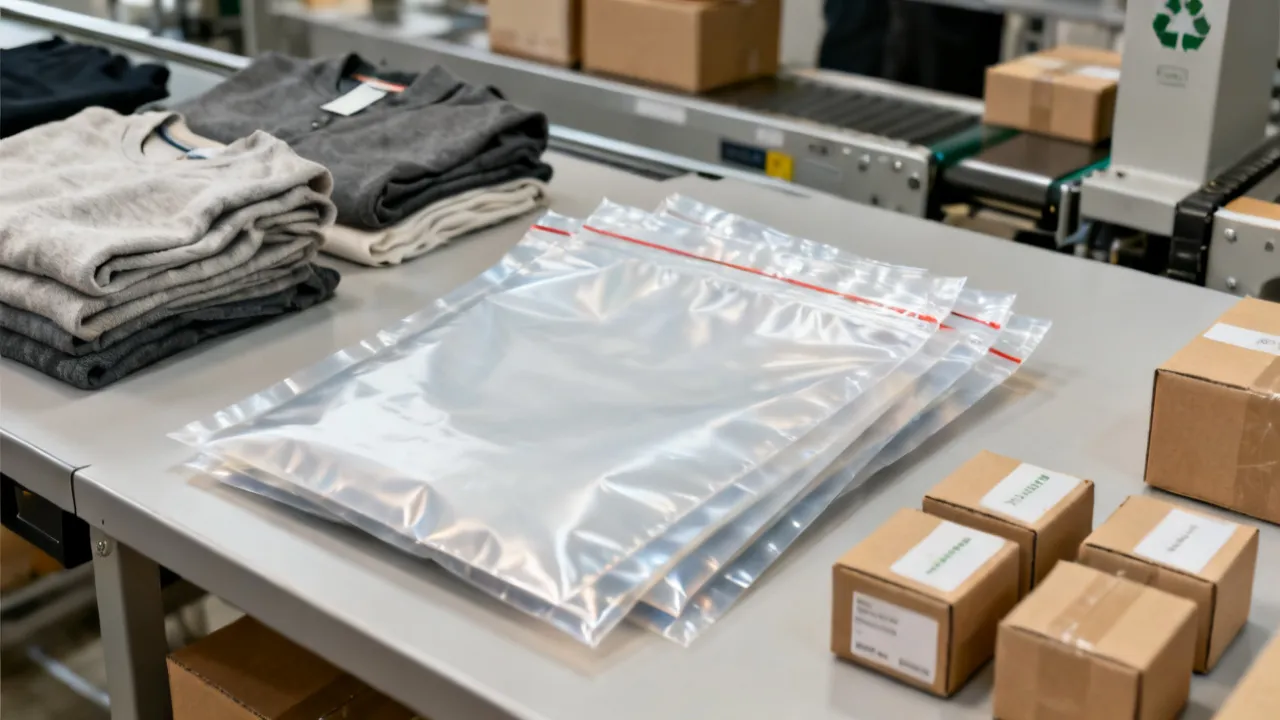
A Poly Mailer is a lightweight shipping envelope made primarily from polyethylene film. It is designed to protect products from surface moisture, dust, abrasion, and routine handling during transportation. Unlike corrugated boxes, it does not provide substantial resistance against crushing, impact, or puncture from sharp objects. The very important purchasing decision is therefore not appearance or price alone, but whether the mailer matches the physical characteristics of the item being shipped.
For apparel, linens, soft accessories, printed materials, and other flexible products, a properly selected Poly Mailer can provide an efficient outer layer with comparatively low material use. For fragile, rigid, sharp-edged, or high-value merchandise, it may need to be combined with an inner carton, protective sleeve, cushioning, or another structural package. Packaging professionals generally assess the item, the distribution route, the expected handling environment, and the labeling requirements before selecting a mailer specification.
A business should also consider how the package will be packed, stored, labeled, returned, and discarded. A mailer that performs well in a controlled warehouse may be less successful if customers must reuse it, if the product contains exposed hardware, or if the package travels through a demanding automated sorting network. The best selection is the one that performs reliably throughout the entire order cycle.
These principles apply whether a business is shipping from a small studio, a retail warehouse, or a large fulfillment center. The right specification can simplify packing while reducing avoidable damage and unnecessary packaging layers. It can also make the customer experience more consistent because the package arrives in a predictable condition and can be opened without damaging the contents.
Very poly mailers use polyethylene film, a flexible plastic material valued for its moisture resistance and relatively low weight. The film may be produced in different grades, thicknesses, colors, and surface finishes. Some products are manufactured from a single layer, while others use multi-layer film structures designed to improve strength, opacity, or printability.
Polyethylene is flexible rather than rigid. This characteristic allows the mailer to conform to the contents, but it also means that the package depends heavily on the shape of the product inside. A smooth folded garment presents a very different risk profile from a pair of shoes, a product with metal clasps, or a box with sharp corners. The same mailer may therefore be appropriate for one product line and unsuitable for another.
Film thickness is often expressed in mils or microns, depending on the supplier and market. Thickness is useful as a reference point, but it does not tell the entire performance story. Two mailers with similar thickness may behave differently because of resin selection, manufacturing quality, seam design, additives, and the orientation of the film. A purchaser should consider test results and actual use conditions rather than assuming that a thicker product will always be the top choice.
The principal components of a typical mailer include the body, side seams, bottom seam, closure flap, adhesive strip, and exterior surface. Each component contributes to package performance. A strong film may still fail if the seam is weak or the adhesive does not bond correctly. Similarly, a reliable closure cannot compensate for a body that tears when it contacts a rough product edge.
Not every feature is necessary for every shipment. A returns strip may be valuable for fashion retail, while it may add little value for one-way document delivery. A transparent mailer may simplify visual identification in a warehouse but may not meet privacy expectations for particular products. A tear strip may improve convenience for the customer, but it should be tested to ensure that it does not create an unintended weak line during sorting.
A Poly Mailer is generally well suited to products that are soft, flexible, lightweight, or already protected by an inner package. Common examples include shirts, trousers, sweaters, towels, bedding components, fabric accessories, posters with suitable reinforcement, and non-fragile promotional items. It can also be used for certain books or stationery products when the mailer includes adequate reinforcement and the contents do not have exposed corners likely to puncture the film.
Its flexible format can be helpful when product dimensions vary modestly. Rather than maintaining many rigid box sizes, a business may use several mailer sizes for a broader range of soft goods. The reduced bulk can also simplify storage and packing-station organization. However, these advantages should be evaluated against product protection, return handling, and the requirements of the carrier or fulfillment partner.
A mailer is especially useful when the product does not require empty space for cushioning. In a box, an apparel item may move around unless void fill is added, while a mailer can fit closely around the folded product. This can reduce shifting and help the package remain compact. The benefit is greatest when the product itself is resilient and does not need compression protection.
Businesses should consider an alternative package when the item is fragile, has a sharp corner, contains liquid, is vulnerable to bending, or requires compression resistance. Electronics, glassware, ceramics, framed products, and rigid components often require an inner carton or a more structured outer package. A Poly Mailer may still serve as a secondary protective layer, but it should not be treated as a substitute for impact protection.
| Product type | Typical packaging suitability | Additional consideration |
|---|---|---|
| Clothing and soft textiles | Generally suitable | Fold contents carefully and protect sharp hardware such as buckles or zippers. |
| Books and printed products | Conditionally suitable | Use corner protection or an inner wrap when bending or edge damage is a concern. |
| Cosmetics in sealed containers | Conditionally suitable | Use leak-resistant inner packaging and follow applicable transport rules. |
| Glass and ceramics | Usually unsuitable as the sole package | Use a rigid inner and outer structure with appropriate cushioning. |
| Metal parts with exposed edges | Conditionally suitable | Cover edges and test for puncture resistance before routine use. |
| Documents and soft promotional materials | Often suitable | Select an opaque construction when confidentiality is important. |
| Shoes and accessories | Conditionally suitable | Use an inner shoe box or protect rigid soles, heels, and buckles from puncturing the film. |
Size selection affects product protection, labor time, shipping presentation, and material consumption. A mailer should be large enough to receive the item without forcing the contents into the adhesive flap, yet compact enough to prevent excessive movement. Oversized packaging can create unnecessary folds and weak points, while undersized packaging can place stress on the seams and closure.
Start by measuring the item in its final packing condition. If clothing is folded, measure the folded bundle. If the product will be placed inside a protective sleeve or carton, measure the complete inner package rather than the product alone. Record length, width, and thickness. Then compare those measurements with the supplier’s usable internal dimensions.
Manufacturers may describe dimensions in different ways. Some list the full outside dimensions, while others list the usable dimensions below the flap. The flap length may not contribute to the internal cavity. Buyers should request a dimensional diagram or physical sample when the fit is close. A small difference can determine whether the sealing area remains clean and secure.
The thickness of the packed product should be considered carefully. A mailer may have enough length and width but still fail to close properly because the contents create a thick central bulge. When the item is bulky, the next larger size may provide a better seal, even if the smaller size technically accommodates the length and width. A flat, relaxed flap is generally preferable to one that is stretched tightly over the product.
A useful operational approach is to create a size matrix. Each product category can be assigned a preferred mailer size, a backup size, and a packaging exception. This reduces improvisation at the packing station and helps maintain a consistent appearance across orders. The matrix can also identify items that need a box, cushioning, or an additional protective bag instead of a mailer alone.
Businesses should avoid creating too many sizes without an operational reason. A large range may improve fit but can make inventory control and picker training more difficult. The objective is usually to identify a practical group of sizes that covers most products while reserving special packaging for unusual items.
Film thickness is one of the very visible technical specifications, but performance should be assessed as a group of related properties. These include tensile strength, tear resistance, puncture resistance, seam strength, adhesive performance, and resistance to temperature or moisture conditions encountered during distribution.
For soft products with smooth surfaces, a lightweight film may be adequate. Heavier goods or items with hard corners may require a more robust construction. The appropriate choice depends on the total package weight and the shape of the contents, not weight alone. A light object with a pointed edge can create more damage risk than a heavier object with a smooth, rounded profile.
Film flexibility is also relevant. A very stiff construction may resist certain forms of puncture but may be harder to fold, seal, or fit around irregular products. A more flexible film may conform better but require stronger seams or inner protection. Packaging selection is therefore a balance between material strength and usability.
Professional packaging evaluation should include both laboratory information and practical trials. Supplier test data can establish a baseline, but a business should also perform filled-package testing that reflects real handling. Packages may be stacked, conveyed, sorted, loaded, unloaded, and exposed to changes in temperature and humidity. The exact conditions vary by carrier and service, so no single test can predict every outcome.
It is wise to document the approved specification. A packaging record can include the supplier, product code, dimensions, film thickness, closure type, color, print requirements, sample approval date, and any restrictions. This record helps prevent substitutions that appear similar but perform differently.
The adhesive closure is a critical part of the Poly Mailer. A well-designed closure should create a continuous bond across the flap without requiring excessive pressure or special equipment. The sealing area should remain free from dust, fibers, moisture, and product material. If the adhesive is contaminated, the package may open during handling even when the film and seams are strong.
Packers should avoid overfilling the mailer. Excessive tension can pull the flap away from the body or create stress at the side seams. The contents should sit below the closure zone, with the flap able to fold naturally. When a package is too full, selecting the next larger size is usually more reliable than forcing the existing one closed.
Storage also affects adhesive performance. Suppliers typically identify recommended temperature and humidity conditions. Mailers should be kept in their original cartons or protective wrapping and stored away from direct sunlight, dust, heat sources, and prolonged moisture exposure. Rotating inventory according to the supplier’s guidance can help maintain consistent adhesion.
Some closures are designed for one-time use, while others include a return strip. A one-time adhesive generally provides a clear indication that the package has been opened. A return strip can be convenient, but it must be positioned so that the outbound closure does not cover or damage it. The packing instruction should explain the sequence clearly to avoid accidental use of the wrong strip.
For return programs, a second adhesive strip can improve customer convenience. The design should make it clear which strip is used for the outbound shipment and which is reserved for a return. Businesses should also consider whether the mailer remains intact after opening and whether the returned item requires a different level of protection.
Polyethylene film provides a barrier against ordinary surface moisture, which can help protect contents from rain, condensation, dust, and minor exposure during transportation. This does not mean that every mailer is waterproof under all circumstances. Seams, closures, punctures, and handling damage can create entry points, and some products require a fully sealed inner package.
Moisture-sensitive goods should be evaluated individually. Paper products, textiles, labels, and certain powders may benefit from an inner bag or protective wrap. If a product contains liquid, the inner container must be suitable for the liquid, securely closed, and compliant with relevant transport requirements. The outer mailer should not be the only barrier against leakage.
Appearance also influences customer perception. A clean, opaque mailer can present a consistent brand image, while a printed design may distinguish a shipment from ordinary parcels. However, branding should not compromise legibility of the shipping label or create confusion about the carrier address. The very effective designs usually place decorative elements away from the label zone and maintain strong contrast for operational markings.
Color can be useful for internal organization. Different colors may identify product categories, customer groups, or service levels. Nevertheless, color coding should not replace barcode verification or other order controls. Colored film can also affect print contrast and label readability, so the final design should be tested under warehouse lighting and normal scanning conditions.
A Poly Mailer may include a plain surface, a one-color mark, a full-color design, a return message, or handling instructions. Printing should be assessed for adhesion, abrasion resistance, and color consistency. The supplier should explain whether printing is applied directly to the film or through a label or laminate system.
Shipping labels require a stable, clean surface. Highly textured film, excessive wrinkling, or low-surface-energy materials can make labels difficult to apply. Before approving a mailer, apply the actual label stock used by the business and test it after representative handling. The barcode should remain readable, and the label should not peel when the package bends.
Placement is equally important. Labels should be attached to a relatively flat area, not across a seam, flap edge, or deep fold. If the mailer is flexible, the label should be pressed firmly across the entire surface. Businesses using automated sorting or scanning should confirm compatibility with the carrier and fulfillment system.
For businesses shipping internationally, artwork may need to accommodate customs declarations, return addresses, and destination-specific labels. Leaving a sufficiently large uninterrupted area can prevent the need for extra labels or tape that could obscure the original design.
Environmental evaluation should consider the full packaging system rather than a single material attribute. A Poly Mailer may use less material by weight than a rigid package for suitable products, but its environmental profile depends on film composition, manufacturing, transport, reuse potential, collection infrastructure, and disposal practices.
Recycled content can reduce reliance on newly produced resin when it is sourced and documented appropriately. Buyers should request a written specification identifying the type and proportion of recycled content. Statements should be precise and should not imply that a product is accepted in every municipal recycling program.
Recyclability is determined not only by material chemistry but also by local collection systems. Many household recycling programs do not accept flexible plastic packaging in curbside bins, even when the film itself is technically recyclable. Some regions provide dedicated drop-off collection through retail or specialist programs. Businesses should communicate disposal instructions carefully and verify local requirements before printing them on packaging.
Reusable mailers can be appropriate in closed-loop distribution systems, subscription programs, returns networks, or business-to-business routes where the package can be collected and inspected. Reuse only provides a practical benefit when the mailer remains durable through repeated handling and the return process is convenient enough to occur consistently.
Material reduction should be approached cautiously. Using a thinner film or a smaller size can reduce material use, but only if the shipment remains protected. A package that fails frequently can create additional environmental impacts through replacement products, second shipments, customer returns, and wasted merchandise. The most responsible option is usually the lightest construction that passes realistic performance requirements.
Packaging claims should be specific, evidence-based, and understandable. A supplier may be able to document recycled content, material type, or participation in a collection program. A business should avoid broad claims that suggest universal environmental superiority. Instead, it can describe the verified feature and provide accurate disposal guidance for the intended market.
Relevant information may be reviewed through national environmental agencies, recognized recycling authorities, packaging associations, and supplier technical documentation. Requirements differ by jurisdiction, so an environmental statement suitable for one market may not be accurate in another.
Testing should occur before a packaging format is adopted across a product range. A simple internal trial can identify problems that are not visible in a supplier catalog. The test should use representative products, actual labels, normal packing methods, and the intended closure process.
Handling tests should represent the likely distribution environment without creating a misleading sense of certainty. A drop test may reveal puncture or seam issues, while a compression test may show whether contents are being damaged by stacking. A rubbing test can indicate whether printing or labels deteriorate. Moisture exposure can help identify weaknesses around the closure and seams.
Testing should not be represented as a guarantee of carrier performance. It is a decision-support process that helps identify packaging weaknesses under defined conditions. For sensitive or high-value products, businesses may engage a packaging laboratory or follow recognized distribution-testing protocols.
| Test area | What to observe | Possible corrective action |
|---|---|---|
| Seal integrity | Flap separation, lifted corners, or incomplete bonding | Improve storage, sealing technique, size selection, or adhesive specification. |
| Puncture resistance | Small holes caused by corners, hardware, or repeated contact | Add inner protection or choose a stronger film construction. |
| Label adhesion | Peeling, wrinkling, or barcode obstruction | Use a smoother label zone or revise label placement. |
| Moisture exposure | Water entry through punctures, seams, or closure areas | Add an inner barrier and verify closure and seam performance. |
| Product movement | Excessive shifting or abrasion inside the mailer | Adjust the size or add a suitable inner wrap. |
| Customer opening | Difficulty opening without damaging the product or return package | Add a tear strip, opening instruction, or revised return design. |
Supplier selection should address consistency, technical support, production capacity, lead times, quality control, and communication. A low unit quotation is not necessarily the lowest total packaging cost if it leads to frequent damage, repacking, label failures, or stock shortages.
Begin by preparing a written specification. Include dimensions, usable cavity, film type, thickness, opacity, color, closure style, printing, recycled content requirements, packaging quantity, and tolerances. If the mailer must work with automated equipment, state that requirement before samples are produced.
Request samples that reflect the proposed production item rather than a generic demonstration sample. Evaluate the sample in the same packing environment used for routine operations. Ask the supplier to identify any acceptable variations in size, color, print registration, adhesive position, and film appearance.
Businesses should also consider minimum order quantities and storage space. Custom printing may require a larger commitment than plain stock, and seasonal artwork can create obsolete inventory. A phased approach may be appropriate: approve the construction with plain samples, confirm performance, and then move to a limited printed run before expanding the design.
Supplier continuity matters as well. If a particular mailer becomes unavailable, an untested substitute may create problems at the packing station. Maintaining an approved alternative specification can reduce supply risk, but every alternative should be checked for dimensions, closure performance, label adhesion, and product protection before it is placed into regular use.
The cost of a Poly Mailer includes more than the amount paid per envelope. A complete assessment can include storage, labor, labels, inner protection, damage rates, returns handling, disposal, and the effect of package dimensions on shipping charges. The correct calculation depends on the carrier’s pricing method and the business’s operating model.
Labor efficiency may improve when a mailer is easy to open, fill, and seal. A package that requires repeated adjustments or additional tape can increase handling time. Conversely, a highly specialized mailer may have a higher purchase price while reducing packing steps and improving consistency.
Damage-related costs deserve particular attention. If a thinner construction causes punctures or open seals, the business may incur replacement, reshipment, customer-service, and reverse-logistics expenses. These indirect costs can outweigh a modest difference in packaging price. Packaging decisions should therefore be based on total cost of ownership rather than unit price in isolation.
| Cost category | Evaluation question |
|---|---|
| Material purchase | What is the price per approved mailer specification? |
| Labor | How much time is required to insert, seal, label, and inspect each package? |
| Inner packaging | Does the mailer require sleeves, wraps, inserts, or edge protection? |
| Shipping interaction | Does the final package size affect the selected carrier service or charge method? |
| Returns | Can the package support return handling without additional packaging? |
| Quality losses | What are the costs of damage, repacking, reshipment, or customer complaints? |
| Inventory | How much storage, safety stock, and obsolescence risk does the specification create? |
It is also useful to compare packaging costs by product category rather than using one average number. A mailer that is economical for a shirt may be inefficient for a heavy sweatshirt or a multipack. Category-based reporting can show which products need a larger size, inner reinforcement, or an alternative package format.
A strong mailer can underperform when the packing process is poorly controlled. The workstation should keep mailers protected from sharp tools, excessive heat, dust, and standing moisture. Products should be checked for exposed corners, loose components, or contamination before insertion.
The packing workflow should be simple and repeatable. The packer verifies the product, selects the assigned size, inserts the item, checks the fit, removes the release liner, seals the flap, and applies the label. If the business uses multiple sizes, each size should be clearly identified to reduce selection errors.
Cutting open a sealed mailer with a blade can damage the contents. Packing teams should be instructed to use safe opening methods and to position labels so that a customer can identify the return or opening area. For products with sharp hardware, the item should be folded or wrapped so that the hardware does not contact the outer film directly.
Training should include examples of acceptable and unacceptable packages. A visual guide can show how much space should remain beneath the flap, how a properly sealed edge looks, and which products require inner protection. Periodic observation at the packing station can identify shortcuts that are not obvious from written instructions alone.
Returns are an important consideration for online retail. A mailer with a second adhesive strip may allow a customer to package an item without obtaining another outer envelope. This design is very useful when the returned product has similar protection needs and the original mailer remains clean and intact.
Businesses should provide clear return instructions that do not depend on the mailer’s appearance alone. The customer should know which section to open, which strip to use, and where to attach the return label. If the original package is damaged, the instructions should explain that a suitable alternative package may be required.
Reuse is not appropriate in every situation. A mailer exposed to moisture, dirt, stretching, or puncture may no longer offer dependable protection. A returned package should be inspected before it is placed back into circulation. In many direct-to-consumer systems, collecting and redistributing used mailers is more complex than designing a durable return closure. The practical result depends on customer behavior, transport distance, and the organization’s reverse-logistics process.
Customer experience also includes the way the package opens. An envelope that is extremely difficult to tear may encourage the use of knives or scissors near the product. An easy-open strip can reduce this risk, but it should be placed away from the main contents and tested for dependable operation. Clear opening and return instructions can improve convenience without adding substantial material.
Packaging requirements vary according to product type, destination, carrier, and jurisdiction. A general Poly Mailer intended for apparel may not be suitable for regulated goods, liquids, batteries, medical products, food-contact applications, or items requiring tamper-evident protection.
Businesses should review carrier packaging rules and product-specific regulations before shipment. For international delivery, customs documentation, address formatting, commercial invoices, and destination-country requirements may apply. The outer mailer should provide a stable location for labels and documents without obscuring required information.
Environmental labeling also requires care. Terms describing recyclability, recycled content, compostability, or biodegradability may be regulated or interpreted differently across markets. Claims should be supported by documentation and written in a way that does not mislead the recipient about available collection systems.
When the product has special safety requirements, the packaging supplier should not be the only source of compliance advice. The shipper should consult the relevant carrier, regulator, testing body, or qualified specialist for the destination and product category.
A glossy finish, attractive color, or premium print does not demonstrate adequate puncture resistance or seam strength. Visual quality should complement, not replace, functional testing.
The flap, seams, and manufacturing tolerances reduce usable space. Confirm the internal dimensions before approving the size.
Overfilling stretches the film and closure, increases stress at the seams, and may create an uneven surface for the label. Select a larger specification or revise the inner packing method.
Hard corners, buckles, zippers, and metal parts can puncture flexible film. Cover or reposition these features before sealing.
Uneven surfaces can reduce adhesion and interfere with scanning. Apply the label to a flat, clean area.
Material recyclability and collection access vary by location. Use documented, market-specific information and provide practical disposal guidance.
Even an approved product can experience batch variation or shipping damage. A basic receiving inspection can detect incorrect dimensions, damaged cartons, or adhesive problems before the mailers reach the packing line.
A substitute may have a similar color and listed size but a different film grade, seam design, or adhesive. Any change should be sampled and tested before full implementation.
The very suitable package is determined by the item and distribution risk. A Poly Mailer is not universally better or worse than a box, paper envelope, padded mailer, or reusable bag. Each format provides a different balance of flexibility, protection, storage demand, presentation, and end-of-life handling.
| Packaging format | Primary strengths | Primary limitations | Common applications |
|---|---|---|---|
| Poly Mailer | Lightweight, flexible, moisture-resistant surface, efficient for soft goods | Limited crushing and impact protection; flexible plastic collection varies | Apparel, textiles, non-fragile merchandise |
| Corrugated box | Structural support, stackability, better protection for rigid products | Requires more storage volume and may require void management | Electronics, household goods, fragile or heavy products |
| Paper envelope | Paper-based construction, printable surface, familiar disposal pathway in some markets | Lower moisture resistance and limited puncture protection | Documents and selected lightweight products |
| Padded mailer | Combines an outer envelope with cushioning for moderate protection | May be harder to recycle because of mixed materials | Small products needing abrasion or light impact protection |
| Reusable bag | Designed for repeated cycles when collection and inspection are organized | Higher reverse-logistics and cleaning considerations | Closed-loop delivery or managed return programs |
A hybrid solution can sometimes provide the best balance. For example, a garment may be placed in a thin inner sleeve for cleanliness and then shipped in an opaque mailer. A printed book may be placed between protective boards before insertion. A shoe may remain in its retail box and receive a stronger outer mailer only when the box itself does not need substantial impact protection. These combinations should be tested as complete systems.
From an industry perspective, the top packaging choice follows a sequence rather than a single preference. First, define the product risk. Second, establish the minimum protection required. Third, select a package construction that meets that requirement. Fourth, test the complete shipment. Finally, assess operating cost, customer experience, and local disposal conditions.
This framework prevents a common purchasing error: selecting a mailer based on a catalog description and discovering only after launch that the product shape, label system, or return process creates a problem. Packaging is part of the fulfillment system. It interacts with product design, warehouse work, carrier handling, customer expectations, and environmental communication.
The decision should be revisited when products change. A new zipper, larger bundle, heavier catalog, seasonal insert, or revised return label can alter the way a mailer performs. Regular review is particularly important for companies that expand into international markets or introduce automated packing and sorting.
A quality-control program does not need to be complicated to be useful. Incoming inspection can verify dimensions, film appearance, closure position, print quality, and carton labeling. In-process checks can confirm that packers are using the correct size and sealing the mailer consistently. Periodic shipment reviews can reveal whether the package continues to perform after changes in product mix, carrier service, or warehouse procedure.
Measurements should be recorded in a format that supports trend analysis. Useful fields include supplier batch, mailer size, product category, failure type, destination region, shipping service, and corrective action. Over time, these records can show whether a problem is associated with product edges, incorrect sizing, adhesive storage, or a particular production batch.
When a defect occurs, preserve the failed package and its contents when practical. Photographs alone may not show the full cause. The supplier may need to inspect the material, seal, seam, and handling conditions. A documented investigation supports a more reliable corrective action than an immediate change based on an isolated assumption.
Quality-control results can also support purchasing negotiations. If a supplier consistently meets the approved specification and responds effectively to problems, that performance has value. Conversely, repeated dimensional variation or adhesive failures may justify a supplier review even when the quoted unit cost remains attractive.
A Poly Mailer is commonly used to ship soft, flexible, and non-fragile products such as clothing, textiles, documents, and selected accessories. It can also serve as an outer layer for products protected by an inner carton or sleeve. It is generally not sufficient as the sole protective package for glass, ceramics, or other fragile goods.
Polyethylene film resists ordinary surface moisture, but a mailer should not automatically be described as waterproof in every condition. Punctures, open seams, adhesive failure, and rough handling can allow water entry. Moisture-sensitive or liquid-containing products may require a sealed inner barrier and additional testing.
Measure the product in its final packed condition, including any inner sleeve, wrap, or carton. Compare the measurements with the supplier’s usable internal dimensions rather than only the outside dimensions. Select a size that allows easy insertion and a flat, secure closure without excessive empty space.
There is no single thickness suitable for every product. Lightweight soft goods may need less material than heavy items or products with exposed edges. Film thickness should be considered together with puncture resistance, seam strength, adhesive performance, package weight, and distribution conditions. Samples and filled-package trials are recommended before approval.
A Poly Mailer can be used as a secondary outer layer for a fragile item, but it generally should not replace a rigid protective structure. Fragile goods require an inner package that controls movement and provides impact protection. The completed shipment should be tested under representative handling conditions.
Some mailers include a second adhesive strip for returns, and certain durable designs may support repeated use in a managed system. Reuse depends on the condition of the package, the product, the return route, and the organization’s inspection process. A punctured, stretched, wet, or heavily soiled mailer should not be returned to service.
Recycling availability depends on the film type and the collection system in the relevant area. Flexible plastic packaging is not accepted in every curbside program. Businesses should verify local guidance and use only documented material and disposal statements.
Shipping labels can adhere when applied to a clean, smooth, relatively flat section of the film. Adhesion may be reduced by wrinkles, dust, textured surfaces, low-surface-energy films, or placement across seams. Test the actual label stock and apply it with firm, even pressure.
It may reduce packaging weight and storage volume for suitable products, but the effect on total shipping cost depends on the carrier’s pricing structure, the final package dimensions, service level, and destination. A complete cost analysis should include labor, damage, returns, and inner packaging.
Printed mailers can support brand recognition and provide handling or return information. Plain mailers may offer greater flexibility when products, markets, or designs change frequently. The decision should consider minimum order quantities, artwork costs, label readability, inventory risk, and customer expectations.
Store them in a dry, clean area away from direct sunlight, heat, sharp objects, and prolonged moisture. Keeping stock in its original cartons can reduce dust and handling damage. Follow the supplier’s recommendations for temperature, humidity, and inventory rotation.
A purchasing specification should identify the material, dimensions, usable cavity, film thickness, opacity, color, closure style, printing, recycled-content requirements, tolerances, packaging quantity, and quality expectations. It should also state whether the mailer must work with automated sorting, specific labels, or a return process.
A box is usually preferable when the item is fragile, rigid, heavy, sharp-edged, sensitive to crushing, or likely to be damaged by bending. A mailer can still be added as a secondary layer in some cases, but the box or protective structure should provide the primary physical protection.
A Poly Mailer can be an effective shipping format when it is matched carefully to the product and distribution environment. Its principal advantages are flexibility, moisture resistance at the film surface, compact storage, and suitability for many soft goods. Its limitations are equally important: it offers limited structural protection and can be vulnerable to puncture, poor sealing, and unsuitable handling.
The strongest purchasing decision combines accurate sizing, documented material specifications, supplier samples, practical testing, reliable warehouse procedures, and responsible environmental communication. By evaluating the complete packaging system rather than focusing on a single feature, businesses can establish a mailer program that supports product protection, operational consistency, customer experience, and informed resource management.
In practical terms, the right Poly Mailer is not necessarily the thickest, cheapest, most colorful, or most heavily featured option. It is the specification that protects the intended product with an appropriate amount of material, seals consistently, accepts labels reliably, fits the fulfillment workflow, and satisfies the requirements of the markets where it will be used. A disciplined selection and review process allows businesses to obtain those benefits without treating a flexible envelope as more protective than it really is.
For technical verification and market-specific decisions, readers should consult supplier technical data sheets, carrier packaging guidance, national postal authorities, official environmental agencies, recognized packaging associations, and applicable transport regulations. These sources can provide current information on material claims, labeling, flexible-film collection, testing methods, and product-specific shipping requirements.
Additional reference areas may include distribution-testing standards, adhesive manufacturer guidance, recycled-content documentation, warehouse safety procedures, and local rules for packaging disposal. Because requirements and collection systems can change, businesses should review these sources periodically rather than relying indefinitely on an old package specification or a general statement from a catalog.
Striking the Perfect Balance: Navigating Premiums and Out-of-Pocket Expenses in Senior Insurance Plans

Explore the Tranquil Bliss of Idyllic Rural Retreats

How to Make Lasting Memories at Disneyland Attractions

Affordable Phones and Plans for Seniors

Affordable Full Mouth Dental Implants Near You

Unlock the Top Kept Secrets to Finding Your Ideal Dentist for Flawless Dental Implant Results!

Discovering Springdale Estates

Unveiling RS Sul Telecom Services

The Guide to Car Trading


Understanding Proportional Valves
Proportional valves are hydraulic components vital for controlling fluid flow and pressure with high precision in various industrial applications. Their importance in automation and manufacturing settings stems from their ability to offer variable output in response to input signals, greatly enhancing system efficiency and performance.

Understanding Rexroth Valve Systems
Rexroth Valves are quintessential components in various industrial applications, known for their precision and reliability. These hydraulic, pneumatic, and electrohydraulic valves regulate fluid flow in machinery, ensuring optimal performance and safety. Understanding their functionality and benefits is crucial for industries seeking efficiency and sustainability in their operations.

Unveiling Thermo Fisher Chromatography
This article explores the pivotal role of Thermo Fisher Chromatography in modern analytical science. Chromatography is crucial for separating compounds within mixtures, making it indispensable in industries such as pharmaceuticals and environmental testing. Thermo Fisher Scientific stands out in this field for its innovative solutions, leading to improved accuracy and efficiency in research and development.

Understanding Corrosion Inhibitor Manufacturers
In today's industrial landscape, corrosion inhibitor manufacturers play a crucial role in safeguarding equipment and infrastructure against corrosive damage. These manufacturers provide specialized chemicals that prevent corrosion in various environments, including industries such as oil and gas, marine, and construction. Understanding their operations and offerings is essential for selecting the right supplier and maintaining asset longevity.

Analyzing Lm66100 Digikey Components
This article offers an in-depth analysis of the Lm66100 component available through Digikey, a renowned distributor of electronic components. The Lm66100, a load switch, is integral in industry applications, providing efficient power management. This piece explores its features, applications, and availability through Digikey, while offering a comprehensive guide for industry professionals seeking to optimize their electronic designs.

Leading Corrosion Inhibitor Suppliers
Corrosion inhibitor manufacturers play a crucial role in protecting materials from degradation. These companies specialize in creating chemical compounds that slow down or prevent the corrosive effects on various surfaces, especially metals. Understanding their production processes and solutions offered is vital for industries reliant on metal infrastructure.