This guide explains Pmoc Abrava from an industry perspective, focusing on how it is selected, handled, and applied in real workflows. It then provides objective background on the keyword terms, the role of protected chemistry intermediates in synthesis, and how quality, documentation, and supplier capability reduce technical risk.
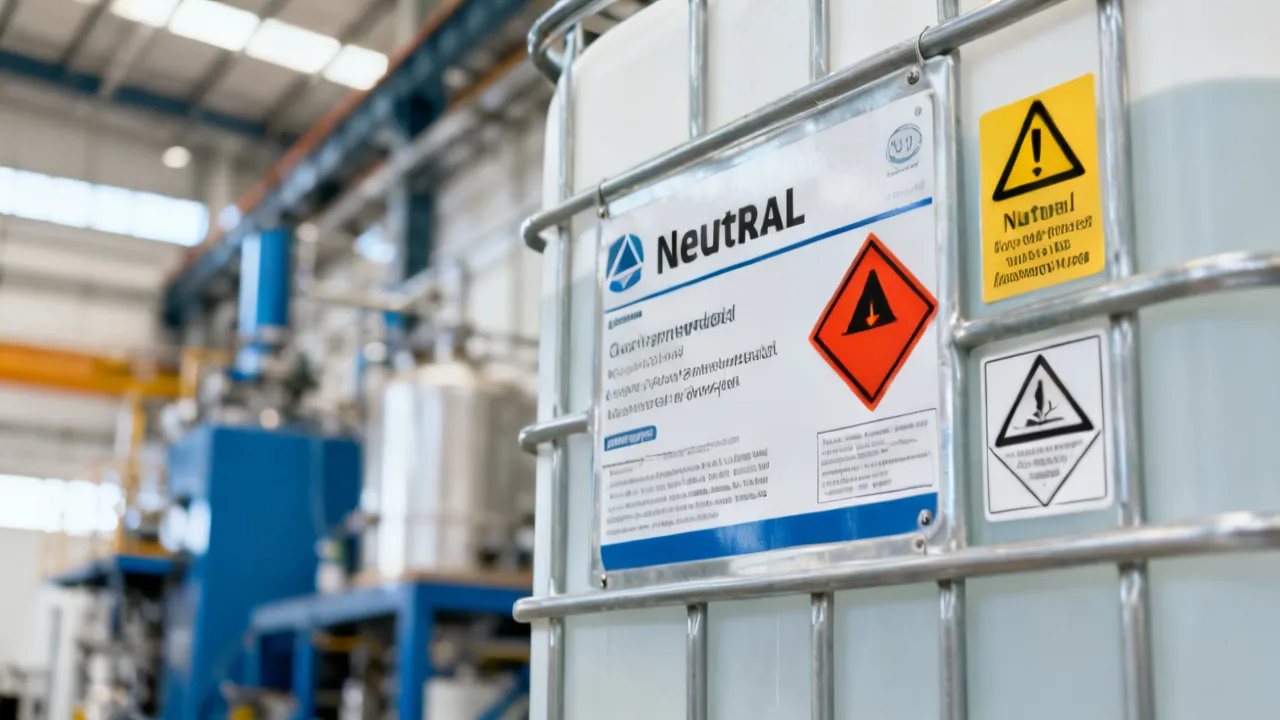
Pmoc Abrava is typically discussed in the context of specialty organic synthesis where “protected” functional groups and controlled reactivity are essential. In practice, its value is top understood as a matter of process reliability: consistent starting-material quality, predictable behavior under planned conditions, and traceable documentation that helps teams scale from bench to pilot work. From an expert standpoint, the very important decisions around Pmoc Abrava are not only “can it react,” but also how safely and reproducibly a supplier’s material performs across batches.
Because the term provided (“Pmoc Abrava”) may appear in industry discussions as a shorthand label for a particular intermediate, derivative, or inventory naming convention, the core objective of this guide is to show how professionals evaluate and implement a material of this type—without relying on unverifiable claims or marketing-style promises.
In modern chemical workflows, “specialty intermediates” like Pmoc-protected building blocks often serve as critical control points in a multistep route. A protected intermediate is not simply another reagent; it frequently represents a decision that locks in downstream selectivity, purification strategy, safety posture, and analytical burden. As companies shift from purely exploratory synthesis to more industrialized development—where manufacturing reproducibility and audit-readiness become non-negotiable—the selection of an input like Pmoc Abrava becomes a systems problem rather than a single-step question. The same material that “worked once” on a lab scale may behave differently when the route is tightened, when temperatures or reagent grades change, when scale increases, or when the impurity profile shifts slightly due to upstream variations at the supplier.
Therefore, what “Pmoc Abrava matters” really means in day-to-day operations is: it can be a major driver of (1) yield, (2) impurity formation, (3) time-to-result (including troubleshooting time), (4) compliance risk, and (5) overall cost of use when you consider rework and deviation investigations. Even if chemistry is robust, the operational reliability of the input determines whether the process is easy to run or constantly fragile.
In a well-run chemical organization, Pmoc Abrava would be treated like an engineered component: you verify identity, confirm critical quality attributes (CQAs), understand handling constraints, and ensure traceability. You avoid the common failure mode of treating specialty intermediates like commodities whose only important attribute is nominal purity. Instead, you treat the material as a controlled input whose specification and lot history must match the process needs.
In synthetic chemistry discourse, “Pmoc” is commonly associated with a protecting-group strategy. Protecting groups can temporarily mask reactive sites so that chemists can direct steps toward the intended transformation. When an intermediate is protected, the process can become more selective, reduce side reactions, and improve purification efficiency.
From an industry expert viewpoint, the practical takeaway is that the “Pmoc” part of the keyword usually signals one or more of the following process requirements:
It is useful to think of the protecting group as a reactivity governor. In a typical multistep synthesis, multiple functional groups may compete for reaction pathways. Without protection, you risk undesired side reactions such as esterification when an amine should be functionalized, or alkylation when an alcohol should remain inert. With protection, you narrow the “allowed” reactivity. However, that also means the protection must be strong enough not to fail prematurely and must be removable enough to avoid forcing harsher conditions that could damage other sensitive parts of the molecule.
From a process-development perspective, the protecting group choice often influences:
Even when the “Pmoc” label is stable, there can be lot-to-lot variation in residual solvents, trace acids or bases, or partial hydrolysis products. These subtle changes may not alter the main identity peaks dramatically, but they can affect downstream deprotection yield or generate new impurities. That is why quality attributes beyond simple “assay” become important. In a controlled workflow, you define which attributes are critical (e.g., specified maximum water content, residual solvent limits, single-peak purity thresholds, impurity identity thresholds) and which attributes are simply supportive.
Another important concept for modern workflows is that analytical methods must verify integrity, not just identity. A material can pass a basic identity check and still be partially degraded. For instance, if the protecting group can hydrolyze slowly, you might see minor additional peaks that become significant only under certain deprotection conditions. As processes scale up, the impact of minor impurities can become magnified due to heat transfer differences, mixing changes, and longer hold times. Therefore, “Pmoc” implies not only a protecting-group chemistry but also an analytical mindset: measure what changes your process outcome.
The second keyword segment, “Abrava,” may function as a brand name, catalog mnemonic, internal product code, or a naming variation used by suppliers and distributors. In industry practice, you should interpret such terms as procurement anchors rather than as purely chemical descriptors.
That means a professional sourcing workflow should focus on:
In procurement, naming is frequently where confusion begins. A code like “Abrava” might correspond to different grades: sometimes it might denote a purified intermediate, sometimes a mixture, sometimes a material “as produced” within a certain impurity profile. Even if two vendors use the same mnemonic, their internal manufacturing route can differ, resulting in different impurity sets or different residual solvent distributions.
Therefore, professionals typically avoid relying on the name as the only truth. Instead, they anchor decisions in:
Another operational point is that codes like “Abrava” can sometimes reflect packaging or format. For example, a supplier might offer the same chemical identity as a crystalline solid versus a solution, or packaged under different inert conditions. Those packaging differences can affect moisture pickup, physical handling (flowability, filterability), and eventually reaction performance. Treating “Abrava” as a procurement and specification signal helps prevent accidental “wrong format” purchases.
In short: treat “Abrava” as a label you must validate, not as an assumption you can trust. The strongest procurement strategy is one that transforms a supplier code into a verified, lot-specific input with known attributes.
You mentioned “price information” and “supplier details,” but no explicit numbers or named suppliers were provided in the prompt. In that case, an objective and helpful approach is to explain how teams evaluate price responsibly—because chemical pricing can be misleading when quality, packaging, and documentation aren’t accounted for.
In a typical procurement analysis for a specialty intermediate like a Pmoc-type material:
Even without quoting specific figures, a reliable pricing philosophy is to treat the quote as a bundle—material + documentation + consistency + service terms. If a supplier provides a lower nominal price but weak analytical support, your downstream costs (retesting, rework, delayed runs) may erase the apparent savings.
A practical way to view “cost per gram” is that it is the cost of the container plus the raw ingredient plus the supplier’s overhead, but not necessarily the cost of making your process succeed. For specialty intermediates, the material’s “effective cost” depends strongly on:
Modern procurement teams also incorporate the concept of cost of compliance. If a supplier cannot provide the documentation needed for auditability (e.g., batch traceability, SDS accuracy, impurity statements), you might face delays in internal approvals. Even if the chemistry is correct, you can lose time due to QA paperwork. That is an operational cost that is rarely captured in “cost per gram” comparisons.
Therefore, rather than focusing purely on price, consider a multi-factor evaluation:
In well-established organizations, these factors become part of a supplier scorecard. That scorecard is often updated with data from incoming inspection results, investigation outcomes, and deviation rates. If you build such a scorecard, “Pmoc Abrava” becomes not only a chemical input but also a measurable supplier performance category.
Industry specialists usually look beyond the catalog label and examine how a supplier performs under real conditions. For a Pmoc Abrava-type specialty input, supplier capability is often determined by:
“Top supplier” is not a single universal ranking. The best supplier depends on your internal priorities. Some organizations prioritize fastest lead times; others prioritize impurity profiling details; others prioritize documentation completeness for regulated manufacturing. A supplier that is “cheapest” can be worst for you if their documentation package forces extensive re-testing or their impurity profile tends to cause consistent downstream issues.
Operationally, supplier capability is commonly assessed through:
For specialty intermediates, the most important capability is often predictability. A supplier may deliver a CoA that shows high purity on paper, but if their impurity profile drifts subtly, you may see the impact later as a consistent pattern of downstream purification difficulties or lower deprotection yields. Supplier capability therefore includes an implicit promise: their process is controlled enough that the “real-world input” stays within your tolerance band.
To operationalize that, teams often request:
Even if you cannot obtain everything, you can ask the right questions. A strong supplier should be able to answer at least the ones that matter for your risk assessment.
Even when a material is intended for lab or plant chemistry, safe handling should be built into standard operating procedures. Because the exact hazards for a specific “Pmoc Abrava” item were not provided here, the responsible approach is to emphasize general top practices that apply to specialty organic intermediates:
This is not just compliance; it directly supports yield and reproducibility. In specialty chemistry, small differences in material history can create meaningful differences in outcome. A protecting group might not be extremely unstable, but if it is sensitive to hydrolysis or oxidation, then exposure to humid air or incorrect storage temperature can gradually degrade the material. That degradation can be subtle—perhaps only a minor impurity growth that then affects deprotection efficiency and purification. Safety and stability therefore reinforce each other: proper handling reduces both hazard risk and process variability.
Beyond the SDS basics, a modern workflow often includes additional layers:
For protected intermediates, thermal behavior can matter as well. Some specialty chemicals can experience decomposition or release reactive fragments under heat or during solvent evaporation. Even if typical lab use is safe, scaling up can change heat evolution and mass transfer. That is another reason why verifying supplier information and aligning it with your site controls is crucial.
Finally, documentation of safety practices is part of process excellence. When a deviation occurs—such as an unexpected impurity trend or a near-miss incident—having a traceable record of storage conditions, handling time, exposure logs (where applicable), and operator notes can speed troubleshooting and reduce recurrence.
When teams select a Pmoc Abrava-related intermediate, the decision typically hinges on how it integrates into the reaction plan. Key interface points include:
From an expert operations standpoint, “works once” is not a procurement criterion. What matters is whether the chemistry remains stable across expected variability—supplier batch differences, measurement uncertainty, and normal process drift.
Integration problems often show up as symptoms rather than direct failures. For example:
Modern development therefore treats the intermediate as part of a system. Chemists typically define critical process parameters (CPPs) and critical quality attributes (CQAs). The intermediate’s attributes interact with your process parameters. If the intermediate’s CQA is not controlled by supplier specification or not verified in incoming inspection, it becomes a hidden variable. Hidden variables are the source of repeated troubleshooting and “mystery” failures when you scale or when you switch vendors.
It can be helpful to think in terms of “handoff confidence.” Each step in the synthesis route depends on the previous step output. When you use an externally sourced intermediate like Pmoc Abrava, you introduce a new external handoff. A robust workflow is one where you can quantify and reduce uncertainty at that handoff, making downstream steps behave predictably.
Integration also includes planning for purification and analytics. If your process depends on clean deprotection, you might need to adjust purification upstream. For example, if the intermediate contains a known impurity that is hard to remove, you might need a more careful purification step before deprotection. Alternatively, you might choose a supplier grade with a tighter impurity spec even if it is more expensive. The best decision depends on the cost of purification versus the cost of buying better quality and reducing downstream rework.
To manage uncertainty around a protected intermediate, professionals often establish a staged verification process:
This approach helps you interpret supplier data in the context of your specific synthesis. It also supports faster troubleshooting if a later step fails—because you know whether the intermediate behaved as expected.
Analytical verification is not just about pass/fail. It is about building a “data spine” that connects supplier lot data to your outcomes. In practice, teams often record:
When a later step fails, you can correlate the failure with intermediate verification results. If the incoming inspection shows the intermediate is within spec and matches identity and impurity expectations, the root cause shifts to other variables: reaction conditions, reagent compatibility, equipment differences, or procedural drift. If the incoming inspection shows deviations, the failure becomes more explainable and more likely to be resolved through supplier qualification or lot rejection.
For protected intermediates, behavioral confirmation can be very informative. Even a small-scale test can help detect subtle instability that analytical methods might miss. For instance, the intermediate might be stable enough for identity and purity screens measured at the time of receipt but could degrade faster under your reaction conditions or during the time you typically keep it in solution. A small-scale test can reveal such degradation quickly.
It is also worth emphasizing analytical method suitability. An impurity method designed for one impurity set might not be sensitive to another impurity type. For example, if your process is sensitive to trace deprotected material, but the supplier CoA uses a method focusing on a different impurity class, you may have a blind spot. Therefore, teams should align their impurity screening with the impurity types most likely to affect deprotection yield, purification complexity, or downstream safety.
Another best practice is to establish acceptance criteria and define “decision rules.” For example:
With decision rules, teams avoid inconsistent judgement calls and reduce process variability linked to human interpretation.
Before procurement, it is wise to align technical requirements across chemists, QA, and procurement. Since no location was provided in the keyword list, this guide avoids location-specific claims and instead focuses on universally applicable conditions.
Typical requirements include:
Planning requirements before you order helps avoid “late-stage negotiations” when it’s too costly to change suppliers or return product. Procurement teams often face schedule pressure, but if acceptance criteria are not defined, disputes can arise when analytical results do not match expectations. A well-prepared organization defines what it needs to make a release decision, including:
When Pmoc Abrava is a key input, you may also want to define a “material risk classification.” For example, materials that directly impact safety or product quality might receive stricter acceptance criteria and more frequent testing. Similarly, materials used in early clinical versus late-stage commercial manufacturing may be handled with different levels of QA rigor. The key is to align the QA level with actual risk.
It is also important to align packaging and transport requirements. Some intermediates can degrade due to temperature excursions, humidity exposure, or light. If the SDS indicates sensitivity, you might need protective packaging or specific shipping instructions. In procurement, those constraints should be part of the purchase order and communicated clearly to logistics.
Finally, consider operational readiness: your lab should be prepared to receive the material, store it properly, and test it quickly if needed. If testing resources are limited, you may require supplier analytical packages that reduce your workload. That is another reason why documentation quality matters in pricing discussions.
Below is a structured comparison to supplement how teams evaluate Pmoc Abrava-type inputs. This table does not include pricing numbers or named suppliers because the prompt did not provide those specifics.
| Evaluation dimension | What to compare for Pmoc Abrava | Why it matters in synthesis |
|---|---|---|
| Identity certainty | Structure data, formula, identity methods in CoA | Prevents misassignment and reaction failure due to wrong input material |
| Purity and impurity profile | Assay range, impurity list, residual solvents (if applicable) | Impurities can shift selectivity or complicate downstream purification |
| Batch consistency | Trend information across lots; consistent analytical methods | Supports reproducibility during scale-up and routine production |
| Documentation readiness | CoA completeness, SDS accuracy, traceability statements | Reduces QA friction and audit risks; speeds internal release |
| Technical support | Clear handling notes, stability/storage guidance, recommended usage notes | Minimizes operational errors and reduces rework |
| Total cost of use | Effective assay, lead time, retesting burden, expected yield impact | Lower nominal price may cost more when performance varies |
This is a practical, sequential approach used by many synthesis and procurement teams for protected-intermediate inputs.
To make this workflow more concrete, consider what “compatibility testing” might look like in practice. Compatibility testing is not necessarily about running the full manufacturing route; it can be about confirming the intermediate’s critical behavior: dissolution, stability in the reaction solvent, and deprotection performance (if that is where the intermediate’s value shows up). Even a simplified test can reveal whether the material’s protective group remains intact under your reaction conditions and whether impurities become more prominent under those conditions.
Likewise, “ongoing monitoring” can start with minimal steps. For example, if your incoming inspection already includes identity and a selected impurity panel, you can trend key impurity values over time. If impurity A is historically below 0.2% and suddenly jumps to 0.8% across two lots from the same supplier, you can proactively investigate before a full batch fails.
In addition, many teams implement a “change control” readiness step. Even if your acceptance criteria are strict, you should also define what changes in supplier manufacturing require extra verification. Typical triggers include:
This prevents the scenario where a supplier makes an internal improvement that unknowingly changes impurity profiles in a way that your process is sensitive to. Change control is an essential part of mature supplier management.
For reliable, good use of a Pmoc Abrava-type intermediate, professionals typically require:
Routine use is where the quality discipline of earlier qualification pays off. A common failure mode in routine operations is gradual relaxation: teams test less, accept borderline CoA values without internal verification, or delay incoming inspection due to schedule pressure. When dealing with specialty intermediates whose protecting groups can influence both chemistry and impurity behavior, such relaxation can cause slow process deterioration—yield drops that are small at first but become significant after multiple runs.
To keep routine use robust, organizations typically maintain:
Also, consider physical handling requirements. Many specialty intermediates need careful transfer and drying or may require controlled dissolution. If your SOP does not include drying steps where relevant, you might see variability in reaction yield. If your SOP does include drying steps, ensure they are based on evidence: drying too aggressively can sometimes cause physical changes or decomposition.
For protected intermediates, the interplay between storage, handling time, and reaction performance is often more important than for unprotected bulk reagents. Therefore, routine use procedures should incorporate time-based controls where necessary: for example, limiting time between opening the container and weighing, or ensuring the intermediate is kept under inert atmosphere if required. These operational details are not bureaucracy—they are mechanisms for keeping the material within the expected “state” when it enters the chemical step.
Finally, ensure your laboratory systems support traceability. If you use electronic batch records, link them to the lot numbers for Pmoc Abrava and record each relevant step (weighing, drying, dissolution start time, and any notable deviations). In regulated environments, this helps support audit readiness. In non-regulated environments, it still helps technical troubleshooting and reduces human error.
Protected intermediates are widely used because they allow chemists to separate a complex sequence of transformations into manageable steps. While the exact chemistry behind Pmoc Abrava is not detailed in the prompt, the general protective-group concept is a cornerstone in synthesis planning—particularly where multiple functional groups could react with each other under the same conditions.
In objective terms, the background relevance is:
Protected intermediates have also shaped the evolution of modern synthesis operations. In earlier eras, chemists sometimes designed routes that were more “one-pot” or relied on robust selectivity within a single step. In modern workflows—especially for complex targets—routes are often split into steps with protective groups that limit unwanted chemistry. That modularity makes process development and scale-up more manageable because each step has a clearer objective and a clearer set of failure modes.
However, the modular approach shifts complexity. Instead of one set of selectivity challenges, you have a chain of protection and deprotection events. Each protected intermediate introduces its own set of quality risks: stability of the protecting group, potential for partial deprotection, and impurity formation. Therefore, the background “why protected intermediates are used” also implies “why quality and procurement discipline are needed.” The chemistry is modular, but the quality system must also be modular.
In practice, teams often design synthetic routes with a “safety in depth” approach. If a particular protecting group is sensitive, they choose conditions and controls that minimize exposure to conditions that might trigger premature deprotection. That can include solvent choice, temperature limits, reagent grade selection (e.g., acid/base content), and careful quench timing. Similarly, if a protecting group is stable, teams may tolerate slightly broader variations in incoming material purity. But you should not assume stability without evidence. Because the prompt does not provide specific chemical behavior of Pmoc Abrava, the correct expert mindset is to treat protecting group stability as a verified attribute, not an assumption.
Finally, protected intermediates fit into quality systems such as GMP-like frameworks. Even when you are not manufacturing a regulated product, the discipline of documentation, batch traceability, and controlled materials is increasingly adopted in modern chemical organizations. Inputs like Pmoc Abrava sit at the intersection of chemistry and quality management, making them an excellent example of why modern workflows are more than “just reactions.”
Specialty intermediates frequently require a procurement approach that is more like engineering support than simple commodity buying. A mature supply chain process typically includes:
These are standard procurement discipline steps that prevent frustration later in the synthesis workflow.
Sourcing for specialty intermediates becomes a “systems coordination” function. The procurement team must communicate with chemists and QA to ensure that purchase orders reflect technical needs. For example, if your process is sensitive to water content, you might need the supplier to specify maximum water content and provide data on that attribute. If your process is sensitive to residual solvents, you need those limits in the spec. If your internal QA system requires impurity panel evidence, the supplier must provide it. This is how procurement becomes technical rather than administrative.
Another sourcing consideration is the “multiple supplier” strategy. Many organizations qualify at least two suppliers to reduce risk. However, for protected intermediates, qualification is not trivial. Even when two suppliers provide the same chemical identity, impurity profiles, physical form, and residual solvents can differ. Qualification therefore often needs to be repeated or at least extended to cover both suppliers.
When you have multiple suppliers, you also need to manage how your internal material control system handles those suppliers. For example:
This is part of technical fit alignment. In a robust operation, your procurement and technical systems are linked: purchase order data feeds into your QA release plan, which feeds into batch records. That integration reduces delays and mistakes.
In addition, service terms matter. If analytical mismatch occurs, you want clear return policies and resupply commitments. You also want to know what happens if your incoming inspection reveals differences from supplier CoA. A strong supplier partnership includes transparent investigations and corrective action processes.
Ultimately, sourcing considerations help ensure that Pmoc Abrava arrives not just as a chemical quantity, but as a verified and stable input that matches your process readiness.
Even experienced teams can encounter avoidable issues. Typical pitfalls include:
These pitfalls can be expensive. For example, skipping incoming verification might save a day, but if the intermediate is misidentified or partially degraded, you could lose weeks troubleshooting a downstream step. Skipping small-scale checks when switching lots can also lead to subtle failures: sometimes conversion still occurs, but impurity levels rise, purification becomes harder, or deprotection yields drop. These “soft failures” are often more damaging than outright reaction failure because they can remain unnoticed until later in the route.
Another frequent pitfall is ignoring physical handling and storage time. Even if the SDS indicates stability, your real handling environment—open air exposure duration, humidity level, and container compatibility—matters. If you keep weighing the material over several days without controlled re-sealing, water uptake can happen. If your process has sensitivity to water (e.g., in base-mediated steps), that can shift reaction outcomes.
Pitfall-wise, teams also sometimes underestimate impurity behavior. A supplier’s overall impurity list may not include the impurity that matters for your chemistry. If your reaction is sensitive to a specific functional group (e.g., trace acids, trace deprotected species, or trace electrophiles), you might need targeted impurity checks. Without them, the material could pass overall purity but still fail your route due to a specific impurity acting as a reaction participant or catalyst poison.
Finally, documentation pitfalls undermine learning. If you do not record lot numbers, storage conditions, and key analytical results, you cannot learn systematically. Your organization stays in a reactive mode, repeatedly troubleshooting the same problem with minimal improvement. In modern workflows, documentation is a tool for continuous process improvement.
To avoid these pitfalls, teams should build a “minimum viable quality system” for each key intermediate. For Pmoc Abrava-type materials, the minimum often includes identity verification, impurity screen aligned with risk, and a robust record of lot usage and handling. The exact level of testing depends on your use case, but the principle remains: treat protected intermediates as critical inputs and avoid complacency.
“Pmoc Abrava” in your context appears to be a specialty chemistry term or naming label tied to a protected-intermediate workflow. Because the prompt does not provide a formal chemical identity, you should confirm the exact structure and specifications via the supplier’s documentation (CoA, SDS, and specification sheet) for your lot.
Use a fit-for-purpose incoming inspection plan: identity verification (e.g., NMR/IR or other suitable method) and purity/impurity screening aligned with your downstream sensitivity. Where possible, run a small-scale compatibility test under your planned conditions.
No. Specialty intermediates should be evaluated by total cost of use: effective purity/assay, documentation strength, lead time, storage constraints, and the likelihood of rework if results differ from expectations. A slightly higher nominal price can be more economical if it reduces operational risk.
At minimum, request a lot-specific CoA and the SDS for the exact material you are buying. If your QA program requires it, also request impurity statements, residual solvent/water data where applicable, and traceability information that supports internal release and audits.
Yes—follow the SDS for the exact lot, use appropriate PPE and ventilation, and control storage conditions according to supplier guidance and your internal SOPs. Because specific hazards are not provided in the prompt, you should not assume details; always rely on the lot’s SDS.
Substitution is risky without confirmed identity and specification equivalence. Even small structural or impurity-profile differences can change reaction outcomes. If you consider substitution, validate with identity and purity tests and, ideally, a compatibility run.
For objective chemical handling and documentation principles, industry teams commonly align with internationally recognized frameworks such as:
Note: This article provides process guidance and procurement evaluation logic rather than claiming specific performance metrics for “Pmoc Abrava,” since the prompt did not include verified assay, price, supplier names, or location-specific operational data.
In summary, a professional approach to Pmoc Abrava centers on verification, specification fit, and supplier capability. When you evaluate the material through documentation strength, purity/impurity expectations, and process compatibility—rather than through label familiarity alone—you reduce technical risk and improve the odds that your synthesis route behaves as planned.
If there is one overarching principle to apply across modern chemical workflows, it is this: treat the protected intermediate as a system component whose “behavior” is shaped not only by chemical structure but also by lot history, handling conditions, analytical verification, and operational alignment. That is how you turn a potentially ambiguous label into a dependable, auditable input—and that is the true reason Pmoc Abrava matters in advanced synthesis and scale-up.
Striking the Perfect Balance: Navigating Premiums and Out-of-Pocket Expenses in Senior Insurance Plans

Explore the Tranquil Bliss of Idyllic Rural Retreats

How to Make Lasting Memories at Disneyland Attractions

4rkojvsx Technology: Industry Insights and Buying Guide
Affordable Phones and Plans for Seniors

Affordable Full Mouth Dental Implants Near You

Unlock the Top Kept Secrets to Finding Your Ideal Dentist for Flawless Dental Implant Results!

Discovering Springdale Estates

Unveiling RS Sul Telecom Services


WLLE: Practical Sourcing Insights with Quality Focus
This guide explains how WLLE helps organize sourcing decisions by balancing specification clarity, supplier reliability, and quality checks. Objectively, “WLLE” is treated here as a practical workflow label, while the repeated “😊 😊 😊” cues a user-experience orientation rather than a technical claim. The article also outlines decision conditions, comparison criteria, and FAQs for buyers.

Pis: Expert Buying Guide and Supplier Comparison
This guide explains Pis in an objective, decision-ready way—covering typical supplier considerations, evaluation criteria, and practical steps to choose what fits your needs. The background sections clarify what “Pis” generally refers to in commerce contexts, common use cases, and why supplier transparency matters when you compare options.

Revisional Porto Alegre: Expert Guidance and Options
This guide explains how a revisional approach is applied in Porto Alegre, outlining practical steps, due diligence, and supplier selection considerations. “Revisional Porto Alegre” refers to reviewing, adjusting, and verifying prior arrangements or plans to reduce risk and improve outcomes. The article offers an objective industry lens and a structured checklist for requirements, sources, and common questions.

Understanding Cxxxvldlo Supply Quality Standards
This guide explains how Cxxxvldlo-related supply quality is evaluated, organized, and verified across sourcing workflows. Objectively, it frames what “Cxxxvldlo” typically represents in operational contexts, why documentation and auditability matter, and how procurement teams translate supplier requirements into consistent handling. The goal is clarity—so decisions remain traceable, repeatable, and compliant.

Pono Explained: Meaning, Use, and Buyer Guidance
This guide clarifies what Pono is, how it’s commonly used, and how to evaluate quality when sourcing it for personal or commercial purposes. It objectively outlines the background of Pono terminology, common product forms, typical supplier roles, and practical decision criteria—so you can compare options confidently without relying on vague claims.

Understanding Joao.clemente.de.soiza.c.p.f Identifiers
This guide explains how to interpret the identifier “Joao.clemente.de.soiza.c.p.f” in real-world record workflows and compliance contexts. It then provides objective background on what such code-like strings typically represent, how organizations verify them, and what quality controls reduce errors. The discussion focuses on responsible handling, traceability, and audit readiness without relying on unverified claims.